Introduction
Congo Bars are one of those timeless, nostalgic desserts that feel instantly familiar the moment you take a bite.
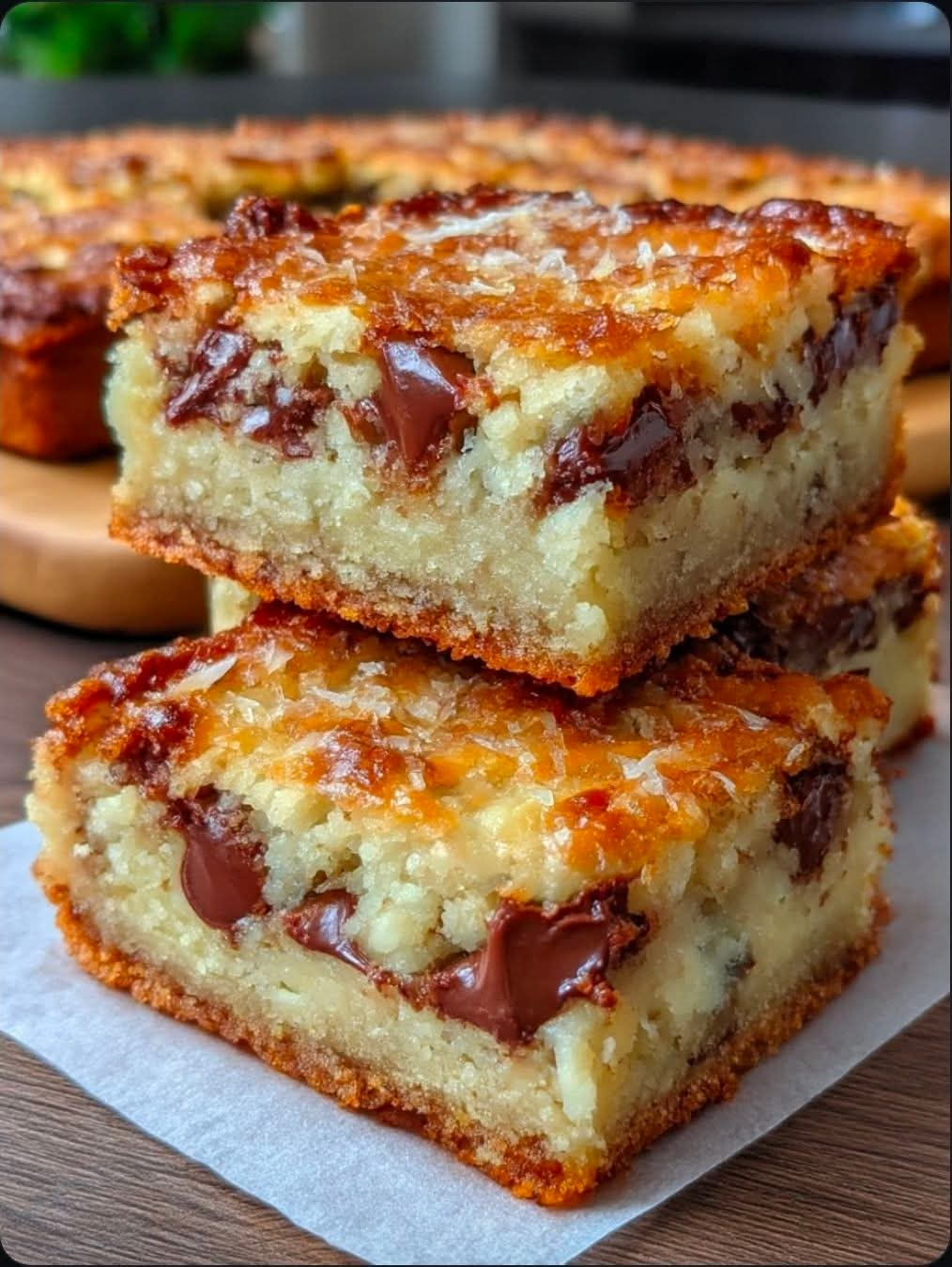
Rich, buttery, and packed with chocolate, they sit perfectly at the intersection of a blondie and a cookie bar. This recipe delivers thick, soft bars with chewy edges and a gooey center that melts in your mouth.
Whether you grew up eating Congo Bars at bake sales, family gatherings, or holiday cookie trays, or you’re discovering them for the first time, this version is designed to be reliable, indulgent, and incredibly satisfying.
These bars are simple enough for a casual weeknight bake yet impressive enough to serve to guests, making them a staple recipe you’ll come back to again and again.
The History and Charm of Classic Congo Bars
Congo Bars have been around for generations, often appearing in old community cookbooks and handwritten recipe cards passed down through families. They gained popularity as an easy alternative to traditional cookies, eliminating the need for chilling dough or baking multiple batches.
Instead, everything goes into one pan, bakes together, and slices into generous squares. The charm of Congo Bars lies in their simplicity: pantry ingredients, no complicated techniques, and consistently delicious results.
Over the years, bakers have customized them with different chocolate combinations, nuts, or mix-ins, but the heart of the recipe has remained the same—a rich brown sugar base and plenty of chocolate.
Why This Congo Bars Recipe Works
This recipe works so well because of the careful balance between fat, sugar, and flour. Using butter at room temperature allows it to cream smoothly with the brown sugar, creating a soft, tender crumb.
Brown sugar adds moisture and depth, giving the bars their signature chewy texture and caramel-like flavor. Eggs provide structure without making the bars cakey, while baking powder gives just enough lift.
The combination of semi-sweet chocolate chunks and milk chocolate chips ensures layers of flavor—some bites rich and intense, others creamy and sweet.
Baking just until the edges are set guarantees that irresistible gooey center every Congo Bar lover craves.
Texture, Flavor, and What Makes Congo Bars Special
What sets Congo Bars apart from other dessert bars is their texture. The edges are slightly crisp and golden, while the center stays soft, dense, and almost fudgy.
Flavor-wise, the brown sugar base brings warm notes of molasses and caramel, which pair beautifully with vanilla and butter. The mix of chocolate chunks and chips means you get pools of melted chocolate as well as little bursts of sweetness throughout.
Every bite feels indulgent without being overwhelming, making these bars easy to enjoy one after another.
What You’ll Need for This Recipe
This Congo Bars recipe uses simple, accessible ingredients that you may already have in your kitchen. Butter forms the rich base, while packed brown sugar sweetens and adds moisture.
Eggs bind everything together and contribute to the soft interior. Vanilla extract enhances all the flavors, while kosher salt balances the sweetness. Baking powder provides lightness without turning the bars into cake.
All-purpose flour gives structure, and the chocolate—both semi-sweet chunks and milk chocolate chips—brings the indulgent finish that makes these bars unforgettable.
Ingredient Notes and Simple Substitutions
If you only have light or dark brown sugar, either will work beautifully, though dark brown sugar will give a deeper molasses flavor. Unsalted butter is ideal, but if you use salted butter, simply reduce the added salt slightly.
Chocolate chunks can be swapped for chopped chocolate bars if needed, and you can use all semi-sweet or all milk chocolate depending on preference.
While this recipe doesn’t call for nuts, chopped walnuts or pecans can be added for extra texture if desired. Just be careful not to overload the batter, as too many add-ins can affect baking.
Kitchen Tools You’ll Want on Hand
You don’t need any fancy equipment to make Congo Bars, which is part of their appeal. A large mixing bowl, an electric hand mixer or stand mixer, a rubber spatula, and a standard 9×13-inch baking dish are all you need.
Lining the pan with parchment paper makes removal and slicing much easier, especially since the bars are soft when warm. Measuring cups and spoons, along with a cooling rack, round out the setup and ensure a smooth baking process from start to finish.
How to Make Congo Bars Step by Step
Start by preheating your oven to 350°F and preparing your baking dish with parchment paper and nonstick spray.
In a large bowl, cream together the butter and brown sugar until light and fluffy, which takes about two minutes. This step is crucial for texture. Add the eggs, vanilla, salt, and baking powder, mixing until everything is well combined and scraping down the sides as needed.
Reduce the mixer speed and gently add the flour, mixing just until no dry streaks remain. Fold in the chocolate chunks and chocolate chips by hand to avoid overmixing.
Spread the thick dough evenly into the prepared pan and bake until the edges are set but the center remains slightly underbaked. Allow the bars to cool before slicing for clean edges and the best texture.
Baking Tips for Perfectly Gooey Bars
The key to gooey Congo Bars is not overbaking them. The center should look slightly underdone when you remove the pan from the oven, as it will continue to set while cooling.
Using an oven thermometer can help ensure accurate temperature, as ovens often run hot or cool. Spreading the dough evenly ensures uniform baking, and letting the bars cool completely before slicing prevents them from falling apart.
If you prefer firmer bars, you can bake them for a few extra minutes, but be careful not to dry them out.
Tips, Tricks, and More for Recipe Success
Room-temperature ingredients are essential for smooth mixing and even baking. Take your butter and eggs out ahead of time to avoid a dense batter.
When measuring flour, spoon it into the measuring cup and level it off to prevent adding too much. For extra flavor, you can brown the butter before creaming it with the sugar, though this will slightly change the texture.
Always use good-quality chocolate, as it makes a noticeable difference in the final result. Finally, patience during cooling pays off with clean slices and perfect texture.
Common Mistakes and How to Avoid Them
One common mistake is overmixing the batter after adding the flour, which can lead to tough bars. Mix just until combined. Another is baking too long, which results in dry, crumbly bars instead of soft and chewy ones.
Skipping parchment paper can make removal difficult, especially with gooey centers. Finally, cutting the bars too soon can cause them to fall apart. Letting them cool completely ensures they hold their shape beautifully.
How to Serve Congo Bars
Congo Bars are best served at room temperature, where their flavors and textures truly shine. Slice them into squares or rectangles depending on your preference.
They’re perfect as a standalone dessert, paired with a glass of milk, coffee, or tea. For a more indulgent presentation, serve them slightly warm with a scoop of vanilla ice cream or a drizzle of chocolate sauce.
Their rich flavor means a small portion goes a long way, making them ideal for sharing.
Serving Suggestions and Variations
These bars are incredibly versatile. Serve them on dessert platters at parties, bake sales, or potlucks where they’re guaranteed to disappear quickly.
You can dress them up with a dusting of powdered sugar or a drizzle of melted chocolate. For variations, try adding white chocolate chips, peanut butter chips, or chopped candy bars.
A sprinkle of flaky sea salt on top before baking adds a gourmet touch that balances the sweetness beautifully.
Time, Storage, and Make-Ahead Information
Preparation for Congo Bars takes about 15 minutes, with a baking time of roughly 30 minutes, making the total time around 45 minutes plus cooling.
Once baked, the bars can be stored in an airtight container at room temperature for up to three days or refrigerated for up to a week.
They also freeze well; wrap individual bars tightly and freeze for up to three months. Thaw at room temperature before serving, making them a convenient make-ahead dessert for busy schedules or special occasions.