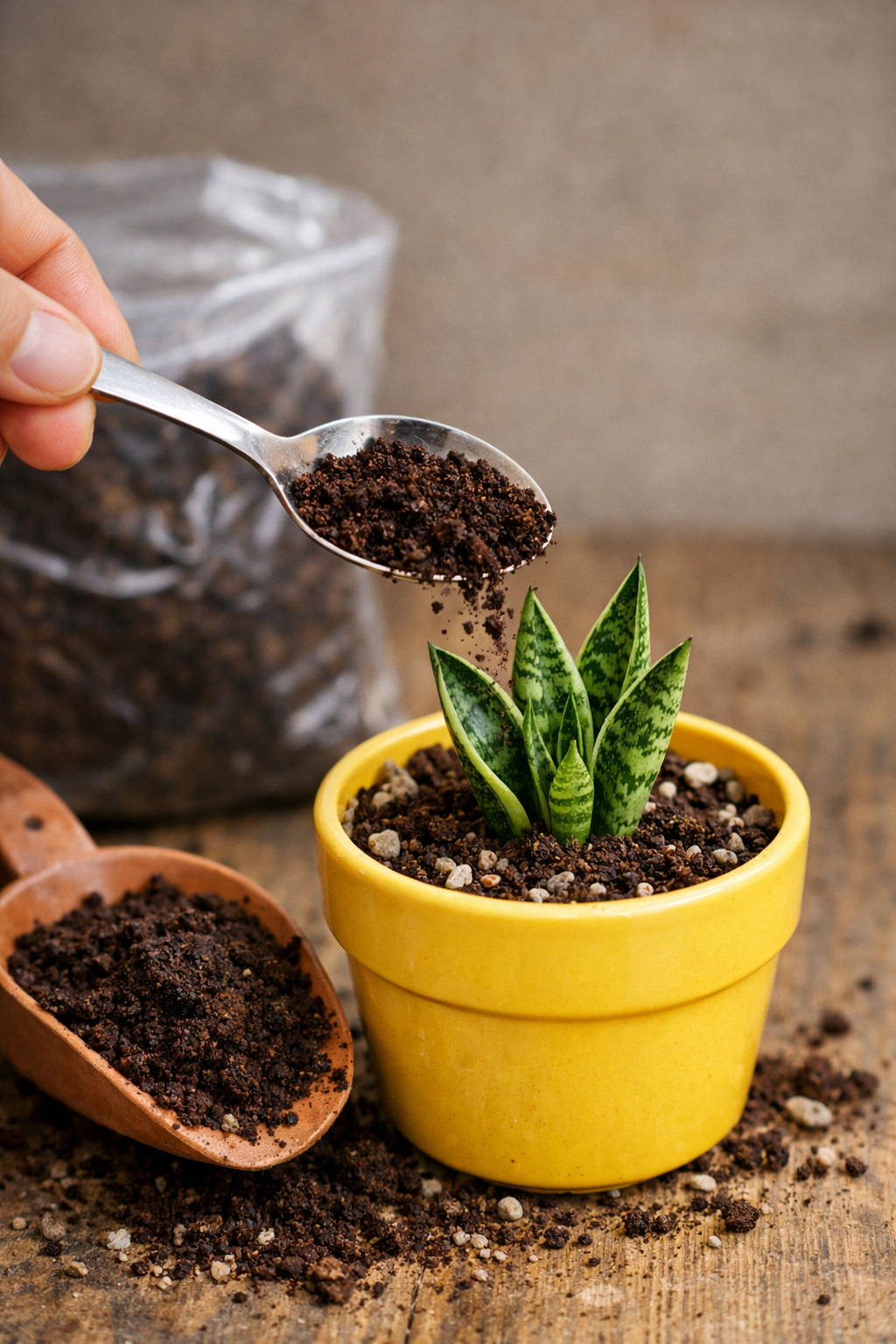
The Truth About Coffee Fertilizer for Snake Plants
Coffee grounds are one of the most talked-about DIY fertilizers online.
Many indoor plant lovers believe they’re a free, natural way to boost growth—especially for popular houseplants like snake plants.
But here’s the truth most blogs don’t explain clearly:
Coffee fertilizer can help snake plants in very specific situations — and harm them in most others.
Understanding the difference is critical, especially for indoor gardening, luxury home decor, and apartment living, where soil mistakes linger much longer than outdoors.
Why Snake Plants React Differently to Coffee
Snake plants (Sansevieria / Dracaena trifasciata) are slow-growing, drought-tolerant plants.
They evolved to survive in:
Dry, mineral-rich soil
Low organic matter
High airflow around roots
Coffee grounds are the opposite:
Organic
Moisture-retaining
Slightly acidic
This mismatch is where most problems start.
What Coffee Grounds Actually Do in Soil
Used coffee grounds:
Increase moisture retention
Add mild acidity
Break down slowly indoors
Reduce oxygen if compacted
Outdoors, this can be helpful.
Indoors—especially in decorative pots—it often causes trouble.
The Biggest Coffee Fertilizer Mistake
Most people sprinkle wet or thick coffee grounds directly on top of the soil.
This creates:
A compact layer that blocks airflow
Trapped moisture near the roots
Slow root suffocation
Snake plants don’t show damage immediately.
Instead, growth silently slows, then stops.
Signs Coffee Fertilizer Is Hurting Your Snake Plant
No new leaves for months
Soft or wrinkled leaf bases
Soil staying wet too long
Fungus gnats appearing
Leaf tips turning yellow or brown
These signs are often blamed on watering—when coffee buildup is the real issue.
When Coffee Fertilizer Can Be Used Safely
Coffee can work only if used correctly and rarely.
Safe conditions:
Fully dried coffee grounds
Mixed into soil (never layered on top)
Extremely small amounts
Well-draining soil with perlite or pumice
Pots with real drainage holes
Even then, it’s optional—not necessary.
The Safer Alternative for Indoor Snake Plants
For indoor plants used in home decor and real estate staging, stability matters more than speed.
Better options:
Diluted liquid houseplant fertilizer (¼ strength)
Mineral-based soil refresh (perlite + fresh mix)
Occasional compost tea only if diluted heavily
These provide nutrients without changing soil behavior.
Why Coffee Fertilizer Often Fails Indoors
Indoor environments:
Dry slowly
Lack soil organisms
Trap moisture in decorative pots
Coffee relies on microbial breakdown. Indoors, this process is slow and uneven—causing nutrient imbalance instead of growth.
Coffee Fertilizer vs Snake Plant Growth Reality
Snake plants grow best when:
Roots stay dry between waterings
Soil remains airy
Feeding is minimal
Overfeeding—especially with organic matter—does the opposite.
In luxury interiors, a stable, upright snake plant always looks better than a fast-growing stressed one.
Should You Ever Use Coffee on Snake Plants?
Short answer: You don’t need to.
If you choose to:
Use once every 3–4 months maximum
Mix fully into dry soil
Never use liquid coffee
Never use on young or stressed plants
Skipping coffee entirely is safer for most homes.
FAQ – Coffee Fertilizer & Snake Plants
Is coffee good for snake plants?
Not usually. It often causes moisture problems indoors.
Can coffee help snake plants make babies?
No. New shoots depend on light, pot space, and root health—not coffee.
Does coffee make snake plants grow faster?
Rarely. It more often slows growth by stressing roots.
Is coffee better outdoors?
Yes, but snake plants are mostly grown indoors in the U.S.
What fertilizer is best for snake plants?
Light, diluted liquid fertilizer or none at all.
Final Truth
Coffee fertilizer isn’t magic—it’s situational.
For snake plants, especially those used in:
Apartments
Modern homes
Minimalist interiors
Real estate staging
Less is more.
Healthy roots, dry soil cycles, and good drainage will always outperform coffee grounds.
Sometimes the best fertilizer is simply not interfering.