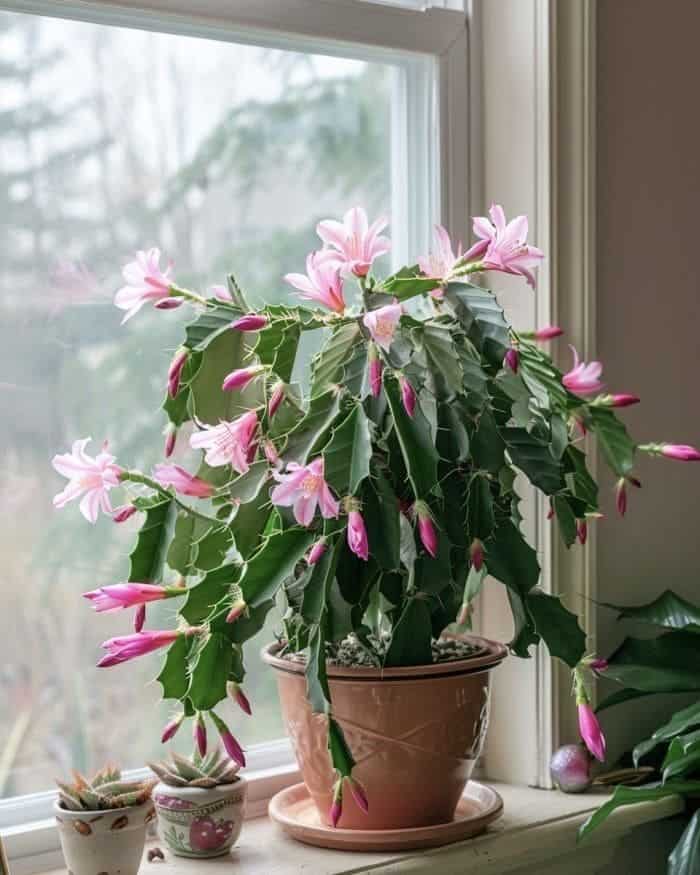
10 Common Mistakes That Stop Your Christmas Cactus from Blooming
The other day, a friend of mine couldn’t understand why his Christmas Cactus wasn’t blooming and looked unhealthy. He insisted he was doing everything “by the book.”
After growing these beautiful plants for years, I quickly realized he was making several common mistakes — the same ones I’ve seen many gardeners make over and over again.
If your Christmas Cactus isn’t thriving, you might be making one of these too.
1. Overwatering: The Silent Killer
Many people assume frequent watering keeps plants happy. Not this one.
Christmas Cactus prefers the soil to dry slightly between waterings. Constantly soggy soil leads to root rot — and that’s often fatal.
Tip: Check the top inch of soil. If it’s dry, water. If it’s still moist, wait.
Always use a pot with drainage holes.
2. Not Enough Light
This plant doesn’t like harsh direct sun — but it also doesn’t enjoy deep shade.
It thrives in bright, indirect light, like near an east-facing window with gentle morning sun.
Too little light = no blooms.
Too much direct sun = scorched leaves.
3. Skipping the Dormancy Period
After blooming, Christmas Cactus needs a rest period of about 6–8 weeks.
During this time:
Reduce watering
Keep it cooler (10–15°C / 50–60°F)
Provide less light
Skipping this rest disrupts its natural cycle and reduces future blooms.
4. Using the Wrong Soil
Regular potting soil holds too much moisture.
In nature, these plants grow in Brazil as epiphytes — meaning they grow on trees, not in dense ground soil.
Use:
Cactus mix
Add perlite or orchid bark for better drainage
Airy soil = healthy roots.
5. Ignoring Temperature & Humidity
These plants dislike sudden temperature changes.
Keep them away from:
Heaters
Air conditioners
Drafty windows
Ideal temperatures:
Growing season: 18–24°C (65–75°F)
Dormancy: Cooler conditions
They also prefer humidity around 50–60%. A pebble tray with water works well.
6. Fertilizing Incorrectly
Too much nitrogen causes lots of leaves — but few flowers.
During the growing season:
Use balanced fertilizer (10-10-10) every 4–6 weeks
Before blooming:
Switch to a low-nitrogen, higher-phosphorus fertilizer
This encourages bud formation.
7. Forgetting to Prune or Repot
Prune leggy stems after blooming to encourage bushier growth.
Repot only every 2–3 years, and only go one pot size up. Too much extra soil holds excess moisture.
8. Moving the Plant During Budding
This is a big one.
Once buds appear, don’t move the plant. Changes in light, temperature, or position can cause bud drop.
Let it stay in its happy place until flowering is done.
9. Ignoring Pests
Even hardy plants can attract:
Mealybugs
Spider mites
Check stems and leaf undersides regularly. Neem oil or insecticidal soap works well if caught early.
10. Misreading Drooping Leaves
Drooping doesn’t always mean thirst.
It could be:
Overwatering
Low humidity
Poor drainage
Nutrient deficiency
Always check soil moisture first before adding more water.
Final Thoughts
Christmas Cactus isn’t difficult — it just has different needs than most houseplants. Once you understand its rhythm of light, rest, and proper watering, it rewards you with spectacular blooms year after year.