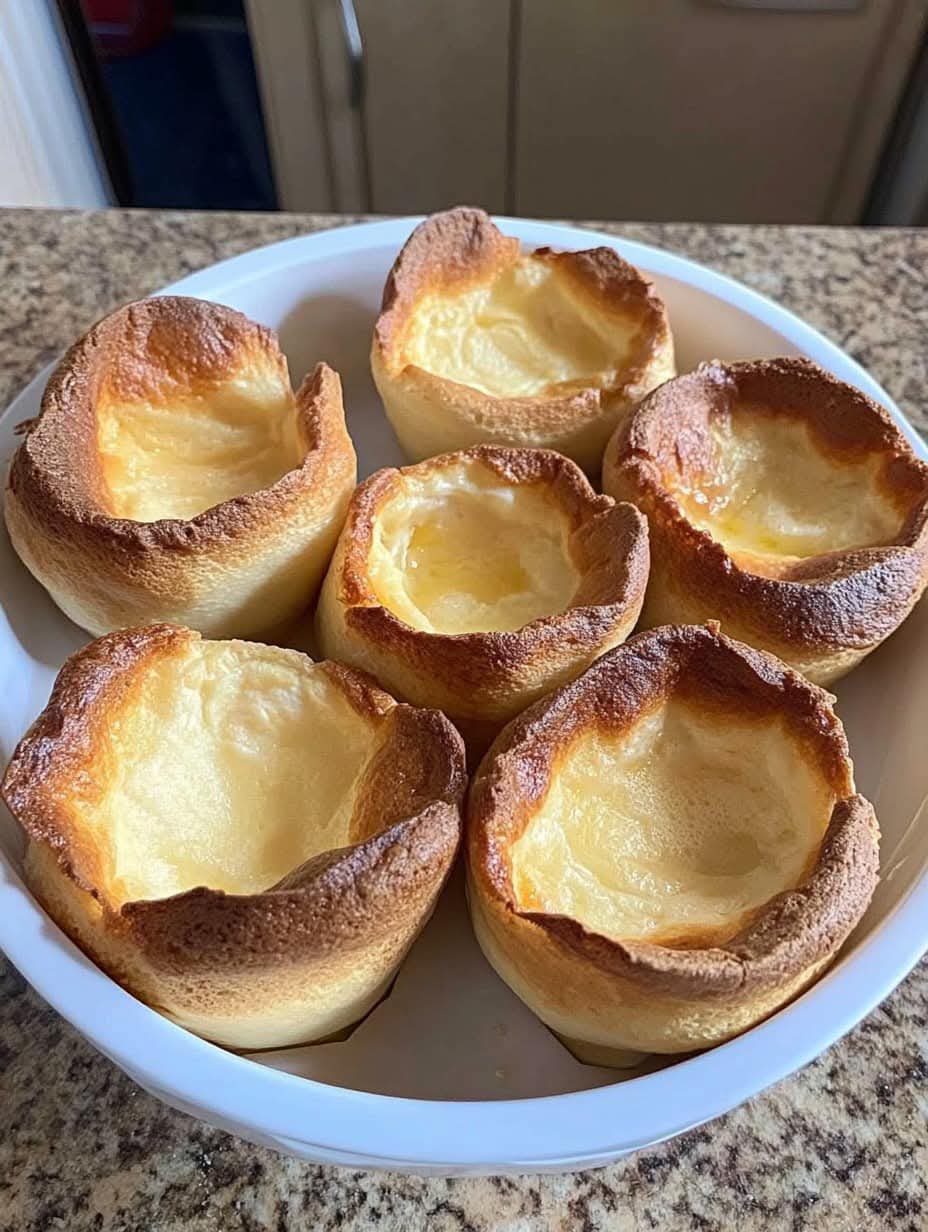
Yorkshire Puddings – A Timeless British Classic Everyone Should Master
Yorkshire Puddings are one of those recipes that feel almost magical when done right. Simple ingredients, a hot oven, and a bit of confidence come together to create tall, golden, crisp-edged puddings with soft, airy centers.
Whether you grew up eating Yorkshire Puddings alongside a traditional Sunday roast or you’re discovering them for the first time, this recipe delivers consistent, bakery-style results right from your home kitchen.
Yorkshire Puddings prove that humble pantry staples can transform into something truly special with the right technique.
Yorkshire Puddings: Why This Recipe Works Every Single Time
Yorkshire Puddings succeed or fail based on temperature, timing, and balance—and this recipe nails all three. The batter rests just long enough to relax the gluten, helping the puddings rise instead of turning dense.
Using a very hot oven ensures the instant steam reaction needed for dramatic puffing, while the preheated fat creates that iconic crisp bottom. Yorkshire Puddings made this way rise tall, brown evenly, and collapse just slightly once cooled, exactly as they should.
Yorkshire Puddings and the Beauty of Simple Ingredients
One of the reasons Yorkshire Puddings have endured for centuries is their simplicity. You don’t need fancy tools or specialty ingredients—just flour, eggs, milk, fat, and seasoning. This minimalist approach lets technique shine.
When each step is followed carefully, Yorkshire Puddings reward you with a texture contrast that feels far more luxurious than the ingredient list suggests.
What You’ll Need For This Recipe (Yorkshire Puddings Essentials)
To make classic Yorkshire Puddings, you’ll need the following ingredients:
All-purpose flour – forms the structure of the puddings
Eggs – provide lift and richness
Milk – creates steam and tenderness
Lard or vegetable oil – essential for crispness and rise
Salt – enhances flavor
Black pepper – optional, but adds subtle warmth
You’ll also need a 12-cup muffin tin, a whisk, and a pourable mixing bowl to make transferring the batter quick and easy. Speed matters when making Yorkshire Puddings.
Yorkshire Puddings: Understanding the Batter Before You Bake
The batter for Yorkshire Puddings should be thin, similar to crepe batter, and slightly lumpy. Over-whisking incorporates too much air and can lead to uneven puffing.
Letting the batter rest in the refrigerator allows starches to hydrate fully, which improves rise and texture. Cold batter hitting hot fat is one of the secrets behind tall Yorkshire Puddings.
How To Make This Recipe Step-by-Step (Yorkshire Puddings Method)
Making Yorkshire Puddings is simple, but timing is crucial:
In a small bowl with a spout, mix the flour and eggs together.
Slowly stir in the milk until just combined. Lumps are perfectly fine.
Refrigerate the batter for at least 30 minutes, or up to overnight.
Preheat your oven to 425°F (220°C).
Add ½ teaspoon of lard or oil to each cup of a muffin tin.
Place the empty tin in the oven for 10–12 minutes until the fat is smoking hot.
Stir salt and pepper into the cold batter.
Carefully remove the hot pan and immediately pour batter evenly into each cup.
Return the pan to the oven without delay.
Bake for 16–18 minutes until puffed and deeply golden.
Do not open the oven door while baking—Yorkshire Puddings need steady heat to stay risen.
Yorkshire Puddings and the Importance of Oven Temperature
High heat is non-negotiable when making Yorkshire Puddings. Anything lower than 425°F will prevent proper steam formation, resulting in flat or chewy puddings.
The intense heat creates rapid expansion, forcing the batter upward before it has time to set. This is what gives Yorkshire Puddings their dramatic height and hollow center.
Tips + Tricks & More For Recipe Success With Yorkshire Puddings
Use cold batter and hot fat – this temperature contrast is critical
Move fast – once the pan comes out of the oven, pour and return quickly
Don’t overfill – fill each cup about halfway for best rise
Avoid convection – standard oven heat works best
Rest the batter – skipping this step reduces height
Yorkshire Puddings reward patience and precision far more than fancy ingredients.
Yorkshire Puddings: Common Mistakes and How to Avoid Them
Flat Yorkshire Puddings usually come from one of three problems: oil not hot enough, oven door opened too early, or batter overmixed. Another mistake is using too little fat—each cup needs enough oil to coat the bottom thoroughly. Yorkshire Puddings should sizzle as soon as the batter hits the pan.
How to Serve Yorkshire Puddings Traditionally
Traditionally, Yorkshire Puddings are served alongside roast beef, roasted potatoes, and gravy. They act like edible bowls, soaking up savory juices and sauces. In classic British meals, Yorkshire Puddings often arrive at the table hot, crisp, and ready to be filled with gravy.
Serving Suggestions: Modern Ways to Enjoy Yorkshire Puddings
Yorkshire Puddings are incredibly versatile. Try serving them:
Filled with roast chicken and gravy
Stuffed with sausage and onions
Topped with smoked salmon and crème fraîche
Used as a base for eggs and breakfast meats
Served sweet with powdered sugar and jam
Yorkshire Puddings can move effortlessly from dinner to brunch to dessert.
Yorkshire Puddings for Make-Ahead and Storage
Yorkshire Puddings are best fresh, but they can be made ahead. Once cooled, store them in an airtight container for up to two days. Reheat in a hot oven (400°F) for 3–5 minutes to restore crispness. Avoid microwaving, as it softens the texture.
Yorkshire Puddings: Perfect for Holidays and Special Meals
Because they feel special but use basic ingredients, Yorkshire Puddings are ideal for holidays.
They stretch meals, impress guests, and pair beautifully with rich mains. Adding Yorkshire Puddings to your table instantly elevates even simple roasted meats.
Time Breakdown for Yorkshire Puddings
Prep Time: 5 minutes
Rest Time: 30 minutes (minimum)
Cook Time: 28–30 minutes
Total Time: About 1 hour
Most of the time is hands-off, making Yorkshire Puddings surprisingly easy for such an impressive result.
Yorkshire Puddings: Why They Deserve a Spot in Your Regular Rotation
Yorkshire Puddings aren’t just for roast dinners—they’re a technique worth mastering. Once you understand how heat, fat, and batter interact, you’ll find endless ways to adapt them.
Few recipes deliver such dramatic results with so little effort, and that’s why Yorkshire Puddings remain beloved across generations.
Final Thoughts on Making the Best Yorkshire Puddings at Home
Yorkshire Puddings are proof that classic recipes endure for a reason. With the right temperature, rested batter, and confidence, you can achieve tall, golden puddings every time.
Whether served traditionally or creatively, Yorkshire Puddings bring warmth, comfort, and a touch of old-world charm to any meal. Once you make them successfully, they’ll quickly become a recipe you return to again and again.