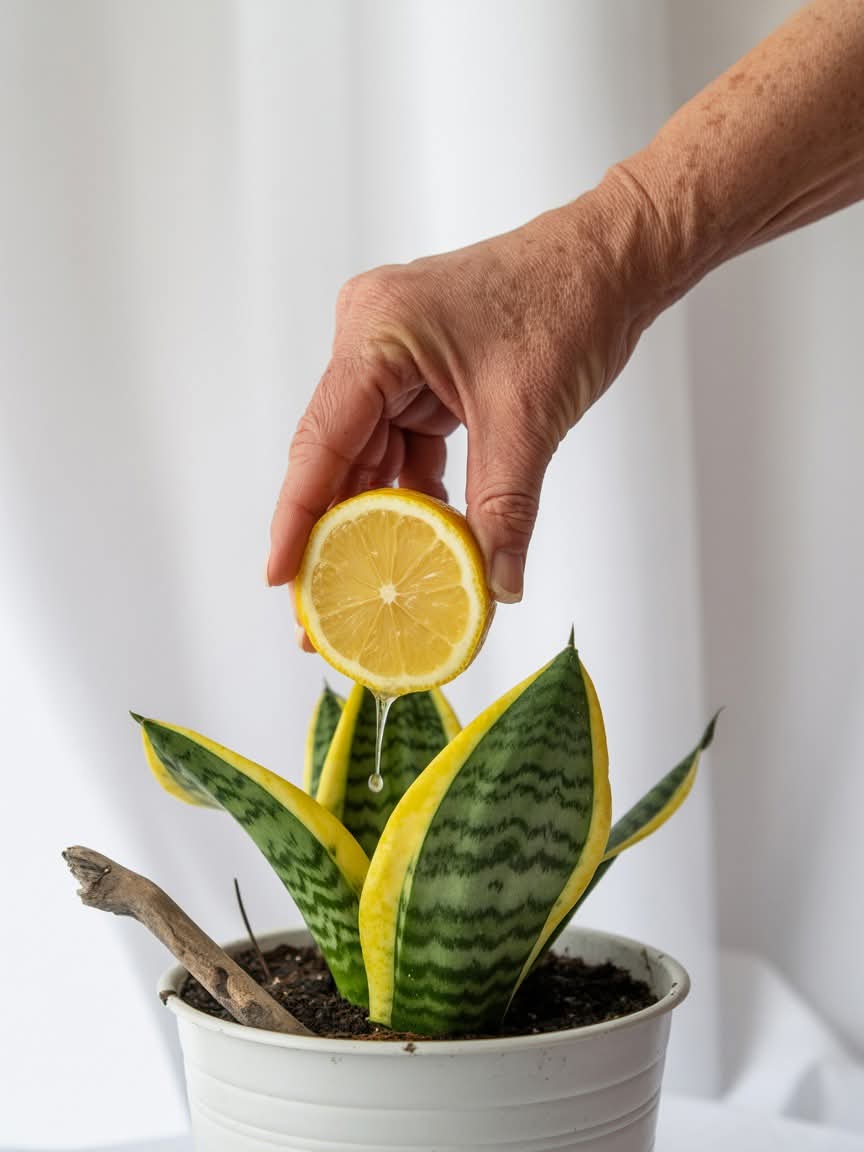
Snake Plant & Lemon Juice: Why This Viral Trick Can Damage Your Plant (And What to Do Instead)
Snake plants (Sansevieria / Dracaena trifasciata) are famous for being low-maintenance, stylish, and perfect for modern home decor, apartments, and luxury interior design.
Recently, a viral trend suggests adding lemon or lemon juice to snake plant soil to “boost growth” or “wake the plant up.”
Here’s the truth: lemon juice is not fertilizer—and in most cases, it harms snake plants.
This article explains what really happens, why people believe the myth, and the safe, high-value alternatives professionals actually use.
Why People Add Lemon to Snake Plants (The Myth Explained)
The idea comes from two misunderstandings:
Lemon is “natural,” so people assume it’s safe
Snake plants tolerate slightly acidic soil
While snake plants can handle mild acidity, lemon juice is extremely acidic and biologically active.
This makes it dangerous for roots, especially in pots.
What Lemon Juice Actually Does to Snake Plant Soil
1. Shocks the Roots
Fresh lemon juice has a very low pH. When poured into soil:
Roots experience acid shock
Fine feeder roots burn first
Growth slows instead of improving
2. Kills Beneficial Soil Microbes
Healthy soil contains microbes that help roots absorb nutrients. Lemon juice:
Disrupts microbial balance
Reduces nutrient availability
Weakens long-term plant health
3. Causes Leaf Yellowing & Soft Growth
Symptoms often appear within weeks:
Yellow margins
Soft or wrinkled leaves
No new pups (babies)
This is why many people see temporary shine, followed by decline.
Can Lemon Ever Be Used Safely?
Only in very controlled, indirect ways, and never fresh lemon juice.
Safe exception (rare use):
Dried lemon peel composted for months
Fully broken down into neutral organic matter
Direct lemon juice = not recommended
What to Use Instead (Safe & Proven Methods)
1. Proper Fertilizer (Best Option)
Use a diluted, balanced liquid fertilizer:
Once every 6–8 weeks
During spring and summer only
This supports:
Root strength
Leaf color
Pup (baby plant) production
2. Mild Organic Boost (Safe DIY)
If you prefer natural care:
Compost tea (very diluted)
Worm casting tea
Rice water (fermented & diluted)
These options support soil life instead of killing it.
Why Snake Plants Thrive in Luxury Home Decor
Snake plants are popular in:
High-end apartments
Staged real estate listings
Minimalist and biophilic interiors
Reasons:
Architectural leaf shape
Air-purifying reputation
Extremely low maintenance
Long lifespan (10+ years indoors)
Healthy snake plants increase visual value and perceived home quality, making them a favorite in premium interior styling.
Common Mistakes That Stop Growth & Baby Formation
Avoid these if you want a full, expensive-looking plant:
Acidic liquids (lemon, vinegar)
Overwatering
Frequent repotting
Cold drafts near windows
Excess fertilizer
Snake plants grow slowly—but consistency beats tricks.
The Professional Rule of Thumb
If something:
Smells strong
Tastes acidic
Would burn your tongue
 It doesn’t belong in plant soil
Plants respond best to stable environments, not shock treatments.
Final Verdict
Lemon juice is a viral myth, not a growth solution. While snake plants are tough, repeated acid exposure quietly damages roots and stops long-term growth.
For a snake plant that:
Produces babies
Holds deep color
Looks premium in home decor
Adds value to interior spaces
Stick to light, drainage, patience, and gentle feeding.
That’s how professionals keep snake plants thriving for years.