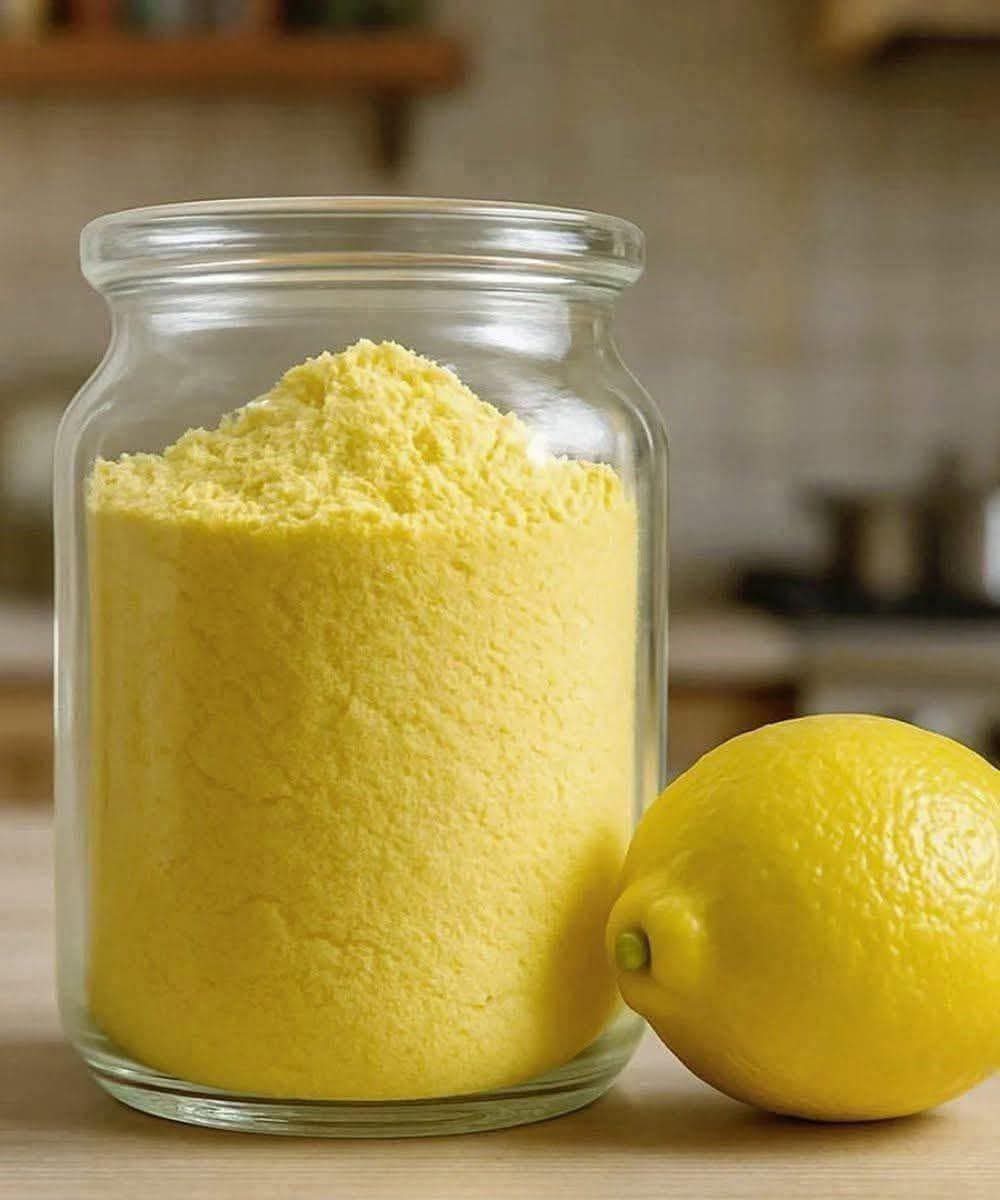
Homemade lemon powder is a convenient way to preserve the bright flavor and fragrant oils found in fresh lemon peel. It is made by removing the yellow zest, drying it until completely crisp, and grinding it into a fine powder.
The finished powder adds concentrated citrus flavor without introducing the extra liquid found in lemon juice. A small amount can brighten cakes, cookies, frostings, seasoning blends, marinades, roasted vegetables, and many other recipes.
You can prepare lemon powder in a regular oven or food dehydrator. The process requires very little active work, but the peels must be thoroughly dried before grinding and storing. Any remaining moisture can cause clumping and shorten the powder’s shelf life.
Why This Method Works
Drying removes moisture from the lemon peel while retaining much of its characteristic citrus aroma. Once the peel becomes brittle, it can be ground into a lightweight powder that is easy to measure and store.
This homemade method works especially well because:
- It requires only one ingredient.
- Both an oven and dehydrator can produce good results.
- The powder adds lemon flavor without adding liquid.
- It provides a practical use for peels left after juicing lemons.
- The recipe can be scaled according to the number of lemons available.
- Properly dried powder can remain flavorful for several months.
Unlike fresh zest, lemon powder can be kept in the pantry and used whenever a recipe needs a quick citrus boost. Its flavor is concentrated, so it is best added gradually.
What Is Lemon Powder?
Lemon powder is dried lemon peel that has been ground into fine particles. This homemade version is different from many commercial lemon powders, which may contain dried lemon juice, sugar, maltodextrin, preservatives, or other ingredients.
Using only the thin yellow portion of the peel creates a fragrant powder with a clean citrus flavor. The white layer beneath the zest, called the pith, is safe to eat but noticeably bitter. Removing most of it produces a more versatile powder for both sweet and savory recipes.
Lemon powder does not dissolve completely like sugar. When stirred into drinks or smooth sauces, tiny particles may remain. For the finest consistency, grind the dried peel thoroughly and sift the powder before using it.
Choosing the Best Lemons
Select firm lemons with bright, fragrant skins. Avoid fruit with mold, deep bruises, or large soft areas.
Because the peel is being used, unwaxed lemons are the most convenient choice. Organic lemons may also be preferred, but they should still be washed carefully. Organic labeling does not mean the fruit is automatically free from all agricultural residue or surface coatings.
Wash each lemon under cool running water and gently scrub the surface with a clean produce brush. Do not wash lemons with dish soap or household cleaners. Dry them thoroughly before removing the zest.
Regular lemons produce a familiar sharp citrus flavor. Meyer lemons can also be used, but their powder tends to have a sweeter, more floral aroma.
Ingredients and Equipment
Ingredients
- 6 medium unwaxed lemons
Six lemons will generally produce approximately 3 to 5 tablespoons of lemon powder. The exact yield depends on the size of the lemons, the thickness of the peel, and how finely the dried zest is ground.
Equipment
- Vegetable peeler, citrus zester, or sharp paring knife
- Cutting board
- Baking sheet or food dehydrator
- Parchment paper, if using an oven
- Spice grinder, clean coffee grinder, or high-powered blender
- Fine-mesh sieve, optional
- Clean, completely dry airtight jar
A spice grinder normally produces a finer texture than a full-size blender, especially when preparing a small batch.
How to Make Lemon Powder
Step 1: Wash and Dry the Lemons
Rinse the lemons thoroughly under cool running water while gently scrubbing the surface. Pat them completely dry with a clean kitchen towel.
Moisture left on the surface will increase the drying time, so make sure the fruit is dry before peeling.
Step 2: Remove the Yellow Peel
Use a vegetable peeler or sharp paring knife to remove thin strips of the yellow outer peel.
Try to leave behind as much of the bitter white pith as possible. If a strip contains a thick layer of pith, carefully scrape it away with a small knife.
Alternatively, use a citrus zester to remove fine strands of zest. Finely grated zest dries faster than wide strips, so it will need to be checked more frequently.
After removing the peel, save the lemons for juice, lemonade, dressings, marinades, lemon curd, or another recipe.
Step 3: Choose a Drying Method
The lemon peel can be dried in either an oven or food dehydrator. Whichever method you choose, arrange the pieces in a single layer without overlapping them.
Oven Method
Preheat the oven to its lowest available temperature, ideally between 150°F and 170°F (65°C and 75°C).
Line a baking sheet with parchment paper and spread the lemon peels across it in one layer.
Dry the peels for approximately 2 to 4 hours. Begin checking them after 90 minutes, especially if you used finely grated zest. Rotate the pan occasionally to promote even drying.
The exact time will depend on your oven, the thickness of the peels, and their moisture content. Remove smaller pieces as soon as they are completely crisp to prevent them from becoming excessively browned.
Dehydrator Method
Arrange the lemon peels in a single layer on the dehydrator trays.
Set the dehydrator to approximately 125°F (52°C). Dry the peels for 6 to 10 hours or until they are brittle and snap easily.
Finely grated zest may dry more quickly, while thick strips can require additional time. Consult your dehydrator’s instructions because recommended settings can vary between models.
Step 4: Check for Dryness
The peels are ready when they:
- Feel crisp rather than leathery.
- Snap cleanly instead of bending.
- Have no soft or damp areas.
- Feel dry after cooling to room temperature.
Always test the peels after they have cooled. Warm pieces can initially feel softer than they actually are.
If any pieces bend or feel moist, return them to the oven or dehydrator. Complete drying is essential for safe storage and preventing mold.
Step 5: Cool Completely
Transfer the dried peels to a clean plate and allow them to cool completely.
Do not grind or seal warm peels in a jar. Trapped warmth can create condensation, introducing moisture into the powder.
Step 6: Grind the Dried Peels
Place the cooled peels in a spice grinder or clean coffee grinder. Work in small batches and pulse until they become a fine powder.
Pause occasionally and allow the powder to settle before opening the grinder. This prevents the light particles from escaping into the air.
For an extra-fine texture, pass the powder through a fine-mesh sieve. Return any coarse pieces to the grinder and process them again.
Step 7: Store the Lemon Powder
Transfer the finished powder to a clean, completely dry airtight jar. Label the container with the name and preparation date.
Store it in a cool, dark cabinet away from the stove, dishwasher, sunlight, and other sources of heat or moisture.
For the best aroma and flavor, use homemade lemon powder within 3 to 6 months. It may keep longer when thoroughly dried and carefully stored, but its citrus fragrance will gradually become weaker.
Discard the powder if you notice mold, unexpected discoloration, an unpleasant odor, condensation, or signs of moisture.
Important Tips for the Best Results
Avoid Excess White Pith
A small amount of pith will not ruin the recipe, but too much can make the powder aggressively bitter. Thin strips containing mostly yellow zest provide the best flavor.
Keep Every Tool Dry
The grinder, sieve, spoon, and storage container must be completely dry. Even a small amount of water can cause the powder to clump or spoil prematurely.
Use Low Heat
High temperatures can quickly brown or burn the peel, creating a toasted and bitter flavor. Slow drying at a low temperature produces a brighter result.
Grind Small Batches
Small batches circulate more efficiently in a spice grinder and generally produce a finer powder. Avoid filling the grinder above the manufacturer’s recommended capacity.
Do Not Add Sugar or Salt Before Storage
Keep the basic lemon powder plain so it remains useful in both sweet and savory recipes. Lemon sugar, lemon salt, and seasoning blends can be prepared separately as needed.
Start With a Small Amount
The strength of homemade lemon powder varies between batches. Begin with ¼ to ½ teaspoon, taste the recipe when possible, and add more gradually.
How to Use Homemade Lemon Powder
Lemon powder is concentrated and versatile, but it does not behave exactly like lemon juice. It adds aroma and citrus flavor without providing the same liquid or level of acidity.
Baking
Add lemon powder to:
- Shortbread cookies
- Pound cakes
- Muffins
- Scones
- Cheesecake fillings
- Pancake or waffle batter
- Homemade granola
Begin with approximately ½ to 1 teaspoon for a standard cake, cookie, or muffin recipe. Adjust the quantity according to the strength of your powder and the desired flavor.
Frostings and Glazes
Lemon powder works particularly well in buttercream and cream cheese frosting because it contributes flavor without thinning the mixture.
Whisk a small amount into the frosting and allow it to rest for several minutes before tasting. This gives the dried particles time to hydrate and release more flavor.
Savory Seasonings
Combine the powder with salt, black pepper, garlic powder, and dried herbs to create a citrus seasoning for:
- Chicken
- Fish
- Roasted potatoes
- Grilled vegetables
- Rice
- Pasta
- Popcorn
When seasoning meat or fish, lemon powder adds citrus aroma but does not replace the acid in lemon juice when acidity is needed for a marinade.
Dressings and Sauces
Whisk a pinch into salad dressings, mayonnaise, yogurt sauce, hummus, or compound butter.
For smooth dressings, allow the mixture to rest briefly so the powder can soften. If necessary, blend or strain the dressing before serving.
Drinks
A small pinch can flavor tea, smoothies, or sparkling water. However, homemade lemon peel powder is not fully soluble, so some particles may settle at the bottom.
For a smoother drink, place the powder in a tea infuser or strain the beverage before serving.
Easy Lemon Seasoning Variations
Lemon Sugar
Mix:
- 1 tablespoon lemon powder
- ½ cup granulated sugar
Use it on cookies, muffins, toast, pancakes, or the rims of beverage glasses.
Lemon Salt
Mix:
- 1 tablespoon lemon powder
- ½ cup fine sea salt
Sprinkle it lightly over roasted vegetables, grilled chicken, fish, potatoes, or popcorn.
Lemon Pepper Seasoning
Mix:
- 1 tablespoon lemon powder
- 1 tablespoon freshly ground black pepper
- 1 teaspoon garlic powder
- 1 teaspoon onion powder
- 1 to 2 teaspoons fine salt
Adjust the salt according to how the seasoning will be used. Store homemade blends in clean airtight containers away from moisture.
Troubleshooting
Why Is My Lemon Powder Bitter?
The most common reason is an excessive amount of white pith. Burned or heavily browned peels can also create bitterness.
Use thin pieces of yellow peel and keep the drying temperature low.
Why Is the Powder Clumping?
Clumping usually indicates moisture. The peels may not have been fully dried, or the container may have been damp.
If the powder has only recently been made and shows no signs of spoilage, spread it on a lined baking sheet and dry it again at a low temperature. Cool it completely before regrinding and storing.
Discard it if mold, condensation, or an unusual odor is present.
Why Is the Powder Brown Instead of Yellow?
Some darkening is normal during oven drying. A deep brown color usually means the oven was too hot or the peels dried for too long.
The powder may still be usable if it smells pleasantly citrusy rather than burned, but its flavor will be more toasted.
Can Whole Lemon Slices Be Used?
They can be dried and ground, but the result will differ from powder made only with zest. Whole slices contain juice, membranes, and more pith, so they take longer to dry and produce a more acidic and bitter powder.
For a versatile powder suitable for baking and seasoning, yellow lemon peel is the better choice.
Can Frozen Lemon Peels Be Used?
Yes, but freezing softens the peel and introduces additional moisture. Thaw the peels, pat them thoroughly dry, and expect the dehydration process to take longer.
How Much Powder Replaces Fresh Lemon Zest?
The strength varies, but approximately ½ teaspoon of homemade lemon powder can replace 1 tablespoon of fresh zest as a starting point.
Add it gradually because some batches are more concentrated than others.
Lemon powder cannot directly replace lemon juice in recipes that depend on the juice for liquid, acidity, or a chemical reaction with baking soda.
Storage and Shelf Life
Keep the powder in a small airtight glass jar or spice container. A smaller container leaves less air around the powder and can help preserve its aroma.
For best quality:
- Store it in a cool, dark cabinet.
- Always use a dry measuring spoon.
- Keep it away from steam.
- Close the container immediately after measuring.
- Use it within 3 to 6 months for the strongest flavor.
If you prepare a large quantity, store most of it in one container and keep a smaller jar for everyday use. This reduces repeated exposure to air and moisture.
Homemade Lemon Powder Recipe
Preparation Time
10 minutes
Drying Time
- Oven: approximately 2 to 4 hours
- Dehydrator: approximately 6 to 10 hours
Total Time
Approximately 2 hours 10 minutes to 10 hours 10 minutes
Yield
Approximately 3 to 5 tablespoons
Ingredients
- 6 medium unwaxed lemons
Instructions
- Wash the lemons under cool running water, gently scrub their surfaces, and dry them thoroughly.
- Remove thin strips of yellow peel with a vegetable peeler or sharp knife, leaving behind as much white pith as possible.
- For the oven method, arrange the peels on a parchment-lined baking sheet and dry them at 150–170°F (65–75°C) for 2 to 4 hours.
- For the dehydrator method, arrange the peels on the trays and dry them at approximately 125°F (52°C) for 6 to 10 hours.
- Continue drying until every piece is brittle and snaps rather than bends.
- Cool the dried peels completely.
- Grind them in small batches until fine.
- Sift the powder if a smoother texture is desired, then regrind any coarse pieces.
- Transfer the powder to a clean, dry airtight jar.
- Store it in a cool, dark place and use it within 3 to 6 months for the best flavor.
Recipe Notes
- Drying times vary according to peel thickness, lemon variety, appliance, and humidity.
- Remove individual pieces as they become crisp to prevent burning.
- Do not store the powder until the peels are completely dry and cool.
- Start with a small quantity when adding it to recipes.
- Lemon powder adds citrus flavor but does not always replace the liquid or acidity supplied by lemon juice.
Final Thoughts
Learning how to make lemon powder at home is a simple way to transform fresh lemon peels into a useful pantry ingredient. The method requires patience more than effort: carefully remove the zest, dry it at a low temperature, grind it finely, and protect it from moisture during storage.
The finished powder can add concentrated lemon flavor to baked goods, frostings, seasoning blends, dressings, and savory dishes. Because each batch varies in strength, begin with a small amount and adjust it to taste.
With proper drying and storage, homemade lemon powder provides a practical way to enjoy citrus flavor long after the fresh lemons have been used.