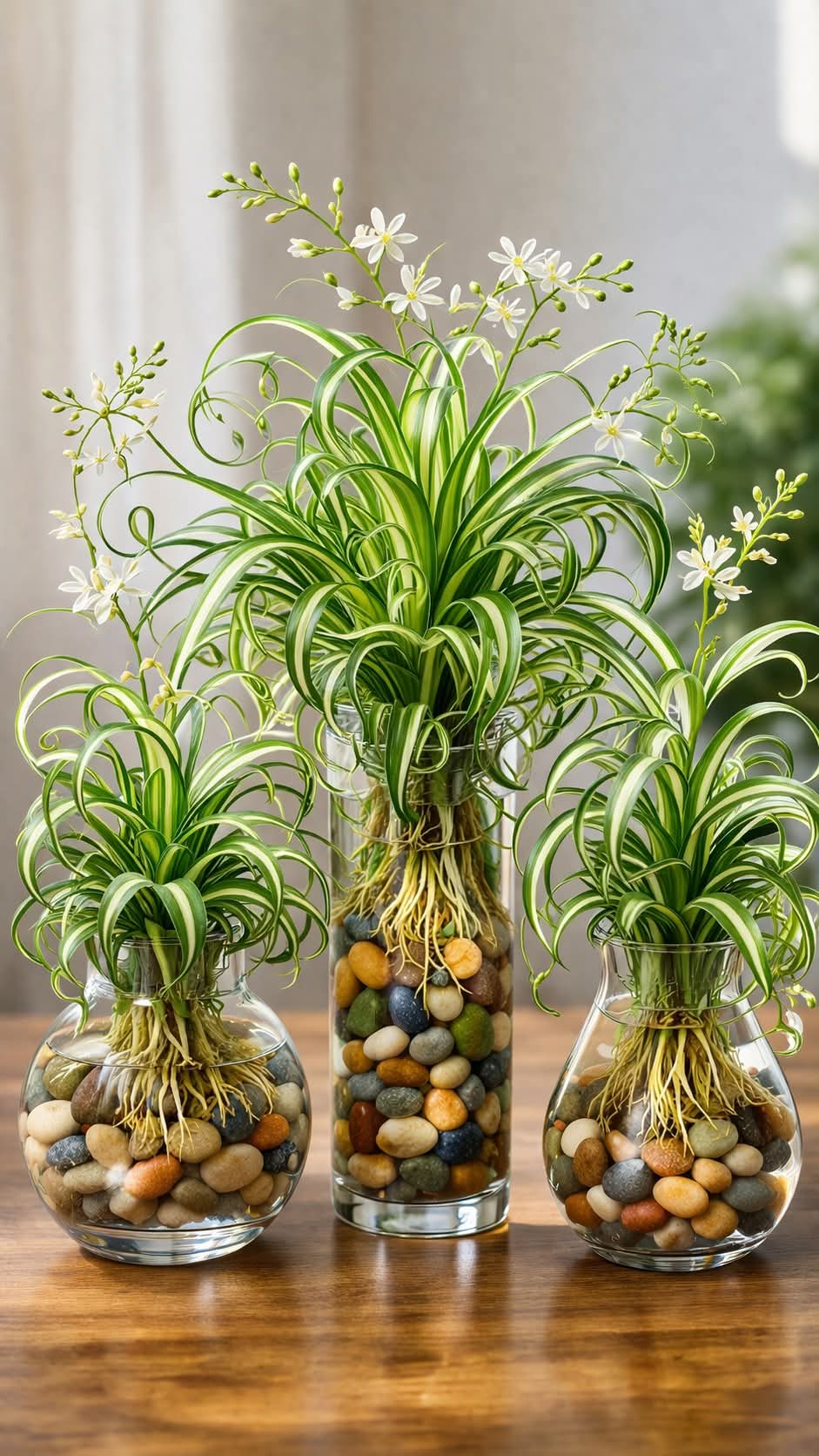
🌿 5 Easy Tips to Get Your Spider Plant to Flower
Spider plants () are famous for their cascading green leaves and adorable baby offshoots—but many growers never realize these plants can also bloom with delicate white, star-shaped flowers.
If yours hasn’t flowered yet, don’t worry—you’re not doing anything wrong. Flowering simply requires the right combination of maturity, light, and care. Here’s how to help your spider plant finally show off its blooms.
🌼 Understanding Spider Plant Flowers
Spider plant flowers are small, white, and star-like, appearing along long stems called stolons. These same stems often produce baby plants (spiderettes), making flowering a sign your plant is happy and ready to reproduce.
Not every indoor plant will bloom, though. Factors like age, lighting, and environment all play a role.
⏰ When Do Spider Plants Flower?
Most spider plants won’t flower until they’re 1–2 years old and fully mature.
- 🌸 Peak blooming season: spring and summer
- ☀️ Trigger: longer daylight hours
- 🌱 Healthy plants bloom more reliably than stressed ones
A mature, well-cared-for plant is your best bet for consistent flowering.
☀️ Tip #1: Give It the Right Light
Light is the #1 reason spider plants fail to bloom.
- Place near an east-facing window for soft morning sun
- Or a south-facing window with sheer curtains
- Avoid deep shade—it prevents flowering
💡 Low light = lush leaves, but no flowers.
If your home is dark, a grow light can make a big difference.
💧 Tip #2: Water and Feed Properly
Spider plants are forgiving, but consistency matters.
Watering:
- Keep soil lightly moist
- Let the top inch dry between waterings
- Avoid soggy soil (prevents root rot)
Feeding:
- Fertilize once a month in spring & summer
- Use balanced fertilizer (10-10-10 or 20-20-20)
- Avoid too much nitrogen—it reduces flowering
🪴 Tip #3: Let It Get Slightly Root-Bound
This might surprise you—but spider plants bloom better when slightly crowded.
- Roots filling the pot = trigger for flowering
- Repot only when absolutely necessary
- Roots peeking out? That’s actually a good sign
🌿 A snug pot encourages the plant to reproduce (aka flower).
🌡️ Tip #4: Maintain the Right Temperature
Spider plants thrive in stable indoor conditions.
- Ideal range: 18–24°C (65–75°F)
- Avoid sudden temperature drops
- Moderate humidity helps growth
Dry or cold environments can delay blooming, even if everything else is perfect.
🔄 Tip #5: Mimic Natural Seasons
Sometimes your plant needs a little “seasonal reset.”
In winter:
- Reduce watering slightly
- Stop fertilizing
- Let the plant rest
Then in spring:
- Resume feeding
- Increase watering
- Provide more light
🌸 This cycle signals the plant that it’s time to grow—and bloom.
✨ Bonus: Be Patient
Even with perfect care, spider plants bloom on their own timeline.
If your plant is:
- Healthy
- Mature
- Getting good light
…then flowers will come eventually!
🌱 Final Thoughts
Getting your spider plant to flower isn’t difficult—it just requires the right balance of light, care, and patience.
Once it blooms, you’ll not only enjoy its tiny white flowers but also more baby plants to propagate and share 🌿