Introduction
The 3-Ingredient Church Supper Chicken Recipe turns a short list of everyday ingredients into tender chicken thighs coated in a dark, glossy glaze. Bone-in, skin-on chicken thighs stay juicy as they bake, while brown sugar and soy sauce combine with the natural chicken juices to form a sweet-and-savory sauce.
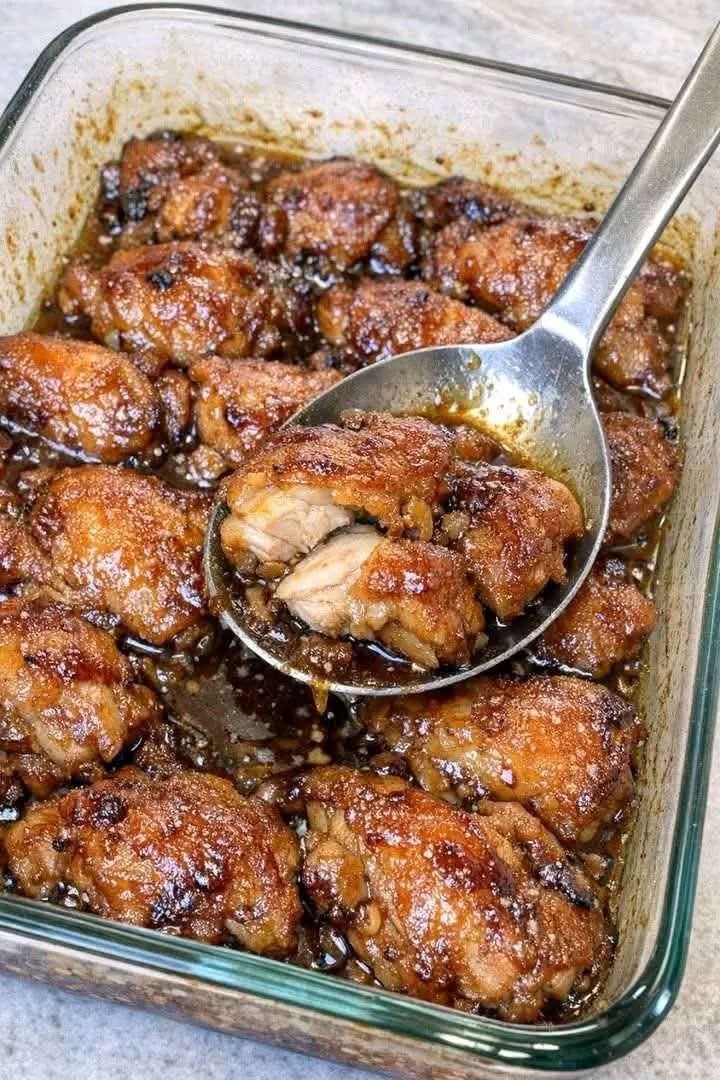
This uncomplicated baked chicken is especially useful when you need a dependable main dish without extensive preparation. Arrange the chicken in a baking dish, add the two glaze ingredients, and let the oven do most of the work. Basting the thighs partway through baking helps develop the richly caramelized finish shown in the photo.
Because the sauce is bold and slightly sweet, the chicken pairs well with mild sides such as white rice, mashed potatoes, steamed vegetables, or buttered noodles. The recipe can also be doubled for a larger dinner, provided the chicken is divided between baking dishes so the pieces are not crowded.
Prep time: 10 minutes
Cook time: 45–60 minutes
Resting time: 5 minutes
Total time: Approximately 1 hour 5 minutes
Servings: 6–8
Course: Main course
Cuisine: American
Difficulty: Easy
Why This Recipe Works
The effectiveness of this recipe comes from the different roles played by its three main ingredients.
Bone-in, skin-on chicken thighs contain enough fat to remain moist during relatively long baking. The skin protects the meat from direct oven heat while developing browned edges on top. Bone-in thighs are also more forgiving than lean chicken breasts, making them a practical choice for an easy oven recipe.
Brown sugar supplies sweetness and helps the surface of the chicken caramelize. As it dissolves into the soy sauce and rendered chicken juices, it creates a glaze that becomes thicker as the liquid reduces.
Soy sauce contributes saltiness and savory depth, balancing the brown sugar so the finished dish is not simply sweet. It also gives the sauce its deep brown color.
The wide surface of a 9×13-inch baking dish allows some of the moisture to evaporate during cooking. That reduction is important: it transforms the initially thin mixture into a concentrated sauce that can be spooned over the chicken.
Basting halfway through cooking redistributes the glaze and coats areas that may not be sitting directly in the sauce. Leaving the dish uncovered encourages browning and helps the sauce reduce.
Ingredients You’ll Need
The following amounts make approximately six to eight servings:
6–8 bone-in, skin-on chicken thighs
1 cup packed brown sugar
1/2 cup soy sauce
Optional garnishes and seasonings
These are not required for the three-ingredient recipe, but you may add one or more if desired:
Red pepper flakes
Garlic powder
Freshly ground black pepper
Chopped fresh parsley
Thinly sliced green onions
Sesame seeds
Kitchen equipment
9×13-inch baking dish
Measuring cups
Small mixing bowl
Spoon or whisk
Basting spoon
Instant-read meat thermometer
Oven mitts
Serving platter
Ingredient Notes and Substitutions
Chicken thighs
Bone-in, skin-on thighs are the best match for the long baking time and the appearance of the finished dish. Try to select thighs of similar size so they finish cooking at approximately the same time.
Before arranging them in the pan, pat the surface dry with paper towels. Removing excess moisture encourages better browning and helps the glaze cling to the skin.
Boneless, skinless thighs can be used, but they will cook more quickly and will not have the same crisp-edged exterior. Begin checking them after approximately 25–30 minutes. Regardless of the cut, chicken must reach at least 165°F (74°C) internally.
Brown sugar
Light or dark brown sugar will work. Light brown sugar creates a slightly milder glaze, while dark brown sugar has a more pronounced molasses flavor and may produce a deeper color.
Measure the sugar by packing it firmly into the measuring cup. Break apart any large lumps before mixing it with the soy sauce so it dissolves more evenly.
Apricot or peach preserves may replace the brown sugar for a fruitier version. Because preserves contain water and fruit solids, the consistency and flavor of the resulting glaze will be different. Use approximately 1 cup of preserves and watch the chicken carefully near the end because fruit-based glazes can scorch.
Soy sauce
Regular soy sauce produces the boldest sweet-and-salty result. If you prefer less sodium, use reduced-sodium soy sauce. Avoid adding extra salt before tasting the finished sauce.
Dry onion soup mix was included as an alternative in the original recipe information. For that variation, omit the soy sauce and sprinkle one packet of dry onion soup mix over the chicken before adding the brown sugar. The flavor and consistency will differ from the dark soy-based glaze shown in the image. Make sure the soup mix is distributed evenly because it is highly concentrated.
How to Make 3-Ingredient Church Supper Chicken Recipe
Step 1: Preheat the oven
Preheat the oven to 375°F (190°C). Lightly grease a 9×13-inch baking dish to help prevent the glaze from sticking around the edges.
Pat the chicken thighs dry with paper towels. This small step removes surface moisture that could dilute the sauce and interfere with browning.
Step 2: Arrange the chicken
Place the thighs in the prepared dish in a single layer with the skin facing upward. Leave a little room between the pieces whenever possible.
Crowding traps steam, which can prevent the skin from browning and slow the reduction of the sauce. If eight large thighs do not comfortably fit in one dish, divide them between two smaller baking dishes.
Step 3: Prepare the glaze
Combine the brown sugar and soy sauce in a small bowl. Stir until the sugar is moistened and most of the lumps have disappeared.
Pour the mixture evenly over and around the chicken. Use a spoon to coat the tops, but keep the thighs skin-side up.
If you do not want to use a mixing bowl, pour the soy sauce over the arranged chicken and distribute the brown sugar evenly on top. Mixing separately, however, generally produces more consistent coverage.
Step 4: Bake uncovered
Bake the chicken uncovered for 45–60 minutes. The exact cooking time will depend on the size and starting temperature of the thighs.
After approximately 25–30 minutes, carefully remove the dish from the oven. Spoon some of the bubbling sauce over each thigh, then return the dish to the oven. Take care when basting because the sugar mixture and the baking dish will be extremely hot.
If the chicken is browning too quickly before it is cooked through, loosely cover the dish with foil. Remove the foil for the final few minutes so the glaze can continue reducing.
Step 5: Check the temperature
Insert an instant-read thermometer into the thickest part of the largest thigh without touching the bone. The chicken is safe to eat when it reaches at least 165°F (74°C).
Chicken thighs often become more tender when cooked somewhat beyond the minimum safe temperature, but remove them before the meat begins to dry out. Checking several pieces is helpful when the thighs vary in size.
The juices should run clear, and the glaze should be bubbling around the chicken. Remember that the sauce will thicken further as it cools.
Step 6: Rest and serve
Remove the baking dish from the oven and let the chicken rest for 5 minutes. Resting allows the juices in the meat to settle and gives the glaze time to thicken slightly.
Spoon the warm sauce over the chicken immediately before serving. Add parsley, green onions, or sesame seeds only if desired.
Tips and Tricks for Recipe Success
Pat the chicken dry
Dry chicken skin browns more effectively than wet skin. It also prevents unnecessary water from entering the glaze.
Keep the thighs in one layer
Every piece should have access to the oven’s heat. Stacking or tightly overlapping the thighs can lead to uneven cooking and a watery sauce.
Bake the dish uncovered
Covering the dish traps moisture. For a concentrated glaze and browned surface, leave it uncovered unless the top begins to darken too quickly.
Baste carefully
One thorough baste midway through cooking is usually sufficient. Opening the oven repeatedly releases heat and can extend the cooking time.
Use a thermometer
Color alone is not a reliable indicator of doneness. A thermometer confirms that the center of the chicken has reached a safe temperature without requiring you to cut into every piece.
Watch the sugar near the end
Sugary sauces can move quickly from caramelized to scorched. Begin checking the dish regularly during the final 10 minutes, particularly if your oven tends to run hot.
Let the sauce reduce
The glaze may appear thin during the early stages of baking. As moisture evaporates, it becomes more concentrated. It will also continue thickening during the resting period.
Handle the pan sauce safely
The sauce has been cooked alongside raw chicken, so it must bubble and cook thoroughly before serving. Do not reserve any uncooked glaze for the table unless you prepare a separate batch that has not touched raw poultry.
Recipe Variations
Each of the following options changes the original three-ingredient formula, so any additions should be considered optional.
Apricot-glazed chicken
Replace the brown sugar with 1 cup of apricot preserves. Stir the preserves into the soy sauce before pouring the mixture over the chicken. This creates a fruit-forward glaze with a mild tang.
Peach-glazed chicken
Use 1 cup of peach preserves instead of brown sugar. Peach pairs well with the salty soy sauce and gives the glaze a softer fruit flavor.
Sweet and spicy chicken
Add a small pinch of red pepper flakes to the brown sugar and soy sauce mixture. Start conservatively because the heat can become more noticeable as the sauce reduces.
Garlic version
Add garlic powder to the glaze before baking. This variation brings additional savory flavor without changing the preparation method.
Onion soup variation
Omit the soy sauce and use one packet of dry onion soup mix. Sprinkle the mix evenly over the thighs, then distribute the brown sugar on top. This produces an onion-forward version rather than the glossy soy sauce version pictured.
Chicken drumsticks
Bone-in drumsticks can replace the thighs. Arrange them in one layer and use a thermometer to verify doneness, since their cooking time will vary according to size.
How to Serve
Serve the chicken hot after its brief resting period. Transfer the thighs to a platter, then spoon the reduced pan sauce over them. Alternatively, bring the baking dish directly to the table on a heat-safe trivet.
Because the glaze is concentrated, a modest spoonful of sauce is usually enough for each piece. Additional sauce can be served over rice, potatoes, or noodles.
For a neat buffet presentation, arrange the chicken in a shallow serving dish and garnish it with a small amount of parsley, green onion, or sesame seeds. Keep hot food at 140°F (60°C) or warmer during service, and do not leave cooked chicken at room temperature for more than 2 hours.
Serving Suggestions
The sweet and savory glaze pairs particularly well with neutral starches and simply prepared vegetables.
Good starch options include:
Steamed white or brown rice
Creamy mashed potatoes
Buttered egg noodles
Roasted potatoes
Macaroni and cheese
Cornbread
Soft dinner rolls
Vegetable and salad options include:
Steamed broccoli
Roasted carrots
Green beans
Corn
Coleslaw
Cucumber salad
A mixed garden salad
For a balanced weeknight plate, serve one chicken thigh with rice and steamed broccoli. For a larger supper, offer the chicken buffet-style with mashed potatoes, green beans, dinner rolls, and a crisp salad.
Make-Ahead Instructions
Preparing the ingredients
The brown sugar and soy sauce can be combined up to two days in advance and refrigerated in a covered container. Stir the mixture again before using because some sugar may settle at the bottom.
The chicken can also be arranged in the baking dish several hours ahead. Cover it tightly and refrigerate it separately from the glaze. Add the sauce shortly before baking.
Baking for a gathering
For the best texture, bake the chicken close to serving time. If you need to make it slightly ahead, cook it completely, keep it warm, and serve it within a safe timeframe.
Do not partially cook chicken with the intention of finishing it much later. Partial cooking may allow bacteria to survive and multiply.
If doubling the recipe, use two baking dishes rather than crowding twice as much chicken into one pan. Depending on oven capacity, you may need to rotate the dishes halfway through for even cooking.
Storage and Reheating Instructions
Refrigerating leftovers
Allow leftovers to cool briefly, then place them in an airtight container and refrigerate within 2 hours of cooking. Store the chicken with some of the sauce to help preserve moisture.
Properly refrigerated leftovers can be kept for up to 4 days.
Freezing
Freeze the cooked chicken and sauce in an airtight freezer-safe container for up to 3 months. Individual portions are convenient for reheating.
Thaw frozen chicken overnight in the refrigerator before reheating. The texture of the skin will be softer after freezing, but the meat and glaze should retain their flavor.
Reheating in the oven
Place the chicken and a little sauce in a covered baking dish. Reheat at 325°F (163°C) until the center reaches 165°F (74°C). Remove the cover for the final few minutes if you want the surface slightly less soft.
Reheating in the microwave
Place an individual portion in a microwave-safe dish and spoon sauce over it. Cover loosely and heat in short intervals until thoroughly hot, checking that the center reaches 165°F (74°C).
Frequently Asked Questions
Can I use boneless chicken thighs?
Yes. Boneless thighs cook faster, so begin checking their internal temperature after approximately 25–30 minutes. Their finished appearance will differ from bone-in, skin-on thighs.
Can I use chicken breasts?
Chicken breasts can be used, but lean breast meat is easier to overcook. The required time will depend heavily on thickness. Use a thermometer and remove the chicken once it reaches 165°F (74°C).
Is this recipe made with three ingredients or four?
The primary version uses three main ingredients: chicken thighs, brown sugar, and soy sauce. Garnishes and extra seasonings are entirely optional and are not necessary for the recipe.
Can I use onion soup mix and soy sauce together?
It is better to choose one or the other. Both contain considerable sodium, and combining them may make the chicken excessively salty. The soy sauce version best matches the dark, glossy glaze shown in the image.
Why is my sauce watery?
The chicken may have released extra moisture, the pieces may have been crowded, or the dish may have been covered. Continue baking briefly while watching the sugar carefully. The sauce will also thicken somewhat as it cools.
Why did my glaze burn?
The oven may have been too hot, or the chicken may have remained in the oven too long after the sugar caramelized. Use the specified temperature, check the dish during the final 10 minutes, and loosely cover it with foil if it becomes too dark.
Should I season the chicken with salt?
Additional salt usually is not necessary because soy sauce is already salty. Taste the finished sauce before adding any extra seasoning.
Can I prepare this in a slow cooker?
The ingredients can cook in a slow cooker, but the result will not have the same caramelized surface. The covered environment retains moisture, producing a thinner sauce and softer skin. Oven baking is preferable for the texture shown.
Can I remove the chicken skin?
Yes, although the chicken will have less richness and will not develop the same browned exterior. Monitor the meat carefully so it does not dry out.
How do I know when the chicken is done?
Check the thickest section with an instant-read thermometer, avoiding contact with the bone. Every piece should reach at least 165°F (74°C).
Final Conclusion
The 3-Ingredient Church Supper Chicken Recipe is a practical baked dinner made with bone-in chicken thighs, brown sugar, and soy sauce. Its appeal comes from a simple preparation method and a flavorful glaze that develops directly in the baking dish.
Arrange the thighs in one layer, bake them uncovered, baste them midway, and confirm doneness with a thermometer. Paired with rice, potatoes, noodles, or vegetables, this sweet-and-savory chicken makes an easy family dinner and scales well for larger gatherings.