Introduction
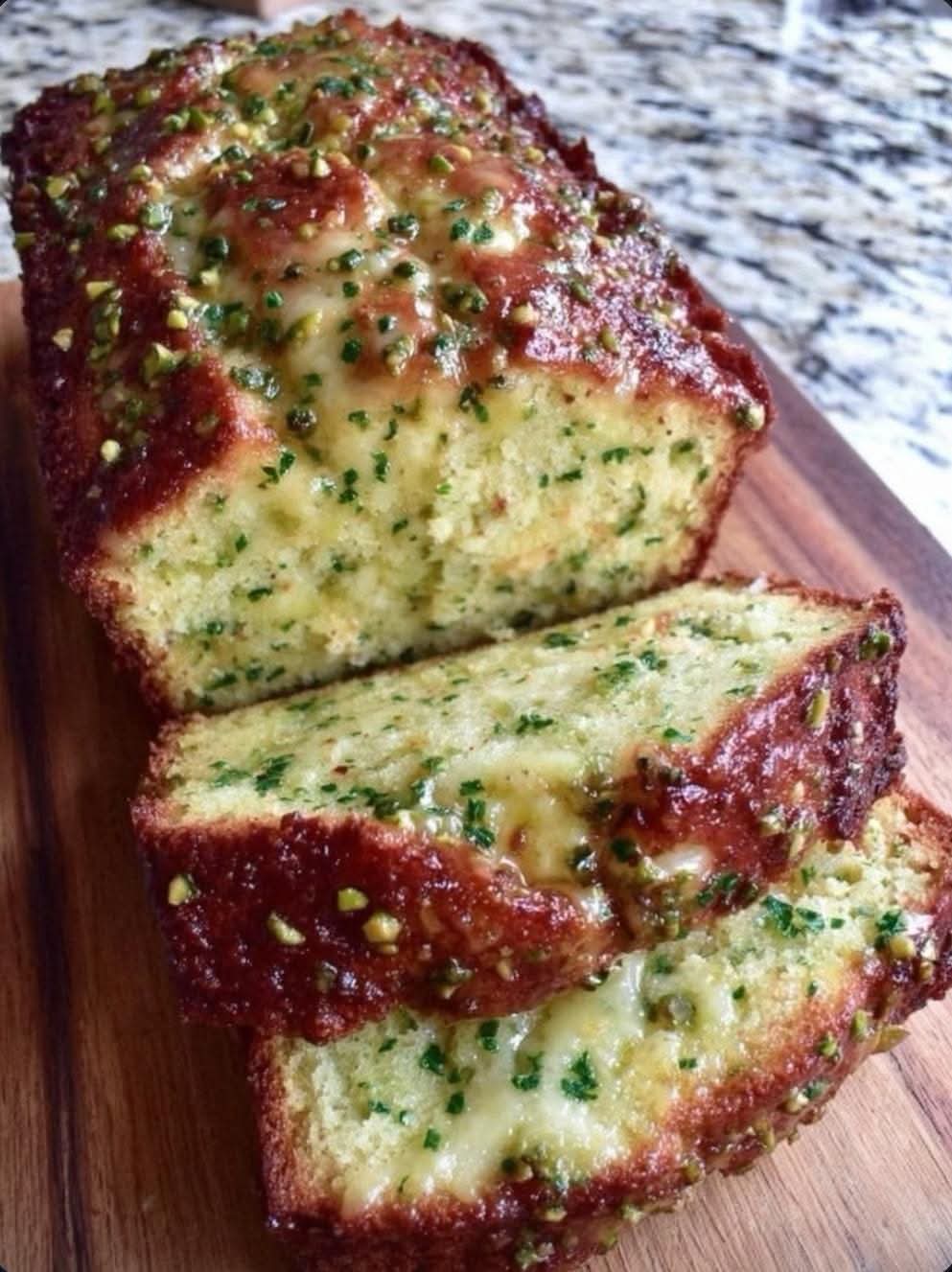
Pistachio Zucchini Bread combines the moisture of freshly grated zucchini with the sweet, nutty flavor of pistachio pudding and the satisfying crunch of chopped pistachios. The result is a soft quick bread with a lightly golden crust, a tender interior, and subtle green color throughout each slice.
Although zucchini is the main source of moisture, it does not give the bread a strong vegetable flavor. Its mild taste blends easily with vanilla and pistachio, making this loaf suitable for breakfast, brunch, an afternoon snack, or a simple dessert.
Dry instant pistachio pudding mix is an important part of the recipe. It contributes flavor, sweetness, color, and starch that helps the bread retain moisture. Vegetable or canola oil also keeps the crumb soft, even after the loaves have cooled.
This recipe produces two 9-by-5-inch loaves, making it convenient when you want one loaf to serve immediately and another to freeze or share. The preparation is straightforward, but careful measuring and gentle mixing are essential for achieving the best texture.
Why This Recipe Works
Pistachio Zucchini Bread uses several moisture-retaining ingredients to create a tender, cake-like crumb without requiring a complicated preparation method.
Fresh zucchini contains a significant amount of water. In this recipe, the grated zucchini is added without being squeezed or drained. Its liquid hydrates the flour and pudding mix as the bread bakes, helping prevent a dry or crumbly interior.
Oil is used instead of butter. Because oil remains liquid at room temperature, the cooled bread stays softer than many butter-based quick breads. It also coats the flour particles, limiting excessive gluten development when the batter is mixed correctly.
The instant pistachio pudding mix provides both flavor and modified starch. That starch absorbs and retains moisture, contributing to the loaf’s dense but tender texture. Chopped pistachios add contrast, keeping the soft crumb from feeling overly uniform.
Whisking the eggs and sugar until thick and pale helps dissolve some of the sugar while incorporating a small amount of air. Baking soda and baking powder then provide the additional lift needed to keep this moisture-rich batter from becoming overly heavy.
Ingredients You’ll Need
This recipe makes two 9-by-5-inch loaves, with approximately 10 slices per loaf.
2 cups all-purpose flour
¼ teaspoon baking powder
1 teaspoon baking soda
1 teaspoon salt
1 box (3.4 ounces) instant pistachio pudding mix, dry mix only
3 large eggs
1¾ cups granulated sugar
1 tablespoon vanilla extract
¾ cup vegetable or canola oil
2 cups grated zucchini, peeled or unpeeled and not drained
½ cup chopped pistachios
Ingredient Notes and Substitutions
All-Purpose Flour
All-purpose flour gives the bread enough structure to hold the zucchini, oil, and pistachios. Measure it by lightly spooning it into the measuring cup and leveling the top. Scooping directly from the bag can compact the flour and lead to dry, heavy loaves.
A standard cup of properly measured all-purpose flour weighs approximately 120 to 125 grams.
Baking Powder and Baking Soda
This recipe uses both baking powder and baking soda. They are not interchangeable, so include the specified quantity of each. Check their expiration dates before baking because old leavening agents may result in a dense or sunken loaf.
Instant Pistachio Pudding Mix
Use one 3.4-ounce box of instant pistachio pudding mix. Add the powder directly to the dry ingredients; do not prepare it with milk first.
Cook-and-serve pudding is formulated differently and should not be substituted. If pistachio pudding is unavailable, instant vanilla pudding may work as a texture substitute, but the finished bread will have a vanilla flavor rather than a distinct pistachio profile.
Eggs
Large eggs provide structure and help bind the wet and dry ingredients. For more even mixing, allow cold eggs to stand at room temperature for about 20 minutes before beginning.
Granulated Sugar
Sugar supplies sweetness, contributes to browning, and helps preserve moisture. Reducing it significantly could change both the flavor and structure of the bread.
As an optional variation, up to half of the granulated sugar may be replaced with packed light brown sugar. This will produce a slightly darker loaf with a mild molasses note.
Vanilla Extract
One tablespoon of vanilla supports the sweet pistachio flavor and rounds out the taste of the pudding mix. Pure vanilla extract or regular baking vanilla may be used.
Vegetable or Canola Oil
Choose a neutral-flavored oil so it does not overpower the pistachio and vanilla. Vegetable and canola oil both work well.
Melted coconut oil may be used as an optional substitution, but it can add a noticeable coconut flavor. Make sure the other ingredients are not very cold, or the coconut oil may solidify during mixing.
Grated Zucchini
Measure two cups of loosely packed grated zucchini. It may be peeled or left unpeeled. Leaving the peel intact creates green flecks throughout the finished crumb.
Do not squeeze or drain the zucchini for this particular recipe. Its natural liquid is needed to hydrate the batter. If the zucchini releases liquid while sitting in the bowl, add that liquid along with the grated vegetable.
A box grater or the shredding attachment of a food processor can be used. Medium shredding works best because very large pieces may remain noticeable after baking.
Chopped Pistachios
Roughly chopped pistachios add texture and reinforce the nutty flavor. Unsalted pistachios are the best choice because the batter already contains one teaspoon of salt.
Shelled pistachios save preparation time. Check carefully for any remaining pieces of shell before chopping.
How to Make Pistachio Zucchini Bread
Step 1: Prepare the Oven and Pans
Preheat the oven to 350°F (175°C).
Lightly coat two 9-by-5-inch metal loaf pans with nonstick cooking spray. Line each pan with parchment paper, leaving enough overhang along the long sides to form a sling. The parchment will make it easier to remove the delicate loaves without damaging their bottoms or sides.
Set the prepared pans aside while you make the batter.
Step 2: Combine the Dry Ingredients
In a large mixing bowl, stir together the all-purpose flour, baking powder, baking soda, salt, and dry instant pistachio pudding mix.
Break apart any noticeable clumps of pudding powder. Mixing these ingredients thoroughly before adding the wet mixture helps distribute the leaveners evenly throughout both loaves.
Step 3: Mix the Eggs and Sugar
In a separate medium or large bowl, whisk the eggs and granulated sugar until the mixture becomes thick, smooth, and pale yellow.
This can be done by hand with a sturdy whisk. There is no need to whip the eggs to a foam; the goal is simply to combine them thoroughly and begin dissolving the sugar.
Add the vanilla extract and vegetable or canola oil. Whisk until the oil is fully incorporated and the mixture looks uniform.
Step 4: Add the Zucchini and Pistachios
Stir the grated zucchini, including all of its natural liquid, into the wet mixture. Add the chopped pistachios and stir just until they are evenly distributed.
The wet mixture may appear loose at this point. That is expected because the dry pudding mix and flour will absorb much of the moisture.
Step 5: Combine the Batter
Pour the zucchini mixture into the bowl containing the dry ingredients. Use a rubber spatula to fold the two mixtures together.
Scrape along the bottom and sides of the bowl so no pockets of dry flour remain. Stop mixing as soon as the batter is evenly combined. It will be thick and may have a noticeable green color from the pudding mix.
Do not try to beat the batter until completely smooth. A few small lumps are preferable to overmixing, which can make the finished bread tough or rubbery.
Step 6: Divide and Bake
Divide the batter evenly between the two prepared loaf pans. Smooth the surfaces gently with the spatula.
Bake both loaves in the preheated oven for approximately 55 minutes. If the pans are positioned on the same rack, leave a little space between them so hot air can circulate.
Begin checking for doneness near the 50-minute mark. Insert a wooden toothpick or thin skewer into the thickest part of each loaf. The loaves are ready when the tester comes out clean or with a few moist crumbs but no liquid batter.
For an additional check, the center of a fully baked quick bread should generally register around 200°F to 205°F (93°C to 96°C) on an instant-read thermometer. Baking times may vary according to the pan material and individual oven.
Step 7: Cool the Loaves
Place the pans on a wire rack and let the loaves cool inside them for 10 minutes. This brief resting period allows the structure to set.
Run a thin knife around any unlined edges if necessary. Lift the loaves from the pans using the parchment-paper slings and place them directly on the rack.
Allow the bread to cool completely before slicing. Cutting while it is hot can compress the moist crumb and make the center appear underbaked.
Tips and Tricks for Recipe Success
Measure the Flour Carefully
Too much flour is one of the most common causes of dry quick bread. For accuracy, weigh the flour or use the spoon-and-level method. Do not shake or press flour into the measuring cup.
Keep the Zucchini Moisture
Some zucchini bread recipes require squeezing the shredded vegetable, but this one does not. Removing the liquid may leave insufficient moisture for the flour and pudding starch.
Mix Only Until Combined
Once flour comes into contact with liquid, mixing begins developing gluten. Excessive stirring can create a tight, chewy texture. Fold slowly and stop when the last visible streaks of flour disappear.
Check Both Loaves
Even when baked together, one loaf may finish a few minutes before the other due to uneven oven heat or slight differences in batter quantity. Test each loaf separately.
Protect the Crust if Necessary
If the tops become deeply browned before the centers finish baking, loosely cover the pans with aluminum foil for the remaining baking time. Do not seal the foil around the pans.
Allow Complete Cooling
The crumb continues to set while the bread cools. For clean slices, wait until the loaves have reached room temperature and use a serrated bread knife with a gentle sawing motion.
Expect a Dense, Moist Texture
Because this batter contains oil, pudding mix, eggs, sugar, and undrained zucchini, its texture will be moist and somewhat cake-like. However, the center should not be wet, gummy, or coated with raw batter.
Recipe Variations
Any additions below are optional and are not required for the original recipe.
Extra Pistachio Topping
Sprinkle a small handful of additional chopped pistachios over the batter before baking. Press them down very lightly so they adhere without sinking completely into the bread.
White Chocolate Pistachio Bread
Fold up to ¾ cup of white chocolate chips into the batter with the pistachios. This creates a sweeter, more dessert-like version.
Semisweet Chocolate Version
Add up to ¾ cup of semisweet chocolate chips for a stronger contrast to the sweet pistachio flavor.
Vanilla Zucchini Bread
Replace the pistachio pudding with an equal-size box of instant vanilla or French vanilla pudding. The moisture and texture should remain similar, but the loaf will lose its signature pistachio flavor and green color.
Brown Sugar Variation
Replace half of the granulated sugar with packed light brown sugar. The bread will have a slightly deeper flavor, softer crust, and darker interior.
When adding extra ingredients, avoid overloading the batter. Too many chips or nuts can weigh down the center and make the loaves difficult to bake evenly.
How to Serve
Serve Pistachio Zucchini Bread at room temperature for the best balance of flavor and texture. Once completely cooled, cut each loaf into approximately 10 thick slices.
The bread is moist enough to serve on its own. If desired, individual slices may be warmed briefly before serving. Avoid overheating them, as this can make the crumb greasy or dry around the edges.
For a neat presentation, arrange the slices slightly overlapping on a serving platter. A small scattering of chopped pistachios around the platter can indicate the loaf’s main flavor, but additional garnishes are not necessary.
Serving Suggestions
This quick bread works well in several settings:
Include it on a breakfast or brunch table with fresh fruit.
Serve it with coffee, tea, or cold milk.
Pack a slice as a midmorning or afternoon snack.
Add it to a dessert tray with cookies and fresh berries.
Wrap individual slices for lunch boxes or convenient grab-and-go snacks.
Serve it as part of a spring or summer gathering when fresh zucchini is abundant.
Because the loaf is already sweet and rich, lighter accompaniments such as fresh berries or unsweetened beverages provide a pleasant contrast.
Make-Ahead Instructions
Pistachio Zucchini Bread is well suited to advance preparation because its moisture and flavor remain noticeable after the loaves have rested.
Bake the bread one day before serving and allow it to cool completely. Wrap each loaf tightly or place it in an airtight container. Store it at room temperature and slice shortly before serving.
The zucchini may also be grated several hours ahead. Refrigerate it in a covered container along with any liquid it releases. Let it sit at room temperature briefly before adding it to the wet ingredients, and include all accumulated juice.
Do not combine the complete batter far in advance. Once the wet and dry ingredients are mixed, the leavening agents begin reacting. For the best rise, divide the batter into the pans and bake it promptly.
Storage and Reheating Instructions
Room-Temperature Storage
Let the loaves cool fully before storing them. Place the bread in an airtight container or wrap it tightly. A dry paper towel placed beneath the loaf can absorb excess surface moisture.
Store at room temperature for up to four days. Replace the paper towel if it becomes damp.
Refrigerator Storage
For longer storage, refrigerate the bread in an airtight container for up to one week. Refrigeration may firm the oil-rich crumb, so allow individual slices to return to room temperature before serving.
Freezer Storage
Wrap a completely cooled loaf or individual slices tightly in plastic wrap, then add a layer of aluminum foil or place them in a freezer-safe bag. Freeze for up to three months.
Thaw a whole wrapped loaf at room temperature. Individual slices can be thawed overnight in the refrigerator or for about an hour at room temperature.
Reheating
Warm an individual slice in the microwave for approximately 10 to 15 seconds. Alternatively, wrap several slices loosely in foil and warm them in a 300°F (150°C) oven for 8 to 10 minutes.
Reheat only the amount you plan to serve, since repeated heating can gradually dry the bread.
Frequently Asked Questions
Should I squeeze the grated zucchini?
No. The zucchini should be added without draining or squeezing. Its natural liquid supplies essential moisture to the flour and pudding mix.
Do I need to peel the zucchini?
No. The peel softens during baking and leaves attractive green flecks in the crumb. You may peel the zucchini if you want a more uniform appearance.
Can I use frozen zucchini?
Fresh zucchini gives the most predictable result. Frozen shredded zucchini releases more liquid as it thaws and may change the consistency of the batter. If used, thaw it completely and retain its liquid, but be aware that the texture may differ.
Can I use cook-and-serve pudding mix?
No. Use instant pistachio pudding mix. Cook-and-serve pudding has a different starch formulation and may not produce the same texture.
Why did the center sink?
A small dip can occur in a very moist quick bread. A significant collapse, however, may indicate that the bread was underbaked, too much leavening was used, or the oven door was opened too early.
Test the deepest part of both loaves before removing them. The tester should not have wet batter attached.
Why is my bread gummy?
A gummy center usually results from underbaking, slicing while hot, using too much zucchini, or measuring too little flour. Measure carefully and let the bread cool completely before cutting it.
Can I bake the recipe as one large loaf?
The full quantity is designed for two 9-by-5-inch pans. Putting all the batter in one standard loaf pan would likely cause overflow and an underbaked center. Use two pans as directed.
Can I make muffins with this batter?
Yes, although the baking time will need to be reduced. Divide the batter among lined muffin cups and begin testing at approximately 18 to 22 minutes at 350°F (175°C). Bake until a toothpick inserted in the center comes out without wet batter.
Is the unusual green batter normal?
Yes. Pistachio pudding gives the uncooked batter a stronger green color. The shade generally becomes softer and more muted during baking.
Does zucchini make the bread taste savory?
No. Zucchini has a mild flavor and primarily contributes moisture. Pistachio, vanilla, and sugar remain the dominant flavors.
Final Conclusion
Pistachio Zucchini Bread turns a simple quick-bread batter into two moist, flavorful loaves with a soft crumb and crunchy pistachio pieces. Undrained zucchini supplies natural moisture, while oil and instant pistachio pudding help the bread stay tender after cooling.
The most important steps are measuring the flour accurately, keeping the zucchini liquid, avoiding excessive mixing, and baking each loaf until its center is fully set. Once cooled, the bread slices cleanly and can be served for breakfast, brunch, snacking, or dessert.
With two loaves in each batch and reliable storage and freezing options, this recipe is also a practical way to use fresh zucchini while preparing an extra loaf for later.