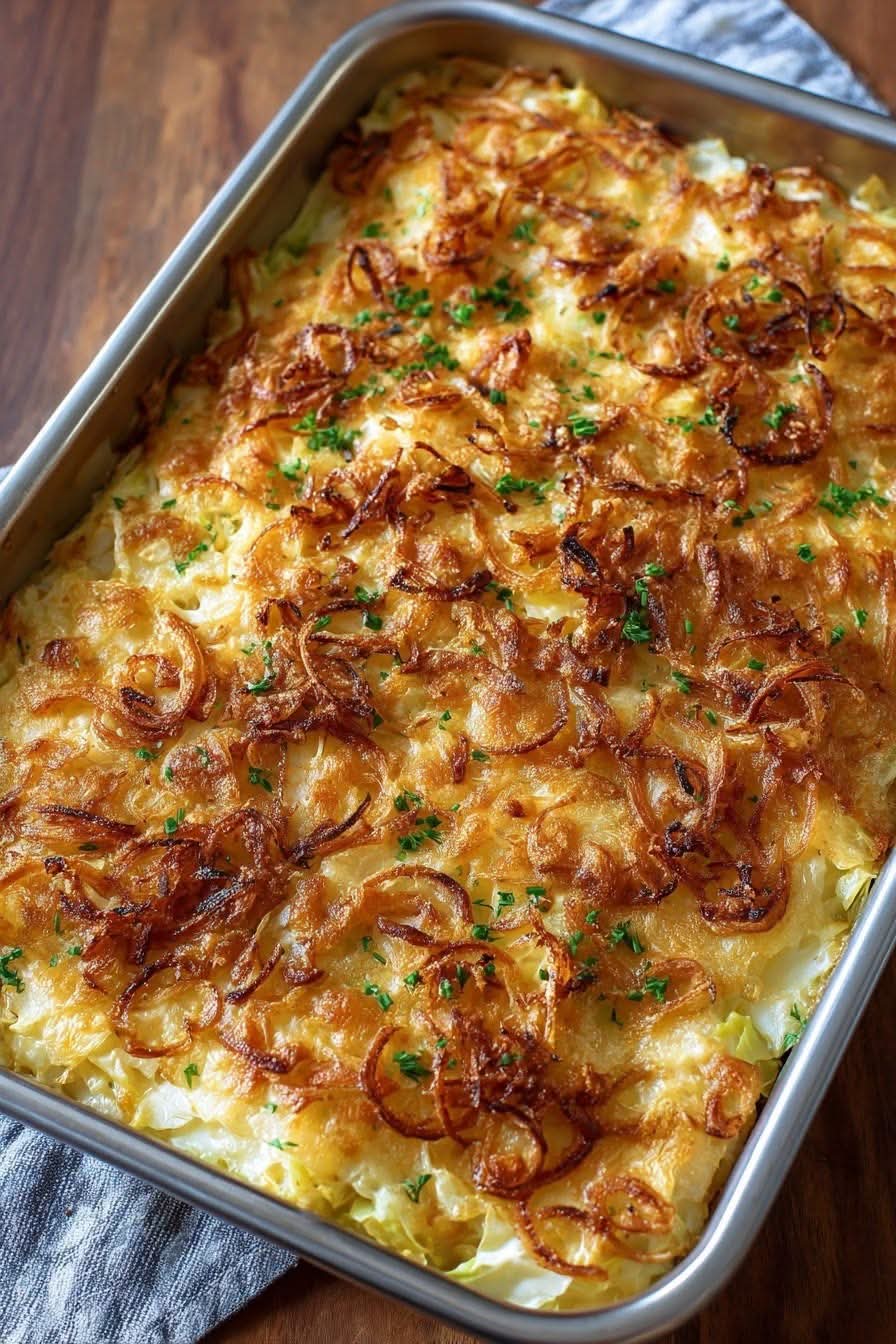
Creamy Cheesy Potato and Cabbage Casserole
Creamy Cheesy Potato and Cabbage Casserole combines tender Yukon Gold potatoes, buttery sautéed cabbage, and onions in a smooth homemade white cheddar sauce. A layer of crispy French fried onions gives every serving a golden, crunchy finish that contrasts beautifully with the creamy vegetables underneath. This filling side dish works especially well for Thanksgiving, Christmas, Sunday dinner, potlucks, or a cozy weeknight meal. Because it uses affordable vegetables and feeds a crowd from one 9-by-13-inch dish, it is also a practical alternative to traditional scalloped potatoes.
Why You’ll Love This Recipe
This casserole transforms a few familiar grocery-store ingredients into a substantial side dish with plenty of texture and flavor.
Rich but balanced: Sharp cheddar and cream make the sauce rich, while sour cream and mustard add enough tang to prevent it from tasting overly heavy.
Two vegetables in one dish: Potatoes provide a satisfying base, while cabbage adds volume and a mild, savory sweetness.
Contrasting textures: The filling is soft and creamy, but the French fried onions remain crisp and golden on top.
Ideal for gatherings: One casserole provides approximately 10 side-dish servings.
Easy to prepare ahead: The vegetable and cheese layers can be assembled a day in advance.
Budget-conscious: Cabbage and potatoes are generally economical ingredients that help stretch the more expensive cheese and cream.
No canned soup required: A simple butter-and-flour roux creates a smooth sauce from scratch.
The brief stovetop cooking stages are important. Parboiling the potato slices helps them cook evenly, while sautéing the cabbage removes some of its excess moisture and develops more flavor before baking.
Key Ingredient Notes
Yukon Gold Potatoes
Yukon Gold potatoes have a creamy texture and hold their shape better than high-starch russet potatoes. Slice them into uniform rounds approximately ⅛ to ¼ inch thick so they cook at the same rate.
Red potatoes are the most reliable substitute. Russets can be used, but they are more likely to break apart during boiling and layering.
Green Cabbage
You will need approximately half of a medium head of green cabbage. Cut out the tough core before slicing the leaves into thin ribbons. The cabbage may initially look like a large quantity, but it loses considerable volume as it cooks.
Sautéing it before assembling the casserole improves its flavor and prevents too much vegetable moisture from diluting the cheese sauce.
Sharp White Cheddar
Sharp white cheddar provides a pronounced cheese flavor without changing the pale, creamy color of the sauce. For the smoothest result, buy a block and grate it shortly before cooking.
Pre-shredded cheese is convenient, but its anti-caking coating can make a homemade sauce slightly less smooth. Sharp yellow cheddar will work equally well if color is not a concern.
Milk and Heavy Cream
A mixture of whole milk and heavy cream gives the sauce enough richness while keeping it pourable. Once combined with the roux, the liquids should simmer gently until the sauce can lightly coat the back of a spoon.
Avoid letting the cream boil aggressively, which can make the finished sauce less stable.
Sour Cream
Sour cream contributes body and a subtle tang that balances the cheddar and cream. Full-fat sour cream produces the smoothest texture, although plain full-fat Greek yogurt can be substituted.
Dry Mustard
Dry mustard strengthens the savory flavor of the cheddar without making the casserole taste strongly of mustard. One teaspoon is enough to season the entire baking dish.
French Fried Onions
French fried onions create the crisp, deeply golden topping shown on the casserole. Covering them during the first part of baking protects them from burning; uncovering the dish near the end allows them to become crisp again.
Chopped fresh parsley may be added as an optional garnish after baking to reproduce the green finish visible in the image.
Recommended Kitchen Equipment
A 9-by-13-inch baking dish provides enough surface area for even layers and a generous amount of crispy topping. A deep dish is preferable because the sauce may bubble around the edges.
Use a large pot to parboil the potatoes and prepare the cheese sauce. Reusing the same pot reduces cleanup. A large skillet gives the cabbage enough room to soften without steaming excessively.
A balloon whisk helps incorporate the milk into the roux without lumps. A sharp chef’s knife or mandoline slicer can produce evenly sized potato rounds, but use the mandoline’s hand guard for safety.
How to Make Creamy Cheesy Potato and Cabbage Casserole
1. Prepare the baking dish
Preheat the oven to 375°F (190°C). Lightly grease a 9-by-13-inch baking dish so the creamy edges release easily when served.
2. Parboil the potatoes
Place the sliced potatoes in a large pot and cover them with cold water. Starting with cold water helps the slices cook more evenly from the outside to the center.
Bring the water to a boil, then lower the heat and maintain a gentle boil for 4–6 minutes. The potatoes should begin to soften but remain firm enough to lift without falling apart.
Drain them carefully and rinse briefly with cold water to slow the cooking. Let them drain thoroughly while preparing the cabbage.
3. Sauté the cabbage and onion
Melt 3 tablespoons of butter in a large skillet over medium-high heat. Add the diced onion and cook for 3–4 minutes, stirring occasionally, until softened.
Add the thinly sliced cabbage and ½ teaspoon salt. Cook for another 4–5 minutes, stirring frequently. The cabbage should wilt and become tender around the edges but does not need to be completely soft. Remove the skillet from the heat.
4. Make the cheddar sauce
Melt the remaining 2 tablespoons of butter in the empty potato pot over medium heat. Sprinkle in the flour and whisk continuously for 1–2 minutes. The mixture should look smooth and lightly foamy without becoming dark brown.
Slowly add the milk while whisking constantly. Pour in the heavy cream and continue whisking. Simmer gently for 3–4 minutes, or until the sauce thickens enough to lightly coat a spoon.
Remove the pot completely from the heat. Add the shredded cheddar gradually, stirring until each addition melts. Stir in the sour cream, dry mustard, and black pepper. Taste and add more salt only if needed, since both cheddar and fried onions contain salt.
5. Assemble the casserole
Pour the cheese sauce into the skillet containing the cabbage and onion. Stir until the vegetables are evenly coated.
Spread one-third of the creamy cabbage mixture in the prepared baking dish. Arrange half of the potato slices over it, overlapping them slightly. Add another third of the cabbage mixture, followed by the remaining potatoes. Finish with the remaining cabbage and sauce.
Distribute the French fried onions evenly across the surface. Cover the dish tightly with aluminum foil.
6. Bake until bubbling and golden
Bake the covered casserole for 40 minutes. Remove the foil carefully to avoid the escaping steam, then continue baking uncovered for 10–15 minutes.
The casserole is ready when the sauce bubbles around the edges, the potatoes are completely tender when pierced with a thin knife, and the onion topping is crisp and golden brown.
Rest the dish for 10–15 minutes before serving. This allows the sauce to settle and thicken slightly.
Professional Tips for the Best Results
Keep the slices uniform
Potatoes of inconsistent thickness will not become tender at the same time. Aim for slices between ⅛ and ¼ inch thick. Very thin slices may break during parboiling, while thick slices can remain firm after baking.
Drain the vegetables well
Excess water is the main cause of a thin casserole sauce. Drain the potatoes thoroughly, and sauté the cabbage only until it softens and releases some of its moisture.
Add cheese away from direct heat
High heat can force the fat and proteins in cheddar to separate, producing an oily or grainy sauce. Remove the pot from the burner before adding the cheese, then stir gently until smooth.
Let the casserole rest
The sauce will look loose immediately after the dish comes out of the oven. A 10–15-minute rest makes it easier to serve without sacrificing its creamy texture.
Watch the topping closely
French fried onions can change from golden to burned quickly. If they are already dark when the foil is removed, leave the dish loosely covered for part of the remaining cooking time.
Common Mistakes and How to Avoid Them
Overcooking the potatoes: Fully boiling them before assembly can cause them to disintegrate. Stop when they are only partially tender.
Using wet cabbage: Adding raw cabbage directly to the dish introduces extra liquid and may leave the filling watery. Sauté it first as directed.
Adding all the milk at once: Gradually whisking the liquid into the roux prevents flour lumps.
Boiling the cheese: Cheddar should melt with residual heat rather than over a hard boil. This protects the sauce’s smooth consistency.
Adding too much salt early: Cheese and packaged fried onions are already seasoned. Taste the finished sauce before adding extra salt.
Serving immediately: Without a brief rest, the sauce may run across the plate instead of clinging to the vegetables.
Recipe Variations and Substitutions
For a slightly nuttier flavor, replace part or all of the cheddar with shredded Gruyère. Sharp yellow cheddar also works without changing the preparation.
Savoy cabbage can replace green cabbage measure for measure. Thinly sliced Brussels sprouts are another option, although their flavor will be stronger.
For a gluten-free casserole, use a cup-for-cup gluten-free flour blend in the roux and choose certified gluten-free crispy onions. Always check individual packaging because formulations vary.
Plain full-fat Greek yogurt may be used instead of sour cream. Avoid very low-fat yogurt, which is more likely to separate during baking.
For an especially crisp finish, reserve half of the French fried onions and add them after removing the foil. The first half will blend into the cheesy surface, while the second remains crunchier.
What to Serve With It
Creamy Cheesy Potato and Cabbage Casserole is substantial enough to accompany simple roasted or grilled proteins. Serve it with:
Roast chicken or turkey
Baked ham
Pork chops or pork tenderloin
Meatloaf
Pot roast or roast beef
Grilled sausages
A crisp green salad with a tangy vinaigrette
Roasted carrots, green beans, or asparagus
For holiday dinners, it can replace scalloped potatoes or another creamy potato side. Because the casserole is rich, pair it with at least one fresh or lightly seasoned vegetable.
Estimated Cost per Serving
The estimated cost is approximately $1.25–$1.75 per side-dish serving, based on 10 servings and typical U.S. supermarket prices. The final amount will vary by location, season, cheese selection, and whether store-brand ingredients are used.
For a more budget-friendly version, choose yellow cheddar when it costs less than white cheddar and use whichever waxy potato variety is on sale.
Make-Ahead Instructions
Assemble the casserole up to one day before serving, but leave off the French fried onions. Cover the baking dish tightly and refrigerate.
When ready to bake, add the onion topping and return the dish to room temperature while the oven preheats. A cold casserole may require an additional 5–10 minutes of covered baking. Make sure the center is hot and the sauce is bubbling before uncovering it.
The potatoes may absorb some sauce while refrigerated, so the make-ahead version can be slightly thicker than one baked immediately.
Storage and Reheating
Cover the cooled casserole or transfer individual servings to airtight containers. Refrigerate for up to four days.
Reheat larger portions in a covered baking dish at 350°F (175°C) until hot in the center, usually 20–25 minutes. Remove the cover for the last few minutes if the topping needs to crisp.
Individual servings can be microwaved in 30- to 60-second intervals until thoroughly heated. The microwave is convenient, although it will soften the fried onions.
Freezing is not recommended. Cooked potatoes can develop a grainy texture after thawing, while the dairy-based sauce may separate. If frozen despite the texture change, cool it completely, wrap it securely, and use it within one month.
Leftovers can be served alongside eggs for breakfast or reheated as a side for roasted chicken, pork chops, or meatloaf.
Frequently Asked Questions
Can I assemble this casserole the night before?
Yes. Assemble the potato, cabbage, and sauce layers, then cover and refrigerate overnight. Add the French fried onions immediately before baking and allow 5–10 additional minutes if the dish is still cold.
Why is my cheese sauce grainy?
The sauce was likely too hot when the cheddar was added, or pre-shredded cheese did not melt smoothly. Remove the pot from the burner and add freshly grated cheese gradually.
Do I have to boil the potatoes first?
Yes, a short parboil gives the potatoes a head start and ensures they become tender without requiring an excessively long baking time. Do not cook them completely on the stovetop.
Can I use russet potatoes?
You can, but russets are more fragile and starchier than Yukon Gold potatoes. Slice and parboil them carefully so they do not break apart.
How do I keep the casserole from becoming watery?
Drain the potatoes thoroughly, sauté the cabbage before assembling, and simmer the white sauce until it lightly coats a spoon. Rest the baked casserole before serving.
Can I use bagged coleslaw mix instead of cabbage?
Plain coleslaw mix without dressing can work as a shortcut. Because it is finely shredded, sauté it briefly and watch it closely so it does not become overly soft.
How can I tell when the casserole is finished?
The sauce should bubble at the edges, the topping should be golden, and a thin knife should pass easily through the potato layers. Rest the casserole for 10–15 minutes before serving.
Printable Recipe Card
Creamy Cheesy Potato and Cabbage Casserole
Tender Yukon Gold potatoes and sautéed cabbage are layered with a smooth white cheddar sauce, then finished with crispy French fried onions. This crowd-sized casserole is an excellent side dish for holidays, potlucks, Sunday dinners, and comforting family meals.
Prep time: 30 minutes
Cook time: 55 minutes
Resting time: 10 minutes
Total time: 1 hour 35 minutes
Servings: 10 side-dish servings
Ingredients
2 pounds Yukon Gold potatoes, sliced into ⅛- to ¼-inch rounds
5 tablespoons unsalted butter, divided
1 large onion, diced
½ medium head green cabbage, cored and thinly sliced
½ teaspoon salt, plus more to taste
2 tablespoons all-purpose flour
1½ cups whole milk
1 cup heavy cream
2 cups freshly shredded sharp white cheddar cheese
1 cup sour cream or full-fat plain Greek yogurt
1 teaspoon dry mustard
Black pepper, to taste
1 cup French fried onions
Chopped fresh parsley for garnish, optional
Instructions
Preheat the oven to 375°F (190°C). Lightly grease a 9-by-13-inch baking dish.
Place the sliced potatoes in a large pot and cover with cold water. Bring to a boil, reduce the heat, and cook gently for 4–6 minutes. The slices should be partially tender but still firm.
Drain the potatoes and rinse briefly under cold water to slow the cooking. Let them drain thoroughly.
Melt 3 tablespoons butter in a large skillet over medium-high heat. Add the diced onion and cook for 3–4 minutes.
Add the cabbage and ½ teaspoon salt. Sauté for 4–5 minutes, stirring frequently, until the cabbage begins to soften. Remove from the heat.
Melt the remaining 2 tablespoons butter in a large saucepan or the empty potato pot over medium heat. Whisk in the flour and cook for 1–2 minutes.
Slowly pour in the milk while whisking constantly. Add the heavy cream and simmer gently for 3–4 minutes, until slightly thickened.
Remove the pot from the heat. Gradually stir in the cheddar until melted. Add the sour cream, dry mustard, and black pepper. Taste and add more salt if necessary.
Pour the cheese sauce over the sautéed cabbage and onion. Stir until evenly combined.
Spread one-third of the cabbage mixture in the baking dish. Arrange half of the potatoes over it. Repeat with another third of the cabbage mixture and the remaining potatoes, then finish with the remaining cabbage mixture.
Scatter the French fried onions evenly over the casserole. Cover tightly with aluminum foil.
Bake for 40 minutes. Remove the foil and bake for another 10–15 minutes, until the edges bubble, the potatoes are tender, and the topping is golden.
Rest for 10–15 minutes. Garnish with parsley if desired and serve warm.
Notes
Grate the cheddar from a block for the smoothest sauce.
Do not fully cook the potatoes during parboiling; they will finish cooking in the oven.
Taste the sauce before adding extra salt because cheddar and fried onions are already salty.
If baking directly from the refrigerator, add approximately 5–10 minutes to the covered cooking time.
For a gluten-free variation, use a cup-for-cup gluten-free flour blend and certified gluten-free crispy onions.
Storage Instructions
Refrigerate cooled leftovers in an airtight container for up to four days. Reheat covered at 350°F (175°C) until hot throughout, uncovering briefly to refresh the topping. Freezing is not recommended because the potatoes may become grainy and the cream sauce can separate.
Estimated Nutrition
Per serving, based on 10 servings: approximately 420 calories, 12 grams protein, 34 grams carbohydrates, 27 grams fat, and 620 milligrams sodium.