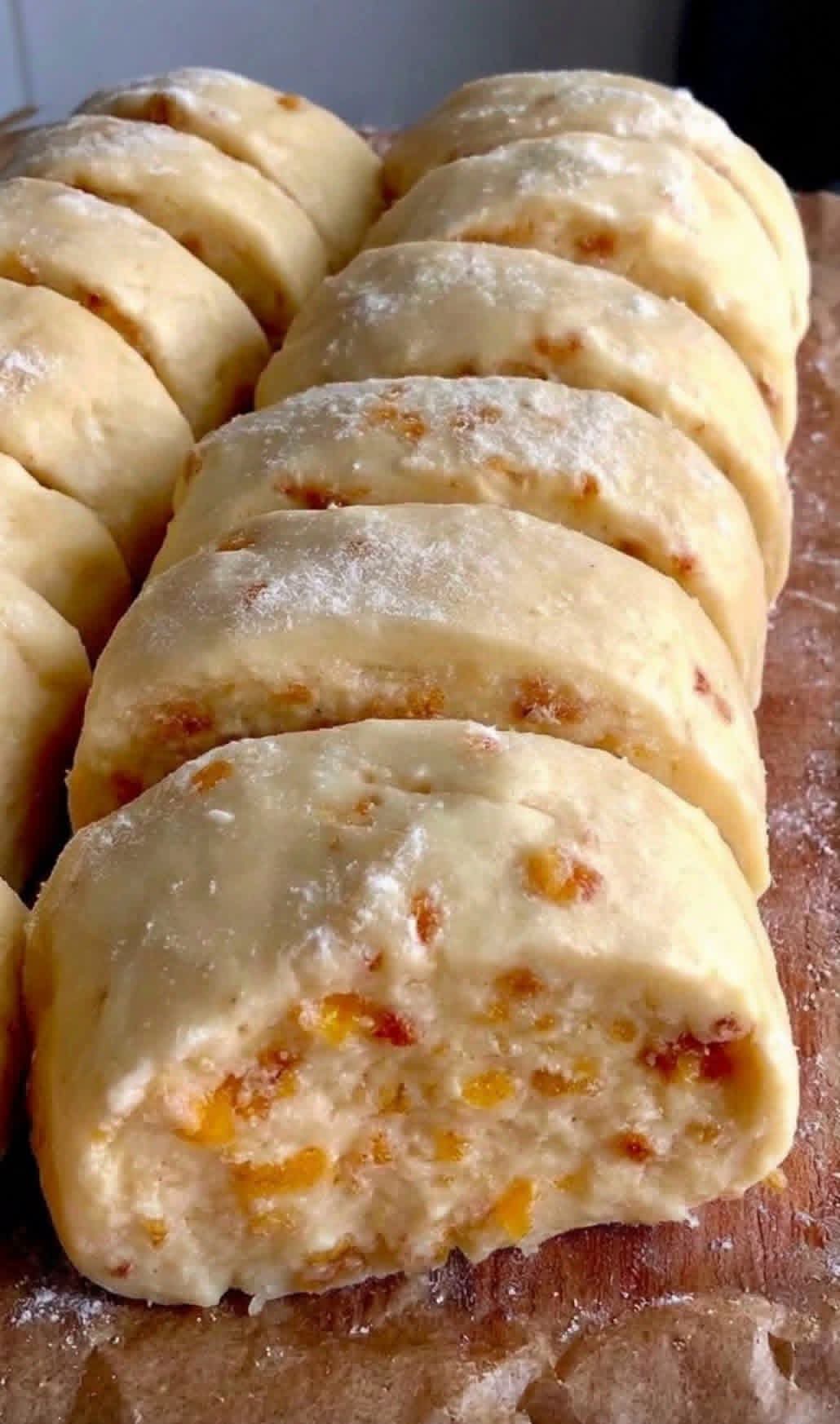
Butterscotch Shortbread Cookies combine the delicate, buttery crumb of classic shortbread with finely chopped butterscotch chips and crunchy toffee bits. The dough requires only a few minutes of mixing before it is shaped into a log, chilled, sliced, and baked. Each cookie has a crisp edge, a pale, tender center, and rich caramelized flavor throughout. Because the dough can be refrigerated or frozen in advance, these slice-and-bake cookies are especially practical for Christmas cookie exchanges, holiday dessert trays, afternoon coffee breaks, and homemade food gifts.
Why You’ll Love This Recipe
These Butterscotch Shortbread Cookies deliver impressive results without complicated decorating or special baking techniques.
- Tender shortbread texture: Cornstarch and powdered sugar help create a fine, delicate crumb that melts in your mouth.
- Rich butterscotch flavor: Chopped butterscotch chips distribute sweet caramel notes throughout every cookie.
- Crunchy toffee pieces: Toffee bits provide a pleasant contrast to the tender shortbread.
- Convenient icebox dough: Prepare the dough ahead, refrigerate it, and slice the cookies when you are ready to bake.
- No eggs required: The simple dough relies on butter for richness and structure.
- Uniform appearance: Shaping the dough into a log produces neat, round cookies that look excellent on holiday platters.
- Freezer-friendly: The unbaked dough log can be frozen for up to three months.
How Cornstarch Creates Tender Shortbread
Shortbread should be tender and slightly crumbly rather than chewy. That texture depends on limiting gluten development.
All-purpose flour contains proteins that form gluten when they are mixed with moisture. Cornstarch does not contain those gluten-forming proteins, so incorporating it effectively dilutes the flour’s protein content. Mixing the dough only until it comes together further prevents excessive gluten formation.
Powdered sugar also contributes to the delicate texture. Its fine consistency blends smoothly into softened butter, avoiding the noticeable sugar crystals that granulated sugar can leave behind. Most powdered sugar also contains a small amount of starch, which reinforces the soft, sandy texture.
The result is a cookie that holds together when cooled but breaks apart easily with each bite.
Key Ingredient Notes
All-Purpose Flour
Measure the flour carefully because too much can make the cookies dry and difficult to shape. For the most accurate result, weigh it if possible. If using measuring cups, spoon the flour into the cup and level it without packing.
Cornstarch
Cornstarch is essential to the signature melt-in-your-mouth crumb. It softens the texture without requiring specialty flour and is readily available in the baking aisle of American grocery stores.
Do not replace the entire amount with additional all-purpose flour. The cookies would still bake, but they would have a firmer, less delicate consistency.
Butter
Use one cup of softened butter, preferably unsalted so you can control the amount of salt in the dough. The butter should feel pliable when pressed but should not appear shiny, greasy, or partially melted.
Butter that is too cold will not blend smoothly with the sugar. Butter that is overly warm can produce a greasy dough and cause the cookies to spread.
Powdered Sugar
Powdered sugar dissolves easily into the butter and keeps the texture finer than granulated sugar would. Sift it first if it contains hard lumps.
Vanilla Extract
One teaspoon of vanilla rounds out the butter and butterscotch flavors. Mix it into the creamed butter before adding the dry ingredients so it disperses evenly.
Butterscotch Chips
Finely chop the butterscotch chips before folding them into the dough. Whole chips can catch on the knife and tear the chilled log as you slice it. Smaller pieces also spread the butterscotch flavor more evenly through each cookie.
Toffee Bits
Toffee bits add caramel flavor and small pockets of crunch. Use plain toffee bits rather than chocolate-coated pieces if you want the finished cookies to match the appearance and flavor of this recipe.
Recommended Kitchen Equipment
No specialty equipment is required, but a few basic tools make preparation easier:
- Electric hand mixer or stand mixer: Creams the butter and powdered sugar evenly without overworking the dough.
- Medium and large mixing bowls: Keep the dry and wet ingredients separate until you are ready to combine them.
- Rubber spatula: Folds in the chopped chips and toffee bits without excessive mixing.
- Plastic wrap: Helps compress and shape the dough into a firm, even log.
- Sharp chef’s knife: Produces cleaner slices through the chilled dough.
- Light-colored baking sheet: Encourages even baking without making the cookie bottoms too dark.
- Parchment paper: Prevents sticking and makes fragile cookies easier to handle.
- Wire cooling rack: Allows air to circulate so the cookies cool without developing damp bottoms.
How to Make Butterscotch Shortbread Cookies
Prepare the Dry Ingredients
Whisk together 1¾ cups all-purpose flour, ½ cup cornstarch, and ¼ teaspoon salt in a medium bowl. Whisking distributes the cornstarch thoroughly and breaks apart small lumps before the dry ingredients reach the butter mixture.
Set the bowl aside while you prepare the creamed base.
Cream the Butter and Sugar
Place one cup of softened butter and ½ cup powdered sugar in a large mixing bowl. Beat until the mixture is smooth, creamy, and evenly combined.
Shortbread does not need the same lengthy creaming process used for light, cakey cookies. Excessive whipping can incorporate too much air and encourage the cookies to spread or lose their clean shape.
Mix in one teaspoon vanilla extract.
Make the Dough
Gradually add the flour mixture to the creamed butter, mixing on low speed or stirring by hand. Stop as soon as no large streaks of dry flour remain and the dough begins holding together.
The mixture may initially look crumbly. Gently press some between your fingers before adding anything else. If it holds together, the dough has enough moisture and simply needs to be compacted.
Fold in ⅔ cup finely chopped butterscotch chips and ½ cup toffee bits. Check that the pieces are evenly distributed without continuing to mix longer than necessary.
Shape and Chill the Dough
Transfer the dough to a large sheet of plastic wrap. Use the wrap to press it firmly into a compact log measuring approximately 2½ to 3 inches in diameter.
Roll the wrapped log gently against the counter to smooth the sides. Press the ends flat so the first and final slices have a uniform shape.
Refrigerate the dough for one to two hours, or until it feels completely firm. A well-chilled log is easier to slice and less likely to spread in the oven.
Slice and Bake
Preheat the oven to 350°F (175°C). Line a baking sheet with parchment paper.
Unwrap the cold dough and cut it into slices approximately ¼ inch thick. Rotate the log one-quarter turn after each cut. This prevents repeated downward pressure from flattening one side of the log.
Arrange the cookies about two inches apart. They should not spread dramatically, but the space allows hot air to circulate evenly.
Bake for 10 to 12 minutes. The cookies are ready when their edges are just beginning to turn light golden while the centers remain pale and appear set. Avoid waiting for the entire surface to brown; that would produce dry, overly crisp shortbread.
Leave the cookies undisturbed on the baking sheet for two minutes. They will be fragile while hot but will become firmer as they cool. Carefully move them to a wire rack and let them cool completely.
Professional Tips for the Best Results
Measure the Flour Without Packing It
Scooping flour directly from its container can compress it and add more than the recipe requires. Spoon it lightly into the measuring cup and level the top, or use a kitchen scale. One and three-quarter cups of all-purpose flour weighs approximately 210 grams.
Chop the Butterscotch Chips Finely
Aim for pieces no larger than small toffee bits. Large chips create weak spots in the dough and can drag through the cookies while slicing.
Keep the Dough Cold
If the log softens while you are cutting it, place the slices and remaining dough in the refrigerator for 10 to 15 minutes before baking. Cold butter helps the rounds maintain their shape.
Use a Gentle Mixing Method
Once the flour enters the bowl, mix only until the dough forms. Overmixing can make shortbread firmer and less tender.
Bake One Sheet at a Time
For the most consistent color, place one baking sheet on the center rack. If baking two sheets simultaneously, rotate them and switch their positions halfway through the baking time.
Watch the Edges, Not the Tops
Butterscotch Shortbread Cookies should remain fairly pale. Look for a faint golden color around the bottom edges rather than deep browning across the tops.
Common Mistakes and How to Avoid Them
The Cookies Spread Too Much
The butter was probably too warm, or the dough did not chill long enough. Return the sliced cookies to the refrigerator until firm before baking. Also make sure the baking sheet has cooled completely before placing another batch on it.
The Dough Crumbles During Slicing
The butterscotch chips may be too large, the dough may be extremely cold, or the log may not have been compressed firmly enough. Allow a frozen or very cold log to sit at room temperature for five minutes, then slice it with a sharp knife using steady pressure.
Minor cracks can be pressed back together before baking.
The Cookies Are Dry
Too much flour, overmixing, or overbaking can all produce dry shortbread. Measure carefully and remove the cookies once their edges are lightly golden.
The Bottoms Brown Too Quickly
Dark-colored pans absorb more heat and may brown the cookies before their centers finish baking. Use a light-colored baking sheet lined with parchment, and keep the pan on the center oven rack.
The Log Has a Flat Side
Rotate the log while shaping it and after every slice. You can also roll the wrapped log inside a split cardboard paper-towel tube while it chills to help preserve its round form.
Recipe Variations and Substitutions
Keep the original ingredient quantities unchanged when adding optional finishes.
Chocolate-Dipped Butterscotch Shortbread
As an optional variation, dip half of each completely cooled cookie into melted dark or semisweet chocolate. Place the dipped cookies on parchment until the chocolate sets. The darker chocolate helps balance the sweetness of the butterscotch and toffee.
Pecan-Crusted Edges
Finely chopped pecans may be pressed around the outside of the shaped dough log before chilling. This optional addition gives the cookies a nutty, textured border.
Holiday Sprinkle Edges
Roll the finished dough log in nonpareils or coarse decorating sugar before wrapping it. Choose colors appropriate for Christmas, Thanksgiving, birthdays, or another celebration.
Salted Butterscotch Cookies
For a sweet-and-salty finish, add an optional light sprinkle of flaky salt immediately after baking. Use it sparingly because the dough already contains salt and the toffee bits may also be salted.
Budget-Friendly Option
Store-brand butter, flour, powdered sugar, and baking chips work well in this recipe. Prices vary, but one batch generally costs approximately $6 to $9, or about $0.20 to $0.30 per cookie, based on a yield of 32 cookies. This is an estimate and will vary by location and ingredient brand.
What to Serve With Butterscotch Shortbread Cookies
The rich butter and caramel flavors pair particularly well with drinks that are not overly sweet. Serve the cookies with:
- Dark-roast coffee or espresso
- Earl Grey or English breakfast tea
- Unsweetened iced coffee
- Cold milk
- Hot chocolate for a sweeter dessert pairing
For a holiday cookie tray, combine them with chocolate cookies, gingerbread, jam-filled cookies, and a lighter citrus-flavored treat. Their tidy round shape also makes them easy to stack in food-safe gift bags or cookie tins.
Crumbled leftover cookies can be sprinkled over vanilla ice cream, layered into pudding cups, or used as a topping for baked fruit.
Make-Ahead Instructions
The dough can be prepared and shaped up to three days before baking. Wrap the log tightly in plastic wrap and refrigerate it. If the dough picks up refrigerator odors easily, place the wrapped log inside an airtight container.
For longer storage, wrap the dough log in two layers of plastic wrap and place it in a freezer-safe bag. Freeze for up to three months.
Frozen dough can be sliced and baked without fully thawing. Let the log stand at room temperature for about five minutes if it is too hard to cut safely. Add one to two minutes to the baking time and use the same visual doneness cues.
Individual unbaked slices can also be frozen in a single layer and then transferred to a freezer container. This method makes it easy to bake a small number of fresh cookies at a time.
Storage and Freezing
Allow the cookies to cool completely before storing them. Place them in an airtight container with parchment between layers to protect their edges.
Store at room temperature for up to one week. Keep the container in a cool, dry area away from sunlight and heat.
Baked Butterscotch Shortbread Cookies can be frozen for up to two months. Arrange them in a rigid freezer-safe container so they do not break. Thaw them inside the closed container at room temperature; this prevents condensation from settling directly on the cookies.
Reheating is not necessary. If you prefer them slightly warm, place a cookie in a 275°F (135°C) oven for three to four minutes. Let it rest briefly before eating because the butterscotch pieces may become hot.
Frequently Asked Questions
Why did my shortbread cookies spread?
The butter was likely too warm or the dough was not chilled until completely firm. Refrigerate sliced cookies for 10 to 15 minutes before baking if they begin to soften.
Can I use granulated sugar instead of powdered sugar?
It is not recommended for this recipe. Granulated sugar produces a coarser, crisper texture, while powdered sugar helps create the intended fine and tender shortbread crumb.
Why is my shortbread dough so crumbly?
Shortbread dough naturally looks crumbly before it is compressed. Press a small amount between your fingers; if it holds, continue shaping the log. Also confirm that the flour was not packed into the measuring cup.
Can I leave the butterscotch chips whole?
Finely chopping them is strongly recommended. Whole chips can catch on the knife, creating cracked or uneven slices, and they will not distribute as evenly through the cookies.
Can I refrigerate the dough overnight?
Yes. The wrapped dough log can be refrigerated for up to three days. If it becomes too hard to slice, leave it at room temperature for approximately five minutes.
How do I know when shortbread is finished baking?
The centers should look pale and set, with only a faint golden color around the edges. The cookies will remain delicate while hot and firm as they cool.
Can I freeze these cookies?
Yes. Freeze the raw dough log for up to three months or freeze completely cooled baked cookies for up to two months.
Printable Recipe Card
Butterscotch Shortbread Cookies
Tender slice-and-bake shortbread cookies filled with finely chopped butterscotch chips and crunchy toffee bits. The convenient icebox dough is ideal for holiday baking, cookie exchanges, and make-ahead desserts.
Prep time: 20 minutes
Chilling time: 1–2 hours
Cook time: 10–12 minutes per batch
Total time: Approximately 1 hour 42 minutes
Yield: Approximately 32 cookies
Ingredients
- 1¾ cups (approximately 210 grams) all-purpose flour
- ½ cup cornstarch
- ¼ teaspoon salt
- 1 cup (2 sticks) butter, softened
- ½ cup powdered sugar
- 1 teaspoon vanilla extract
- ⅔ cup butterscotch chips, finely chopped
- ½ cup toffee bits
Instructions
- Whisk the all-purpose flour, cornstarch, and salt in a medium bowl until evenly combined. Set aside.
- In a large bowl, beat the softened butter and powdered sugar until smooth and creamy.
- Mix in the vanilla extract.
- Gradually add the flour mixture to the butter mixture. Mix only until a soft dough forms and no large streaks of flour remain.
- Fold in the finely chopped butterscotch chips and toffee bits until evenly distributed.
- Transfer the dough to a sheet of plastic wrap. Press and roll it into a compact log approximately 2½ to 3 inches in diameter.
- Wrap the log tightly and refrigerate for one to two hours, or until completely firm.
- Preheat the oven to 350°F (175°C). Line a light-colored baking sheet with parchment paper.
- Remove the plastic wrap and cut the chilled dough into ¼-inch slices. Rotate the log one-quarter turn after each cut to help maintain its round shape.
- Arrange the slices approximately two inches apart on the prepared baking sheet.
- Bake for 10 to 12 minutes, or until the edges are lightly golden and the pale centers look set.
- Let the cookies rest on the hot baking sheet for two minutes.
- Carefully transfer them to a wire rack and cool completely before serving or storing.
Notes
- Butter should be softened but not melted or greasy.
- Finely chopping the butterscotch chips prevents them from tearing the dough during slicing.
- If the sliced cookies soften before baking, refrigerate them for 10 to 15 minutes.
- The yield may vary depending on the diameter and exact length of the dough log.
- Optional finishes include melted chocolate, chopped pecans, decorating sugar, or a light sprinkle of flaky salt.
Storage Instructions
Store completely cooled cookies in an airtight container at room temperature for up to one week. Freeze baked cookies for up to two months or the tightly wrapped raw dough log for up to three months.
Estimated Nutrition
Approximately per cookie, based on a yield of 32 cookies:
- Calories: 145
- Total fat: 8 grams
- Saturated fat: 5 grams
- Carbohydrates: 18 grams
- Sugar: 8 grams
- Protein: 1 gram
- Sodium: 65 milligrams