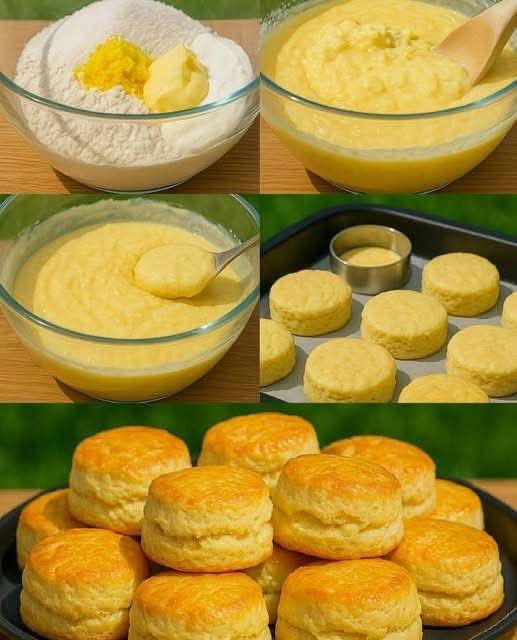
Classic Buttery Biscuits are tender, flaky homemade biscuits made with cold butter, buttermilk, and a simple folding technique that creates distinct, airy layers. Their golden tops and crisp edges give way to a soft, buttery center that is perfect for breakfast, brunch, or dinner.
The recipe uses familiar pantry ingredients and takes about 30 minutes from start to finish, making it practical enough for a weekend breakfast yet special enough for holiday meals. Serve the biscuits with butter and jam, alongside soup, or split them open for breakfast sandwiches and sausage gravy.
Why You’ll Love This Recipe
Rich buttery flavor: A full stick of butter gives every biscuit a satisfying flavor without requiring shortening.
Tender, flaky layers: Folding the dough creates visible layers that separate as the biscuits bake.
Simple ingredients: Everything can be found in an ordinary American grocery store.
Quick preparation: The biscuits are ready in approximately 30 minutes.
Versatile serving options: Enjoy them with sweet spreads, savory gravy, soups, stews, or breakfast fillings.
Freezer-friendly: Cut biscuits can be frozen before baking, allowing you to bake only what you need.
Beginner-friendly method: No mixer or specialized baking equipment is required.
Key Ingredient Notes
All-Purpose Flour
Regular all-purpose flour provides enough structure to support the biscuits while keeping the centers tender. Measure it carefully because too much flour can produce dry, heavy biscuits.
For the most accurate result, weigh 2 cups of flour as 240 grams. If using measuring cups, spoon the flour into the cup and level it with a straight edge. Avoid scooping directly from the bag, which can compact the flour.
Baking Powder
One tablespoon of baking powder provides the lift needed for tall, light biscuits. Check the expiration date before beginning because old baking powder may cause the biscuits to spread or remain dense.
This recipe is formulated for standard double-acting baking powder. Baking soda is not a direct substitute.
Unsalted Butter
Butter contributes flavor, tenderness, and flaky layers. It must remain very cold until the biscuits enter the oven. As the butter melts, its moisture creates steam that separates the layers of dough.
Cut the butter into 1/2-inch cubes and refrigerate it until needed. Unsalted butter offers better control over the final salt level, but salted butter may be used in a variation with an adjusted amount of added salt.
Buttermilk
Cold buttermilk moistens the flour and gives the biscuits a subtle tang. Its acidity also supports tenderness and complements the rich butter.
If buttermilk is unavailable, place 1 tablespoon of lemon juice or white vinegar in a measuring cup. Add enough regular milk to reach 3/4 cup, stir, and let it stand for 5 minutes. This substitute works well, although genuine cultured buttermilk usually creates a slightly richer texture.
Sugar
The teaspoon of granulated sugar is optional. It does not make the biscuits noticeably sweet; it simply rounds out the flavor and encourages browning. Leave it out when serving the biscuits with strongly savory dishes if preferred.
Egg Wash
An egg wash made with one large egg and 1 tablespoon of water gives the tops a glossy, deeply golden finish. It is optional and does not affect the biscuit dough itself. For a softer, less glossy top, brush the biscuits with a little buttermilk instead as an optional variation.
Recommended Kitchen Equipment
A large mixing bowl provides enough space to cut the butter into the flour without spilling the dry ingredients.
A pastry blender makes it easy to break cold butter into small pieces while limiting contact with warm hands. Two table knives or clean fingertips also work.
Use a fork or flexible rubber spatula to mix in the buttermilk gently. A heavy wooden spoon may encourage overmixing.
A 2-inch or 2 1/2-inch round biscuit cutter produces evenly sized biscuits. A thin-edged drinking glass can work, but its thicker rim may compress the edges and reduce the rise.
A light-colored sheet pan lined with parchment paper encourages even browning and makes cleanup easier. Dark pans may brown the bottoms more quickly, so begin checking the biscuits a few minutes early if using one.
How to Make Classic Buttery Biscuits
1. Prepare the Oven and Pan
Preheat the oven to 425°F (220°C). Position a rack in the center and line a large sheet pan with parchment paper or a silicone baking mat.
The oven should be fully heated before the biscuits go in. Strong initial heat causes the butter’s moisture to create steam quickly, helping the biscuits rise before the butter can leak out.
2. Combine the Dry Ingredients
In a large bowl, whisk together:
2 cups all-purpose flour
1 tablespoon baking powder
1 teaspoon granulated sugar, if using
1/2 teaspoon salt
Whisk for approximately 30 seconds so the baking powder is distributed evenly. Unevenly mixed leavening can create biscuits that rise inconsistently or contain unpleasant pockets of baking powder.
3. Cut in the Cold Butter
Add 8 tablespoons of very cold, cubed butter. Use a pastry blender, two knives, or your fingertips to work the butter into the flour.
Stop when the mixture resembles coarse crumbs with some pea-sized pieces of butter remaining. Those visible pieces are important because they create steam pockets during baking.
If the butter begins to feel soft or greasy, refrigerate the bowl for 10 minutes before continuing.
4. Add the Buttermilk
Make a well in the center of the flour mixture and pour in 3/4 cup cold buttermilk. Stir gently with a fork or rubber spatula just until a shaggy dough forms.
The mixture may look slightly dry in a few places. Do not keep stirring until it becomes completely smooth. Overmixing develops gluten and can turn tender biscuits into firm, chewy ones.
5. Fold the Dough to Create Layers
Turn the dough onto a lightly floured work surface. Gently press the loose pieces together without kneading vigorously.
Pat the dough into a rectangle about 1 inch thick. Fold one-third of the rectangle toward the center, then fold the opposite third over it as if folding a letter.
Rotate the dough 90 degrees, gently pat it back into a rectangle, and repeat the fold two or three more times. Use only enough flour to prevent sticking. Too much bench flour can dry out the dough.
6. Cut the Biscuits
Pat the folded dough to a final thickness of 3/4 to 1 inch. Press a 2-inch or 2 1/2-inch cutter straight down through the dough, then lift it straight up.
Do not twist the cutter. Twisting can press the layers together along the edges and interfere with an even rise.
Place the biscuits on the prepared pan. Leave approximately 1 inch between them for firmer, crispier sides. Arrange them nearly touching if you prefer taller biscuits with soft sides.
Gently press the scraps together and cut the remaining dough. Biscuits made from scraps may not rise as evenly because that dough has been handled more.
7. Apply the Optional Egg Wash
Whisk one large egg with 1 tablespoon of water. Lightly brush the mixture over the tops, taking care not to let it run down the cut sides. Egg wash on the edges can seal the layers and restrict their rise.
8. Bake Until Golden
Bake for 12–15 minutes, or until the biscuits have risen and the tops are golden brown. The centers should look set rather than wet or doughy.
For an additional doneness check, the center of a biscuit should register approximately 200–205°F (93–96°C) on an instant-read thermometer. This is well above the USDA’s 160°F (71°C) minimum guideline for dishes containing egg when the optional egg wash is used.
Allow the biscuits to cool on the pan for about 5 minutes, then serve them warm.
Professional Tips for the Best Results
Keep Everything Cold
Cold butter is the foundation of flaky biscuits. If the butter melts before baking, it blends into the flour instead of creating steam pockets.
On a warm day, chill the flour and mixing bowl for 10–15 minutes. You can also place the cut biscuits in the refrigerator while the oven finishes preheating.
Measure the Flour Correctly
Excess flour is one of the most common causes of dry biscuits. A kitchen scale offers the most dependable measurement. If one is unavailable, use the spoon-and-level method rather than packing flour into the measuring cup.
Mix Only Until the Dough Comes Together
A rough, shaggy dough is desirable. It will become more cohesive as it is folded. Continuing to stir until the dough is smooth can develop too much gluten.
Use Sharp, Straight Cuts
A sharp metal cutter slices cleanly through the layers. Press straight down without twisting and flour the edge lightly if it begins to stick.
Bake Immediately
Once the liquid meets the baking powder, the leavening process begins. For the best rise, shape and bake the biscuits without leaving the dough at room temperature for an extended period.
Common Mistakes and How to Avoid Them
The Biscuits Are Flat
Flat biscuits can result from warm butter, expired baking powder, thinly patted dough, or twisting the cutter. Keep the dough cold, use active baking powder, maintain a thickness of at least 3/4 inch, and cut straight down.
The Texture Is Tough
Overmixing or kneading develops gluten and produces a bread-like texture. Stir only until the ingredients are moistened and use gentle pressure during folding.
Butter Leaks Onto the Pan
A small amount of butter around the biscuits is not unusual, but a large puddle indicates that the butter became too warm or the oven was not fully preheated. Chill the shaped biscuits and confirm the oven has reached 425°F (220°C).
The Centers Remain Doughy
Very thick biscuits or an oven running cooler than its setting may require additional time. Bake for another 2–3 minutes and check again. If the tops are already brown, cover them loosely with foil while the centers finish baking.
The Bottoms Brown Too Quickly
Dark baking sheets absorb more heat. Use a light-colored pan, place parchment beneath the biscuits, or move the pan one rack higher if the bottoms consistently become too dark.
Recipe Variations and Substitutions
Cheddar and Chive Biscuits
For a savory variation, add 1/2 cup shredded sharp cheddar and 1 tablespoon finely chopped fresh chives to the flour mixture before adding the buttermilk. The cheese and herbs are optional additions.
Herb Biscuits
Add 1 tablespoon of chopped rosemary, thyme, or dill. Dried herbs are more concentrated, so use approximately 1 teaspoon instead.
Lightly Sweet Biscuits
Increase the granulated sugar to 2 tablespoons and optionally add 1/2 teaspoon ground cinnamon. Serve the finished biscuits with fruit preserves, honey, or whipped butter.
Using Salted Butter
Salted butter can replace unsalted butter. Reduce the added salt to 1/4 teaspoon so the biscuits do not become overly salty.
Budget-Friendly Milk Substitute
The lemon juice-and-milk substitute is convenient when buying a full container of buttermilk is impractical. Use dairy milk for the closest texture. An unsweetened, unflavored non-dairy milk may also work, although the flavor and tenderness can vary.
What to Serve With Classic Buttery Biscuits
For breakfast or brunch, serve warm biscuits with:
Butter, honey, or fruit preserves
Scrambled or fried eggs
Bacon or breakfast sausage
Sausage gravy
Fresh berries or sliced fruit
A breakfast sandwich filling of egg and cheese
For lunch or dinner, pair them with chicken soup, beef stew, pot roast, chili, or roasted chicken. They also make a practical bread option for Thanksgiving, Christmas, Easter, and Sunday dinners.
Leftover biscuits can be split and toasted, used as the base for miniature sandwiches, or topped with leftover chicken and gravy for a quick meal.
Make-Ahead Instructions
Prepare and cut the biscuits as directed, then arrange them on a parchment-lined pan. Cover loosely and refrigerate for up to 24 hours. Bake directly from the refrigerator, adding 1–2 minutes if necessary.
For longer storage, freeze the unbaked biscuits in a single layer until firm. Transfer them to a freezer-safe container or bag and freeze for up to 2 months. Bake them directly from frozen at 425°F (220°C), allowing approximately 18–23 minutes. Watch for golden tops and fully set centers rather than relying only on time.
Do not apply the egg wash until immediately before baking.
Storage and Reheating
Let baked biscuits cool completely before storing them. Keep them in an airtight container at room temperature for up to 3 days. Refrigeration can extend storage to approximately one week, but it may dry the biscuits more quickly.
For freezing, place cooled biscuits in a freezer-safe container with parchment between layers. Freeze for up to 3 months and thaw at room temperature or reheat directly from frozen.
To reheat thawed biscuits, place them in a 325°F (165°C) oven for 5–10 minutes. Frozen biscuits generally need 15–20 minutes. Loosely wrapping them in foil helps preserve moisture.
For a quick option, microwave one biscuit for 15–20 seconds. Serve it immediately because microwaved biscuits may become firm as they cool.
Estimated Cost Per Serving
Depending on local grocery prices and whether the optional egg wash is used, one batch costs approximately $3.00–$4.50, or about $0.38–$0.56 per biscuit when the recipe makes eight. This is an estimate; butter and buttermilk prices vary by region and brand.
Frequently Asked Questions
Why are my homemade biscuits tough?
The dough was probably mixed or handled too much. Stir only until a shaggy dough forms, then use gentle folding rather than traditional kneading.
Can I use regular milk instead of buttermilk?
Yes. Put 1 tablespoon of lemon juice or white vinegar in a measuring cup, then add milk until the total reaches 3/4 cup. Let it stand for 5 minutes before using.
How do I get tall, flaky biscuit layers?
Keep the butter and buttermilk cold, fold the dough two or three times, pat it at least 3/4 inch thick, and cut straight down without twisting.
Can Classic Buttery Biscuits be made without an egg?
Yes. The egg is used only for the optional wash and is not part of the dough. Omit it for a matte, lightly golden surface.
Can I freeze unbaked biscuit dough?
Yes. Freeze the cut biscuits on a pan, then transfer them to a freezer-safe container. Bake from frozen at 425°F (220°C), adding approximately 5–8 minutes.
Why didn’t my biscuits rise?
Common causes include expired baking powder, warm butter, overworked dough, or a cutter that was twisted. An oven that was not fully preheated can also reduce the rise.
How many biscuits does this recipe make?
A 2 1/2-inch cutter usually produces about eight biscuits. A 2-inch cutter may produce 10–12, depending on the final dough thickness.
Printable Recipe Card
Classic Buttery Biscuits
Tender homemade biscuits with crisp golden tops, soft centers, and flaky butter-filled layers. Serve them for breakfast, brunch, holiday dinners, or alongside soups and stews.
Prep Time: 15 minutes
Cook Time: 12–15 minutes
Total Time: 27–30 minutes
Servings: 8 biscuits
Ingredients
2 cups (240 grams) all-purpose flour, plus more for dusting
1 tablespoon baking powder
1 teaspoon granulated sugar, optional
1/2 teaspoon salt
8 tablespoons (1 stick or 113 grams) unsalted butter, very cold and cut into 1/2-inch cubes
3/4 cup (180 milliliters) cold buttermilk
1 large egg, optional, for egg wash
1 tablespoon water, optional, for egg wash
Instructions
1. Preheat the oven to 425°F (220°C). Line a large sheet pan with parchment paper or a silicone baking mat.
2. Whisk the flour, baking powder, optional sugar, and salt together in a large bowl.
3. Cut the cold butter into the flour mixture until it resembles coarse crumbs with some pea-sized butter pieces remaining.
4. Make a well in the center and add the cold buttermilk. Stir gently until a shaggy dough forms. Do not overmix.
5. Turn the dough onto a lightly floured surface and gently bring it together.
6. Pat it into a 1-inch-thick rectangle. Fold it into thirds like a letter, rotate it 90 degrees, and repeat the process two or three more times.
7. Pat the dough 3/4 to 1 inch thick. Cut with a 2-inch or 2 1/2-inch biscuit cutter, pressing straight down without twisting.
8. Arrange the biscuits about 1 inch apart on the pan for crisp edges or nearly touching for soft sides.
9. If using the egg wash, whisk the egg with 1 tablespoon of water and lightly brush it over the biscuit tops.
10. Bake for 12–15 minutes, until risen, golden brown, and no longer doughy in the centers.
11. Cool on the pan for 5 minutes and serve warm.
Notes
Keep the butter and buttermilk cold for the flakiest texture.
If the butter softens while working, refrigerate the dough for 10 minutes.
Do not twist the biscuit cutter because this can seal the edges.
To replace buttermilk, combine 1 tablespoon lemon juice or white vinegar with enough milk to make 3/4 cup. Let stand for 5 minutes.
A 2-inch cutter may yield 10–12 smaller biscuits.
Storage Instructions
Store completely cooled biscuits in an airtight container at room temperature for up to 3 days or refrigerate for up to one week. Freeze baked biscuits for up to 3 months. Reheat at 325°F (165°C) for 5–10 minutes when thawed or 15–20 minutes from frozen.
Safe Internal Temperature
The biscuits should reach approximately 200–205°F (93–96°C) in the center for proper texture and doneness. When the optional egg wash is used, this temperature also exceeds the USDA guideline of 160°F (71°C) for dishes containing egg.