Introduction
Oven-Baked Vegetable Fritter Casserole transforms a colorful mixture of zucchini, cabbage, carrots, green onions, and fresh herbs into a tender, sliceable dish with a beautifully browned surface. Instead of forming and frying individual vegetable fritters, everything is mixed in one bowl, spread in a baking dish, and cooked in the oven.
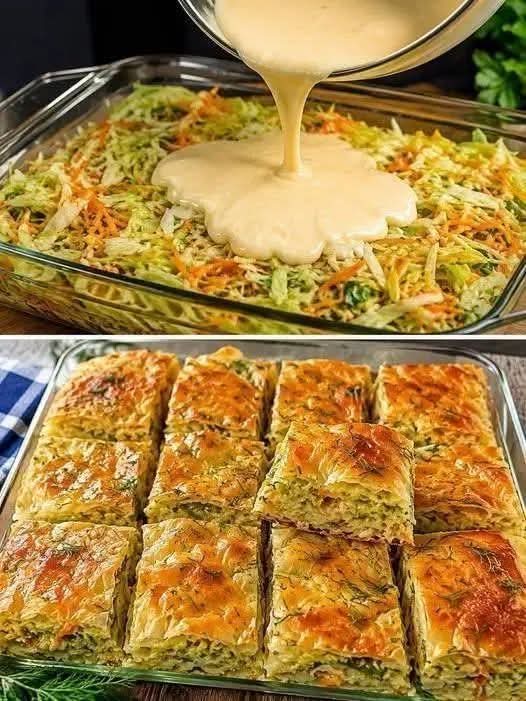
The vegetables provide plenty of texture, while a simple batter made with eggs, milk, oil, flour, and baking powder holds the casserole together. Once baked, it can be cut into neat squares like those shown in the image. The edges become lightly crisp, while the center remains soft, moist, and filled with shredded vegetables.
This recipe works well as a light main course, savory breakfast, brunch dish, appetizer, or vegetable side. It can be served warm from the oven, but it is also enjoyable at room temperature, making it convenient for potlucks and make-ahead meals.
Although preparing the vegetables requires a little chopping and grating, the actual batter comes together quickly. The most important step is removing excess moisture from the zucchini so the finished casserole sets properly instead of becoming watery.
Why This Recipe Works
It uses an easy pour-and-bake method
There is no need to shape or fry individual fritters. The batter is poured over the vegetables, mixed thoroughly, and baked in one dish. This keeps preparation manageable and eliminates the need to stand over a skillet cooking several batches.
The vegetables create a satisfying texture
Thinly sliced cabbage provides structure, while grated zucchini adds tenderness and grated carrots contribute subtle sweetness. Green onions and fresh herbs add freshness without overpowering the other ingredients.
The batter holds everything together
Eggs and flour create the foundation that binds the vegetables. Milk keeps the interior tender, oil adds moisture, and baking powder helps prevent the casserole from becoming excessively dense.
It can be cut into individual portions
Allowing the casserole to rest briefly after baking helps it firm up. Once it has settled, it can be sliced into squares or rectangles for easy serving.
It is flexible
Oven-Baked Vegetable Fritter Casserole can be prepared with or without cheese. The seasonings may also be adjusted, and some of the vegetables can be substituted according to what is available.
Ingredients You’ll Need
2 medium zucchini, grated
2 medium carrots, peeled and grated
½ small head green cabbage, thinly sliced
4 green onions, finely chopped
½ cup chopped fresh parsley or dill
4 large eggs
1 cup whole or 2% milk
½ cup vegetable oil
1½ cups all-purpose flour
1 tablespoon baking powder
1 teaspoon salt
½ teaspoon ground black pepper
½ teaspoon paprika
1 cup shredded mozzarella or cheddar cheese, optional
Vegetable oil or softened butter for greasing the baking dish
Ingredient Notes and Substitutions
Zucchini
Zucchini adds moisture and creates a tender interior. Because it naturally contains a considerable amount of water, it must be squeezed thoroughly after grating. Skipping this step may make the casserole wet and prevent clean slices.
Yellow summer squash can replace zucchini, but it should also be squeezed dry.
Cabbage
Green cabbage gives the casserole structure and creates the shredded appearance visible in the image. Slice it as finely as possible so it softens during baking.
Red cabbage is not the best substitution because it can change the color of the batter. Savoy cabbage may be used for a softer texture.
Carrots
Carrots add color, mild sweetness, and texture. Use the large holes of a box grater so the pieces remain visible after baking.
Green onions and herbs
Green onions add a mild onion flavor. Fresh parsley produces a clean, familiar taste, while dill gives the casserole a more distinctive herb flavor. You may use either one or combine them.
A small amount of finely chopped regular onion can be substituted for the green onions, although its flavor will be stronger.
Eggs
The eggs help bind the flour and vegetables. Four large eggs provide enough structure for the casserole to hold together after cooling slightly.
Milk
Whole milk creates a slightly richer result, but 2% milk also works well. An unsweetened, unflavored nondairy milk may be used if needed, although the final flavor and texture can vary.
Vegetable oil
Neutral vegetable oil keeps the batter moist without introducing a strong flavor. Canola oil or light olive oil can be used in the same quantity.
Flour and baking powder
All-purpose flour forms the body of the batter. Baking powder provides a small amount of lift, keeping the casserole from becoming heavy.
A cup-for-cup gluten-free baking blend may work as a substitution, but the texture may be slightly more delicate depending on the brand.
Cheese
Cheese is optional. Mozzarella provides a mild flavor and soft texture, while cheddar creates a richer taste and more noticeable color. The casserole will still set properly if the cheese is omitted.
How to Make Oven-Baked Vegetable Fritter Casserole
Step 1: Prepare the oven and baking dish
Preheat the oven to 375°F (190°C). Lightly grease a 9-by-13-inch baking dish with vegetable oil or softened butter.
A metal pan generally produces slightly browner edges. A glass or ceramic baking dish works well but may require a few additional minutes in the oven.
Step 2: Prepare the zucchini
Grate the zucchini using the large holes of a box grater. Place it in a clean kitchen towel or several layers of paper towels.
Gather the towel around the zucchini and squeeze firmly over the sink. Continue squeezing until very little liquid comes out. Properly draining the zucchini is essential for a firm, sliceable casserole.
Step 3: Prepare the remaining vegetables
Peel and grate the carrots. Slice the cabbage into very thin, short strips so it cooks evenly. Finely chop the green onions and parsley or dill.
Place the drained zucchini, carrots, cabbage, green onions, and herbs in a large mixing bowl. Toss them together so the different vegetables are evenly distributed.
Step 4: Make the batter
Crack the eggs into a separate medium bowl and whisk until the yolks and whites are fully combined.
Add the milk and vegetable oil, then whisk again. Sprinkle in the salt, black pepper, and paprika.
Add the flour and baking powder gradually while whisking. Continue mixing until no large dry pockets remain. A few small lumps are acceptable, but the batter should be smooth enough to coat the vegetables evenly.
Step 5: Combine the batter and vegetables
Pour the batter over the prepared vegetables. Use a large spoon or spatula to fold everything together, scraping from the bottom of the bowl.
The mixture will contain a large proportion of vegetables compared with the batter. This is expected. Continue mixing until the cabbage, carrots, and zucchini are evenly coated.
If using shredded cheese, fold it into the mixture at this stage.
Step 6: Fill the baking dish
Transfer the mixture to the greased baking dish. Spread it into an even layer, making sure the vegetables reach the corners.
Gently press down any large pieces of cabbage sticking above the surface. This helps prevent them from browning too quickly before the center is finished.
Step 7: Bake
Bake for approximately 35–45 minutes, or until the center is set and the top is golden brown.
The exact baking time will depend on the depth and material of the baking dish. Begin checking at 35 minutes. A knife inserted into the center should come out without wet batter.
Because the casserole contains eggs, the center should reach at least 160°F (71°C) when measured with an instant-read food thermometer.
Step 8: Rest and slice
Remove the casserole from the oven and let it rest in the baking dish for 10–15 minutes. This resting period allows the interior to firm up and makes slicing easier.
Cut it into squares or rectangles and serve warm.
Tips and Tricks for Recipe Success
Remove as much zucchini liquid as possible
This is the most important preparation step. Zucchini that has not been squeezed properly can release water during baking and create a soggy center.
Slice the cabbage finely
Thick pieces of cabbage may remain too firm. A sharp knife or mandoline can help produce thin, even slices. If using a mandoline, always use its safety guard.
Measure the flour correctly
Spoon the flour into the measuring cup and level it with the back of a knife. Scooping flour directly from the container can pack too much into the cup and produce a dry, heavy casserole.
Do not overmix the batter
Mix only until the flour has been incorporated. Excessive mixing can develop too much gluten and make the interior tougher.
Spread the mixture evenly
An uneven layer can cause thin areas to dry out before thicker areas are cooked. Press the mixture gently into the corners and level the top before baking.
Check the center, not only the edges
The edges will set and brown before the middle. Make sure the center no longer looks wet or moves like liquid when the pan is gently shaken.
Let it rest before cutting
The casserole will be softer immediately after it comes out of the oven. Resting it for at least 10 minutes gives the eggs and flour time to settle, producing cleaner portions.
Recipe Variations
Cheesy vegetable casserole
Fold 1 cup of shredded mozzarella or cheddar into the vegetable mixture. A small amount can also be reserved and sprinkled over the top before baking.
Dill and zucchini version
Use fresh dill instead of parsley and slightly increase the amount of zucchini while reducing the cabbage by the same volume. Be sure to drain the additional zucchini thoroughly.
Lightly spicy version
Add crushed red pepper flakes or a small amount of cayenne pepper as an optional seasoning. Start with a small quantity so the heat does not overpower the vegetables.
Additional vegetable version
Finely chopped bell peppers, spinach, or broccoli may be added as optional variations. Keep the total quantity of vegetables close to the original amount to maintain the correct batter-to-vegetable ratio.
Watery vegetables should be drained or cooked briefly before being added. Frozen vegetables should be thawed and patted dry.
Individual portions
Divide the mixture among well-greased muffin cups to make small individual vegetable bites. The baking time will be shorter, so begin checking them after approximately 20 minutes.
How to Serve
Allow the casserole to cool just long enough to hold its shape, then cut it into squares with a sharp knife. Use a thin spatula to lift each portion from the baking dish.
Oven-Baked Vegetable Fritter Casserole can be served warm as a savory breakfast, brunch entrée, light lunch, or vegetable side dish. Smaller squares work well as appetizers or additions to a party platter.
The casserole is also suitable for serving at room temperature. However, because it contains eggs and milk, do not leave it unrefrigerated for more than two hours, or more than one hour when the temperature is above 90°F (32°C).
Serving Suggestions
For breakfast or brunch, serve the casserole with fresh fruit and eggs prepared in your preferred style.
For lunch, pair it with a crisp green salad or tomato and cucumber salad. A light, tangy salad helps balance the tender texture of the baked vegetables.
As a dinner side, serve it alongside roasted chicken, grilled meat, baked fish, or a simple soup. The mild flavor works with many main courses.
Optional sauces that complement the casserole include:
Plain Greek yogurt seasoned with salt and herbs
Sour cream
Tzatziki
A light garlic yogurt sauce
Tomato sauce
These sauces are optional and are not required to prepare the casserole itself.
Make-Ahead Instructions
The vegetables may be washed and chopped up to one day in advance. Store them separately in airtight containers in the refrigerator.
Wait to grate and drain the zucchini until closer to assembly if possible. If it is prepared ahead, store it in a separate container lined with paper towels to absorb additional moisture.
The dry ingredients can also be measured and mixed in advance. Keep the flour, baking powder, and seasonings in a covered container at room temperature.
For the best texture, combine the wet batter with the vegetables shortly before baking. Allowing the assembled raw mixture to sit for several hours can draw additional liquid from the vegetables.
The entire casserole may also be baked in advance, cooled, covered, and refrigerated. Reheat it shortly before serving.
Storage and Reheating Instructions
Refrigerating leftovers
Allow leftovers to cool, then transfer them to an airtight container. Refrigerate for up to 3–4 days.
Avoid storing the casserole at room temperature for extended periods because it contains cooked eggs and dairy.
Freezing
Wrap individual cooled portions in plastic wrap or place parchment paper between the slices. Transfer them to a freezer-safe container and freeze for up to two months.
The vegetables may release a small amount of moisture after thawing, so the texture can be softer than when freshly baked.
Thaw frozen portions overnight in the refrigerator before reheating.
Reheating in the oven
Place the portions in a lightly greased baking dish and cover loosely with foil. Reheat at 350°F (175°C) for approximately 10–15 minutes, removing the foil during the final few minutes if you want to refresh the surface.
Reheating in an air fryer
Reheat individual squares at 350°F (175°C) for about 4–6 minutes. Check frequently to prevent the edges from becoming too dark.
Reheating in the microwave
Place one portion on a microwave-safe plate and heat in short intervals until hot. The microwave is convenient, but it will produce a softer texture than the oven or air fryer.
Reheated leftovers should reach 165°F (74°C) in the center.
Frequently Asked Questions
Is this casserole really ready in 10 minutes?
The batter and vegetables can be assembled quickly once everything has been grated and chopped, but the dish requires approximately 35–45 minutes in the oven. Ten minutes refers more accurately to active mixing and assembly time, not the total preparation and cooking time.
Why did my casserole turn out watery?
The most common cause is excess moisture from the zucchini. Squeeze it very thoroughly before mixing. Thick cabbage pieces or other watery vegetables can also release liquid during baking.
Can I make it without cheese?
Yes. Cheese is optional and is not necessary for the casserole to set. The eggs, flour, and baking powder provide the required structure.
Can I use frozen vegetables?
Frozen vegetables can be used only as optional substitutions. Thaw them completely and remove as much water as possible before adding them. Excess moisture can interfere with the texture.
How do I know when it is fully cooked?
The surface should be golden, the center should appear set, and a knife inserted into the middle should not come out coated with wet batter. For food safety, the center should register at least 160°F (71°C).
Can I prepare the mixture the night before?
It is better to prepare the vegetables and batter separately, then combine them immediately before baking. An assembled raw mixture may become watery overnight.
What size baking dish should I use?
A 9-by-13-inch baking dish produces a casserole that can be cut into medium-size squares. A smaller dish creates thicker portions and may require a longer baking time.
Can I serve it cold?
Yes, the cooked casserole may be served chilled or at room temperature. Keep it refrigerated until shortly before serving and follow standard food-safety time limits.
Final Conclusion
Oven-Baked Vegetable Fritter Casserole is a practical way to turn everyday vegetables into a satisfying, sliceable dish. Zucchini keeps the interior tender, cabbage provides structure, carrots add color, and the simple egg-and-flour batter holds everything together.
The recipe requires no frying and can be served for breakfast, brunch, lunch, or dinner. Careful draining, thinly sliced vegetables, and sufficient resting time are the keys to achieving firm squares with a moist center and golden surface. With optional cheese and several easy variations, this vegetable casserole can be adapted while keeping the straightforward preparation method that makes it so useful.