Introduction
Chicken Fajita Foil Packets turn thinly sliced chicken breasts, colorful bell peppers, onion, lime juice, and pantry spices into a simple meal with minimal cleanup. Everything is seasoned in one bowl, divided among four sheets of foil, sealed, and cooked either in the oven or on the grill.
Inside each sealed packet, moisture released by the chicken and vegetables creates steam. This enclosed cooking environment helps the chicken remain moist while the peppers and onion become tender and absorb the lime-seasoned juices.
This recipe is especially convenient for busy dinners, summer grilling, and camping trips. Serve the cooked mixture with warm tortillas, or open the packets carefully and enjoy the chicken and vegetables directly from the foil.
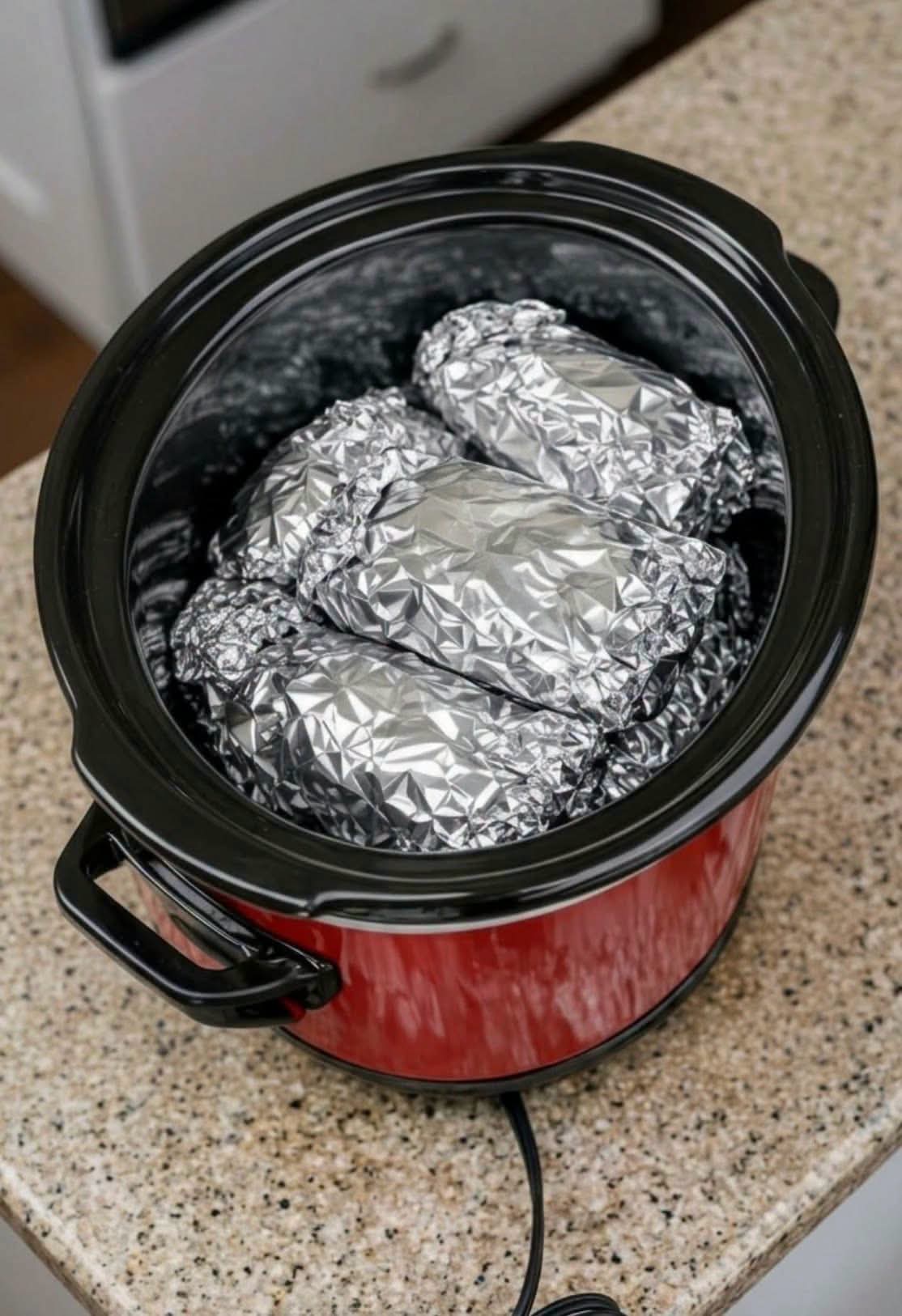
The photograph shows several tightly wrapped foil packets arranged inside a slow cooker. However, the tested instructions provided for this recipe use an oven or grill at 400°F (200°C). Slow-cooker timing is not included because it requires a separate method and cooking time.
Why This Recipe Works
Chicken and vegetables naturally release moisture as they cook. A tightly sealed foil packet traps much of that moisture, creating a steamy environment that cooks the ingredients together and distributes the seasonings throughout the packet.
Thinly slicing the chicken is particularly important. Small, evenly sized strips cook more quickly and are more likely to reach a safe temperature at approximately the same time as the vegetables become tender.
Olive oil helps prevent sticking while coating the chicken, peppers, and onion with the spice mixture. Chili powder, paprika, garlic powder, and cumin provide a warm, savory fajita-style flavor without requiring a packaged seasoning mix.
Fresh lime juice contributes acidity and brightness. It also combines with the olive oil and vegetable juices to create a light sauce inside each packet.
Dividing everything into four individual portions helps the packets cook more evenly. It also makes serving convenient because each packet can be opened and paired with warm tortillas at the table.
Ingredients You’ll Need
2 boneless, skinless chicken breasts, thinly sliced
3 bell peppers—1 red, 1 yellow, and 1 green—sliced
1 medium onion, sliced
2 tablespoons olive oil
1 teaspoon chili powder
1 teaspoon paprika
1 teaspoon garlic powder
1 teaspoon ground cumin
½ teaspoon salt
¼ teaspoon black pepper
Juice of 1 lime
Chopped fresh cilantro, optional
Warm tortillas, for serving
You will also need four large sheets of heavy-duty aluminum foil.
Ingredient Notes and Substitutions
Chicken breasts
Boneless, skinless chicken breasts are lean and cook quickly when cut into thin strips. Try to make the pieces similar in size and thickness. Thick pieces may still be undercooked when thinner pieces are ready.
Boneless, skinless chicken thighs may be used as a substitution. Thighs generally remain moist during enclosed cooking, but they must still reach a safe internal temperature of 165°F (74°C).
Bell peppers
Using red, yellow, and green bell peppers creates a colorful mixture and provides a balance of sweet and slightly grassy flavors. Any combination of bell pepper colors will work if all three are unavailable.
Cut the peppers into strips of similar thickness. Very thin strips may become overly soft before the chicken finishes cooking, while unusually thick strips may remain too firm.
Onion
A medium onion provides sweetness and savory depth as it steams with the chicken. Slice it thinly and separate the layers before mixing so the onion is distributed throughout all four packets.
Yellow, white, or red onion may be used depending on availability. Red onion offers a slightly sharper flavor, while yellow onion becomes sweeter as it cooks.
Olive oil
Olive oil coats the ingredients, helps the dry seasonings adhere, and reduces sticking. Two tablespoons are enough for the entire recipe without making the packets excessively oily.
Fajita-style spices
The seasoning blend consists of chili powder, paprika, garlic powder, cumin, salt, and black pepper. Chili powders vary in heat, so select a mild or hot variety according to your preference.
The recipe calls for standard paprika. Smoked paprika can be used as a substitution if you prefer a smokier flavor, particularly when cooking the packets in the oven.
Lime juice
Fresh lime juice brightens the spice blend and complements the peppers and onion. Squeeze the lime immediately before mixing the ingredients for the freshest flavor.
Cilantro
Fresh cilantro is optional and should be added after cooking. Adding it at the end preserves its color and fresh flavor.
Tortillas
Warm flour or corn tortillas can be served with the finished filling. Check package labels and choose certified gluten-free corn tortillas if preparing the meal for someone who must avoid gluten.
How to Make Chicken Fajita Foil Packets
1. Preheat the oven or grill
Preheat your oven or grill to 400°F (200°C).
If using a grill, set it up for medium-high heat and clean the grates before cooking. Try to maintain a steady temperature so the chicken cooks through without the outside of the packets becoming excessively scorched.
2. Prepare the foil
Tear off four large sheets of heavy-duty aluminum foil. Each sheet should provide enough room for one-quarter of the ingredients plus extra space for folding and sealing.
Place the sheets on a clean work surface. If you only have standard thin foil, use two layers for each packet to reduce the chance of tearing or leaking.
3. Slice the ingredients
Cut the chicken breasts into thin, evenly sized strips. Use a separate cutting board and knife for the raw poultry when possible.
Slice the bell peppers and onion into strips of approximately the same thickness. Separate the onion layers so they mix evenly with the other ingredients.
Wash your hands, cutting board, knife, and any surfaces that touched the raw chicken with hot, soapy water before continuing.
4. Season the mixture
Place the sliced chicken, bell peppers, and onion in a large bowl. Drizzle them with the olive oil and fresh lime juice.
Add the chili powder, paprika, garlic powder, cumin, salt, and black pepper. Toss thoroughly until the chicken and vegetables are evenly coated.
Do not leave the raw chicken mixture at room temperature for an extended period. Assemble and cook the packets promptly, or cover and refrigerate the mixture at 40°F (4°C) or below.
5. Divide the filling
Divide the seasoned mixture evenly among the four sheets of foil. Place each portion near the center of its sheet and arrange it in a relatively even layer.
Avoid making one tall, compact pile. Spreading the ingredients slightly gives the heat more surface area to reach and encourages even cooking.
Make sure every packet contains a similar amount of chicken. This will help all four portions finish at approximately the same time.
6. Seal the packets
Bring the two long edges of each foil sheet together above the filling. Fold them down together twice to create a secure top seam.
Fold and crimp both open ends tightly. The packet should be sealed well enough to retain steam, but leave a small amount of space around the food rather than pressing the foil directly against every ingredient.
Check the foil for tears before cooking. Place a damaged packet inside another sheet of foil and seal it again.
7. Cook in the oven
Arrange the packets in a single layer on a rimmed baking sheet. The baking sheet catches any liquid if a packet develops a small leak and makes it easier to transfer the hot packets safely.
Bake at 400°F (200°C) for 20–25 minutes. Cooking time may vary depending on the thickness of the chicken strips, the amount in each packet, and the accuracy of your oven.
8. Cook on the grill
Place the packets on the preheated grill and close the lid. Grill for approximately 20–25 minutes.
Move the packets if your grill has noticeable hot spots. Use long-handled tongs and avoid puncturing the foil, since holes allow steam and cooking juices to escape.
9. Check the chicken
Carefully remove one packet from the heat and place it on a heat-safe surface. Open it cautiously, keeping your face and hands away from the seam because very hot steam will escape.
Insert an instant-read thermometer into the thickest piece of chicken. The chicken must reach at least 165°F (74°C).
If it has not reached that temperature, reseal the packet and continue cooking. Check it again after several minutes. Do not judge doneness by color alone.
10. Garnish and serve
Allow the packets to rest briefly before opening. Carefully unfold each one away from your body.
Sprinkle the filling with chopped fresh cilantro, if using. Serve immediately with warm tortillas.
Tips and Tricks for Recipe Success
Slice the chicken evenly
Evenly sized chicken strips are essential for consistent results. If some pieces are substantially thicker, they may require more time to reach 165°F (74°C).
Do not overfill the packets
Four moderate packets cook more reliably than two very large ones. Overfilled packets are also harder to seal and more likely to leak.
Use heavy-duty foil
Heavy-duty foil holds its shape better during folding, transferring, and grilling. When using regular foil, double each sheet for additional strength.
Keep the packets in a single layer
Do not stack the packets in the oven or on the grill. A single layer exposes each packet to consistent heat and supports even cooking.
Use a rimmed baking sheet in the oven
Placing foil packets directly on an oven rack can create a mess if one leaks. A rimmed sheet pan makes handling safer and contains the juices.
Be careful when opening
Steam trapped inside the foil is hot enough to cause burns. Let the packets stand briefly, then open the top seam with tongs or oven mitts while keeping your hands and face back.
Adjust the vegetables to your preference
For softer vegetables, slice them slightly thinner. For vegetables with more texture, use moderately thick strips, but avoid cutting them so thick that they remain raw when the chicken is ready.
Recipe Variations
Chicken thigh variation
Replace the chicken breasts with an equal amount of thinly sliced boneless, skinless chicken thighs. Cook until the thickest pieces reach 165°F (74°C).
Shrimp fajita packets
For an optional seafood variation, replace the chicken with peeled and deveined raw shrimp. Shrimp cook much faster than chicken, so this version requires a shorter cooking time. Begin checking for doneness early and cook until the shrimp are opaque and reach 145°F (63°C).
Beef fajita packets
Thinly sliced flank steak or skirt steak can replace the chicken. Slice the beef against the grain for a more tender texture. Cooking time will depend on the thickness of the strips and your preferred doneness.
Vegetarian packets
For an optional meat-free version, omit the chicken and use drained, rinsed black beans, corn, and additional onion or bell pepper. Because these ingredients do not require the same cooking time as raw chicken, begin checking the vegetables before the full 20–25 minutes have passed.
Spicier fajita packets
Use hot chili powder in place of mild chili powder. Sliced jalapeños or crushed red pepper may also be included as optional additions.
These variations use ingredients beyond the original recipe and should be treated as optional adaptations.
How to Serve
Open the Chicken Fajita Foil Packets at the table or transfer the contents to shallow bowls. Make sure each serving includes chicken, all three colors of bell pepper, onion, and some of the seasoned juices from the bottom of the foil.
Serve the filling with warm tortillas so everyone can assemble their own fajitas. Avoid placing too much liquid in each tortilla, as it can cause the tortilla to tear.
The packets may also be eaten without tortillas for a simpler chicken-and-vegetable meal.
Serving Suggestions
Optional toppings and side dishes can make the meal more substantial. Good accompaniments include:
Guacamole or sliced avocado
Sour cream
Salsa or pico de gallo
Shredded cheese
Additional lime wedges
Chopped cilantro
Mexican-style rice
Black beans
Corn salad
Tortilla chips
Place the toppings in separate bowls so each person can customize a serving. When preparing the recipe for guests, keep hot ingredients hot and refrigerate dairy-based toppings until serving time.
Make-Ahead Instructions
The chicken, peppers, and onion can be sliced in advance and kept in separate airtight containers in the refrigerator. Raw chicken should be stored on a low refrigerator shelf where it cannot drip onto other foods.
You can also combine the sliced ingredients with the oil, lime juice, and seasonings and assemble the packets up to 24 hours ahead. Place the packets on a tray or inside a leakproof container and refrigerate them immediately.
If transporting the packets for camping, keep them at 40°F (4°C) or below in a well-insulated cooler with plenty of ice or frozen packs. Do not allow raw chicken packets to remain unrefrigerated.
Cook refrigerated packets within 24 hours and verify that the chicken reaches 165°F (74°C).
Storage and Reheating Instructions
Refrigerating leftovers
Transfer leftover chicken and vegetables out of the foil and into an airtight container. Refrigerate within 2 hours of cooking, or within 1 hour when the outdoor temperature is above 90°F (32°C).
Properly refrigerated leftovers can be stored for 3–4 days. Store the tortillas and optional toppings separately.
Reheating in the oven
Place the chicken and vegetables in an oven-safe dish, cover, and reheat at 350°F (175°C) until the center reaches 165°F (74°C). Covering the dish helps keep the chicken from drying out.
Reheating on the stovetop
Warm the leftovers in a skillet over medium heat. Add the juices from the storage container and stir occasionally until everything is steaming hot and reaches 165°F (74°C).
Reheating in the microwave
Transfer the filling to a microwave-safe dish. Never microwave food while it is wrapped in aluminum foil. Cover loosely and heat in short intervals, stirring between each interval, until thoroughly hot.
Freezing
The cooked chicken filling can be frozen in an airtight, freezer-safe container. However, the bell peppers and onion may have a softer texture after thawing.
For best quality, use frozen leftovers within approximately 2–3 months. Thaw them overnight in the refrigerator before reheating.
Frequently Asked Questions
Can I cook these packets in the slow cooker shown in the photograph?
The provided recipe was developed for an oven or grill at 400°F (200°C). The photograph shows wrapped packets arranged in a slow cooker, but no verified slow-cooker time or setting was provided. Because chicken cooking time and heat circulation differ substantially in a slow cooker, use the oven or grill instructions for reliable results.
Do I need to grease the foil?
The ingredients are already coated with 2 tablespoons of olive oil, so additional grease is generally unnecessary. If sticking is a concern, cooking spray can be applied as an optional precaution.
Can I use chicken thighs instead of chicken breasts?
Yes. Thinly sliced boneless, skinless chicken thighs can replace the breasts. Check the thickest pieces and make sure they reach 165°F (74°C).
Can I prepare the packets the night before?
Yes. Assemble and refrigerate them for up to 24 hours. Keep the packets cold until you are ready to cook them.
Why is there so much liquid in my packet?
The chicken, peppers, and onion all release moisture while cooking. Some liquid is expected and helps distribute the seasonings. Excessive liquid may result from overcrowding a packet or using vegetables with particularly high water content.
Can I place the foil packets directly on the oven rack?
A rimmed baking sheet is safer and easier to handle. It also catches liquid if the foil tears or leaks.
How do I know when the chicken is ready?
Use an instant-read food thermometer. The thickest pieces must reach at least 165°F (74°C). Appearance alone is not a reliable way to confirm that chicken is safely cooked.
Can I cook the packets over a campfire?
They can be placed on a stable cooking grate over hot coals, but direct campfire heat can be difficult to regulate. Turn the packets carefully, avoid open flames, and check the chicken’s internal temperature before serving. Cooking time may differ from the grill instructions.
Is foil packet cooking the same as en papillote?
The methods are related because both enclose food so it cooks in trapped steam. Traditional en papillote cooking typically uses folded parchment paper, while this recipe uses heavy-duty aluminum foil suitable for the oven or grill.
Final Conclusion
Chicken Fajita Foil Packets offer a practical way to prepare seasoned chicken and colorful vegetables with limited cookware. The chicken, peppers, and onion cook together in lime juice, olive oil, and a simple homemade spice blend, creating a complete filling for warm tortillas.
For successful packets, slice the ingredients evenly, divide the mixture into four moderate portions, seal the foil securely, and cook everything in a single layer. Most importantly, verify that the chicken reaches 165°F (74°C) and open each packet cautiously to avoid the escaping steam.
Whether prepared in the oven or on the grill, this recipe makes a convenient family dinner that can be assembled ahead of time and customized with your preferred fajita toppings.