Introduction
Chicken Fried Steak and Gravy is a classic Southern-style comfort-food dinner featuring tenderized beef coated in seasoned flour, fried until crisp and golden, and finished with creamy black pepper gravy.
Despite its name, chicken fried steak does not contain chicken. The name refers to the cooking method: cube steak is breaded and pan-fried using a technique similar to fried chicken. The result is a crunchy exterior surrounding tender beef, with homemade gravy adding a smooth, savory finish.
This recipe uses familiar ingredients and requires no complicated equipment. The most important steps are pressing the coating firmly onto the steaks, maintaining a steady oil temperature, and gradually whisking the milk into the roux. Serve the finished steaks with mashed potatoes, green beans, corn, or biscuits for a complete comfort-food meal.
Why This Recipe Works
Cube steak is especially suitable for this recipe because it has already been mechanically tenderized. Its textured surface also gives the egg and seasoned flour plenty of places to stick, helping create a flavorful crust.
The breading uses a simple combination of all-purpose flour, salt, black pepper, garlic powder, and optional cayenne. Pressing the flour firmly into the meat produces better coverage than lightly dusting it.
A heavy skillet retains heat well and helps the steaks develop an evenly browned coating. Frying in batches prevents overcrowding, which can reduce the oil temperature and make the breading greasy.
The gravy is prepared in the same skillet. Reserved cooking oil and browned bits provide the base, while flour thickens the milk into a creamy pan gravy. Plenty of black pepper gives it the characteristic flavor expected from traditional Chicken Fried Steak and Gravy.
Ingredients You’ll Need
For the chicken fried steak
- 4 to 6 cube steaks, approximately ¼ inch thick
- 2 cups all-purpose flour
- 1 teaspoon salt
- 1 teaspoon black pepper
- ½ teaspoon garlic powder
- Pinch of cayenne pepper, optional but recommended
- 2 large eggs
- ¼ to ½ cup canola, vegetable, or peanut oil
For the peppery white gravy
- 4 tablespoons reserved pan drippings or cooking oil
- 3 to 4 tablespoons seasoned flour, reserved before breading the raw steaks
- 1½ cups whole milk, plus more as needed
- Additional black pepper, to taste
Ingredient Notes and Substitutions
Cube steaks
Cube steaks are generally cut from top round or another relatively lean cut of beef before being mechanically tenderized. The small indentations visible across the meat come from the tenderizing process.
Choose steaks that are approximately ¼ inch thick. If yours are noticeably thicker, place them between sheets of plastic wrap and gently pound them with the flat side of a meat mallet. Keeping the steaks at a consistent thickness helps them cook evenly before the breading becomes too dark.
All-purpose flour
All-purpose flour creates the fried coating and thickens the gravy. Before breading the steaks, transfer 3 to 4 tablespoons of the seasoned flour to a clean bowl for the gravy. This keeps that portion from coming into contact with the raw beef and eggs.
Avoid using self-rising flour as a direct substitute because it contains added leavening and salt, which can change the flavor and texture.
Eggs
Beaten eggs bind the flour to the beef. Beat them until the whites and yolks are completely combined so the steaks receive an even coating.
Seasonings
Black pepper is used in both the breading and gravy. The cayenne is optional and contributes mild background heat rather than making the finished dish intensely spicy.
If you need to reduce the heat, omit the cayenne and adjust the additional black pepper in the gravy according to taste.
Cooking oil
Canola, vegetable, and peanut oil are all appropriate because they have neutral flavors and can tolerate frying temperatures. The exact amount needed depends on the size of your skillet.
The oil should cover the bottom of the skillet generously without completely submerging the steaks.
Whole milk
Whole milk produces a rich and creamy gravy. Reduced-fat milk can be substituted, although the finished gravy may taste slightly lighter. Additional milk can be whisked into the gravy if it becomes thicker than desired.
How to Make Chicken Fried Steak and Gravy
1. Prepare the steaks
Remove the cube steaks from their packaging and pat them dry with paper towels. Moisture left on the surface can make it more difficult for the coating to adhere.
If necessary, pound the steaks to an even thickness of approximately ¼ inch. Set them aside while preparing the breading station.
2. Mix the seasoned flour
In a wide, shallow dish, combine the flour, salt, black pepper, garlic powder, and cayenne pepper.
Before the raw ingredients come into contact with the flour, transfer 3 to 4 tablespoons of the mixture to a separate clean bowl. Reserve it for preparing the gravy.
3. Prepare the egg wash
Crack the eggs into a second shallow bowl. Beat them thoroughly with a fork or whisk until smooth.
Arrange the cube steaks, egg wash, seasoned flour, and a clean tray in an assembly line. This makes the breading process faster and less messy.
4. Bread the cube steaks
Working with one steak at a time, dip the meat into the beaten eggs. Turn it over so both sides are covered, then lift it and allow the excess egg to drip back into the bowl.
Transfer the steak to the seasoned flour. Cover both sides and press the flour firmly into the textured surface. Lift the steak, shake off only the loose excess, and place it on the clean tray.
Repeat with the remaining steaks. Let the breaded steaks rest for about 5 minutes while the oil heats. This short rest helps hydrate the flour and encourages the coating to stay attached during frying.
5. Heat the oil
Add ¼ to ½ cup oil to a large, heavy-bottomed skillet. Cast iron works particularly well because it retains heat, but another sturdy skillet can also be used.
Heat the oil over medium to medium-high heat. For consistent results, aim for approximately 350°F (177°C). Without a thermometer, add a small pinch of clean flour to the oil. It should sizzle immediately without burning.
Do not test hot oil with water, as water can cause dangerous splattering.
6. Fry the steaks
Carefully lower the breaded steaks into the skillet, placing them away from your body to reduce splashing. Leave space between each steak and cook in batches if necessary.
Fry for approximately 4 to 6 minutes per side, adjusting the heat as needed. The coating should become crisp and deeply golden without burning.
The exact cooking time depends on the thickness of the meat and the oil temperature. Cube steak is mechanically tenderized, so cook it to at least 145°F (63°C), followed by a 3-minute rest. Insert an instant-read thermometer through the side of the steak so the tip reaches the center without touching the hot skillet.
Transfer the cooked steaks to a wire rack set over a sheet pan. A wire rack is preferable to paper towels because air can circulate underneath the crust, preventing the bottom from becoming soggy. Cover the steaks loosely with foil while preparing the gravy.
7. Reserve the pan drippings
Allow the oil to cool slightly, then carefully remove the excess, leaving 4 tablespoons of oil in the skillet. Keep the browned crumbs that are not burned because they contribute flavor to the gravy.
If the bottom of the skillet contains heavily blackened flour, remove those pieces before continuing so the gravy does not taste bitter.
8. Make the roux
Return the skillet to medium heat. Sprinkle 3 tablespoons of the clean reserved seasoned flour into the drippings and whisk continuously for approximately 1 to 2 minutes.
The mixture should form a smooth paste and lose its raw flour smell. If it remains very oily, whisk in the fourth tablespoon of reserved flour.
9. Finish the pepper gravy
Slowly pour in the milk while whisking constantly. Adding it gradually helps produce a smooth gravy without lumps.
Bring the mixture to a gentle boil, then reduce the heat and simmer until it thickens. Continue whisking and scraping the bottom of the skillet to incorporate the flavorful browned bits.
Taste the gravy before adding more seasoning because the reserved flour and pan drippings already contain salt. Add extra black pepper as desired. If the gravy becomes too thick, whisk in more milk, one tablespoon at a time, until it reaches a smooth, pourable consistency.
10. Serve immediately
Place the warm steaks on plates and spoon the pepper gravy over the top. For the best contrast between crisp breading and creamy gravy, add the gravy immediately before serving.
Tips and Tricks for Recipe Success
Keep the breading attached
Pat the meat dry before dipping it into the egg. Press the flour into the steak instead of simply rolling it through the mixture, and allow the breaded meat to rest briefly before frying.
Once a steak is in the skillet, avoid moving it repeatedly. Wait until the first side has formed a firm crust before carefully turning it.
Maintain the oil temperature
Oil that is not hot enough can soak into the coating, while excessively hot oil can burn the flour before the beef is cooked.
Allow the oil to return to temperature between batches. If the coating darkens too quickly, lower the heat slightly. If the steaks barely sizzle, increase it gradually.
Do not overcrowd the skillet
Crowding releases too much heat from the oil and can cause the steaks to steam. Frying two steaks at a time may take longer, but it generally produces a crisper and more evenly browned result.
Keep cooked steaks crisp
Place finished steaks on a wire rack rather than stacking them. If several batches are required, keep them warm in a 200°F (93°C) oven while completing the recipe.
Control the gravy’s consistency
Gravy continues to thicken as it cools. Remove it from the heat when it is slightly thinner than your ideal serving consistency. If necessary, whisk in another splash of milk immediately before serving.
Recipe Variations
Extra-crispy coating
For a thicker crust, bread each steak twice: dip it in egg, coat it with flour, return it to the egg, and finish with another layer of flour.
A double coating absorbs more oil and may require additional cooking oil. Monitor the heat carefully because a thicker crust can brown faster.
Mild chicken fried steak
Omit the cayenne pepper and use less additional black pepper in the gravy. Keep the garlic powder, salt, and measured pepper in the flour so the coating remains well seasoned.
Extra-peppery gravy
Add freshly ground black pepper to the finished gravy a little at a time. Freshly ground pepper generally has a stronger aroma than pre-ground pepper, so taste after each addition.
Country-style presentation
Serve the gravy beside the steak instead of covering it completely. This allows each person to add as much as desired and helps preserve the crunchy coating.
How to Serve
Chicken Fried Steak and Gravy should be served hot, preferably as soon as the gravy is ready. Spoon gravy over the center while leaving some of the golden edges exposed for texture.
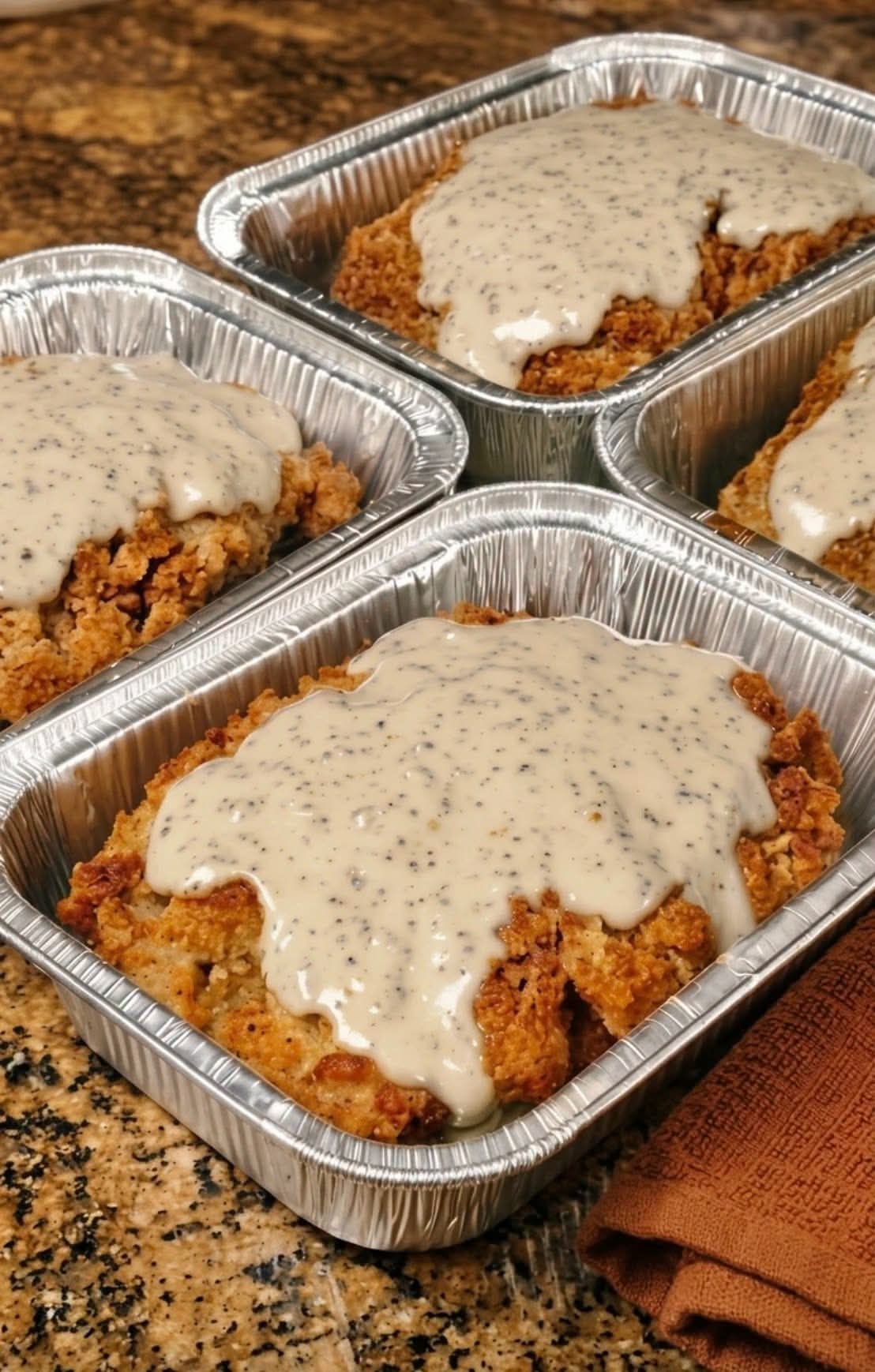
The recipe can also be divided into individual foil pans like the portions shown in the provided image. If preparing takeaway meals, keep the gravy in a separate covered container whenever possible. Adding it too far in advance will soften the fried coating.
One cube steak typically makes a generous serving. Smaller steaks can be served two per person, depending on their size and the number of side dishes included.
Serving Suggestions
Classic mashed potatoes are an excellent companion because they hold the creamy gravy well. Spoon a little additional gravy over the potatoes when plating.
Other suitable side dishes include:
- Southern-style green beans
- Buttered corn
- Roasted carrots
- Coleslaw
- Steamed broccoli
- Buttermilk biscuits
- Dinner rolls
- A simple green salad
For a traditional comfort-food plate, serve one chicken fried steak with mashed potatoes and green beans. Biscuits or rolls can be added when serving a larger family meal.
Make-Ahead Instructions
The steaks can be breaded a few hours before cooking. Arrange them in a single layer on a tray, cover, and refrigerate until ready to fry. Do not stack them because the coating may stick or become uneven.
The seasoned flour can also be mixed in advance and stored in an airtight container. If doing this, reserve the portion for the gravy before beginning the breading process.
For meal preparation, fry the steaks and prepare the gravy separately. Cool both promptly and refrigerate them in different containers. Keeping the gravy off the breading prevents the crust from becoming excessively soft.
Although the components can be prepared ahead, the dish has its best texture when fried and served immediately.
Storage and Reheating Instructions
Refrigerating leftovers
Allow leftovers to cool, but do not leave them at room temperature for more than 2 hours. Refrigerate the steaks and gravy in separate airtight containers for up to 3 days.
Separating the components is important because a steak stored underneath the gravy will lose most of its crisp texture.
Reheating in the oven
Place the steaks on a wire rack set over a baking sheet. Reheat at 375°F (190°C) until hot and crisp, usually 10 to 15 minutes depending on their thickness.
For food safety, reheat leftovers to 165°F (74°C).
Reheating in an air fryer
Arrange the steaks in a single layer and heat at 350°F (177°C) for approximately 4 to 7 minutes. Check them early to prevent the coating from becoming overly dark.
Reheating the gravy
Transfer the gravy to a small saucepan and warm it over medium-low heat, whisking frequently. Add a splash of milk to loosen it as needed.
The microwave can be used for the gravy, but it is not recommended for the steaks because it tends to soften the breading.
Frequently Asked Questions
Is chicken fried steak made with chicken?
No. It is made with beef cube steak. “Chicken fried” describes the breading and pan-frying technique, which resembles the method used to prepare traditional fried chicken.
What is the difference between chicken fried steak and country-fried steak?
The names are sometimes used interchangeably. However, chicken fried steak is commonly served with creamy white pepper gravy, while country-fried steak is often associated with brown gravy.
Why did the breading fall off?
The meat may have been too wet, the flour may not have been pressed firmly enough, or the steak may have been moved before the first side formed a crust. Letting the breaded steaks rest for about 5 minutes can also improve adhesion.
Can I use regular steak instead of cube steak?
Cube steak is recommended because it is thin and mechanically tenderized. Another beef cut can be used only if it is pounded thin and tenderized thoroughly before breading.
Why is my chicken fried steak greasy?
The oil was probably not hot enough, or too many steaks were added at once. Keep the oil near 350°F (177°C) and fry in batches.
Why is my gravy lumpy?
Lumps usually form when milk is added too quickly. Pour it in gradually while whisking constantly. Small lumps can often be removed by continued vigorous whisking.
Can I pour the gravy on before storing the steaks?
You can, but the coating will become soft. For takeaway portions or leftovers, store the gravy separately and add it after reheating.
Can Chicken Fried Steak and Gravy be frozen?
The cooked steaks can be frozen, although the coating may not be quite as crisp after thawing. Wrap them individually and place them in a freezer-safe container for up to 2 months. Thaw in the refrigerator and reheat in the oven or air fryer.
Milk-based gravy can separate after freezing, so preparing fresh gravy usually gives a smoother result.
Final Conclusion
Chicken Fried Steak and Gravy combines tender beef, a well-seasoned golden crust, and creamy black pepper gravy in one satisfying meal. The recipe relies on straightforward techniques, but details such as keeping the oil hot, frying in uncrowded batches, reserving clean flour for the gravy, and serving the components promptly make a noticeable difference.
Pair it with mashed potatoes and a simple vegetable for a traditional Southern-inspired dinner. Whether served directly from the skillet or arranged in individual portions, this hearty dish delivers the best texture when the steaks remain crisp and the warm gravy is added just before eating.