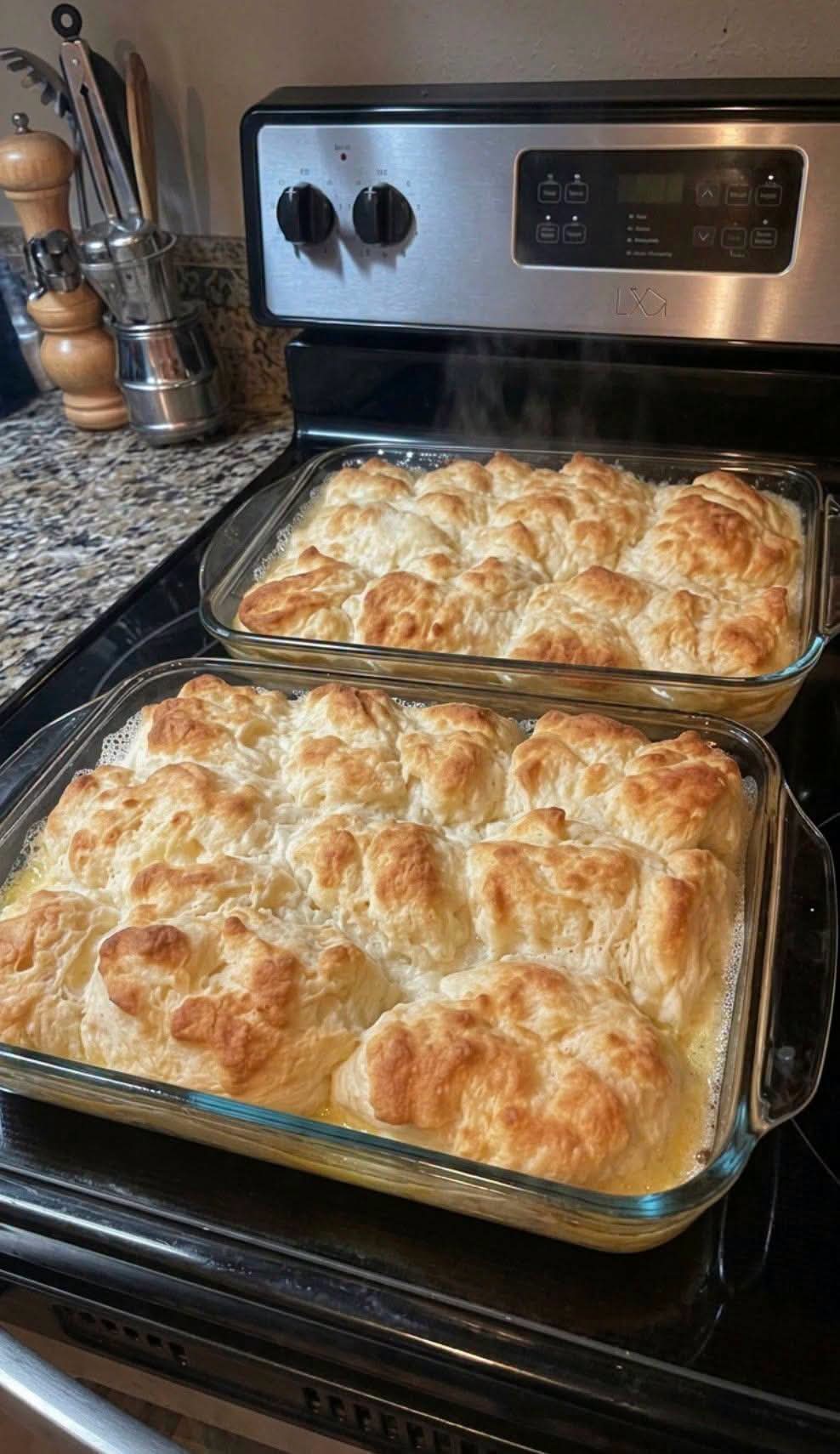
Butter Swim Biscuits are soft, buttery pan biscuits made without rolling, folding, or cutting dough. A thick buttermilk dough bakes directly in melted butter, producing crisp golden edges, a tender interior, and the rustic, craggy surface shown in the photo. Because everything is mixed in one bowl and baked in one dish, this recipe is practical for weekend breakfasts, holiday brunches, family dinners, or serving with sausage gravy.
Why You’ll Love This Recipe
Traditional biscuits often require cold butter, careful folding, and a biscuit cutter. This method removes those steps while still delivering rich flavor and a light, tender texture.
- No rolling pin or biscuit cutter required
- Uses six familiar grocery-store ingredients
- Ready in approximately 35 minutes
- Crisp, buttery bottom with a fluffy center
- Easy to divide into nine generous portions
- Suitable for breakfast, brunch, or dinner
- Delicious with sweet or savory toppings
- Beginner-friendly mixing and shaping method
The dough is intentionally wetter and stickier than traditional biscuit dough. Once placed in the baking dish, the melted butter moves around the edges and into the scored lines. This helps each portion develop a flavorful golden crust.
Key Ingredient Notes
All-Purpose Flour
All-purpose flour provides enough structure for the biscuits to rise while keeping the interior tender. Measure it by spooning the flour into the measuring cup and leveling the top. Scooping directly from the bag can pack in too much flour and produce dense or dry biscuits.
Bread flour is not recommended because its higher protein content can create a chewier texture.
Baking Powder
One tablespoon of baking powder gives the heavy, moist dough enough lift. Check the expiration date before baking. Old baking powder is a common reason homemade biscuits remain flat.
This recipe calls for baking powder, not baking soda. The two ingredients cannot be exchanged in equal amounts.
Granulated Sugar
A tablespoon of sugar lightly balances the tanginess of the buttermilk. It does not make the biscuits noticeably sweet. If you plan to serve them exclusively with savory foods, you can reduce the sugar to 2 teaspoons without changing the basic structure.
Salt
Salt seasons the dough and balances the richness of the butter. Because the recipe uses unsalted butter, 1 teaspoon provides a well-rounded flavor without making the biscuits overly salty.
If using salted butter as a substitution, reduce the added salt to approximately ½ teaspoon.
Buttermilk
Buttermilk supplies moisture, flavor, and acidity. Its acidity also supports the action of the baking powder and helps keep the crumb tender.
Use regular cultured buttermilk rather than a low-fat imitation when possible. Shake the container before measuring because cultured buttermilk can separate during storage.
Unsalted Butter
A full stick of melted butter coats the pan and surrounds the dough as it bakes. Some of it is absorbed while the rest helps brown the bottom and edges.
The dish may look unusually buttery before it enters the oven. That is expected; do not pour off the excess.
Recommended Kitchen Equipment
An 8-by-8-inch baking dish produces nine thick biscuits. A light-colored metal pan generally creates the crispiest bottom, while a glass or ceramic dish works well and allows you to see the browning around the edges.
You will also need:
- A large mixing bowl
- A whisk for combining the dry ingredients
- A flexible spatula or sturdy wooden spoon
- Measuring cups and spoons
- A sharp knife or bench scraper for scoring
- A wire cooling rack to protect the counter beneath the hot dish
Avoid using a smaller pan because the dough may become too deep to bake evenly. A 9-by-9-inch pan can be used, although the biscuits will be slightly thinner and may finish a few minutes sooner.
How to Make Butter Swim Biscuits
Prepare the Oven and Baking Dish
Preheat the oven to 450°F (230°C). Allow it to heat fully before mixing the dough. The immediate high heat activates the baking powder and helps set the biscuit structure.
Melt ½ cup of unsalted butter. Pour it into an 8-by-8-inch baking dish and carefully tilt the dish until the bottom is coated.
If using a glass dish, avoid pouring extremely hot butter into a cold pan. Sudden temperature changes can damage some glass bakeware. Let the melted butter cool briefly if necessary.
Combine the Dry Ingredients
Whisk the flour, baking powder, sugar, and salt in a large bowl. Whisking distributes the baking powder evenly so one area does not rise more than another or develop a bitter taste.
Break up any visible flour lumps before adding the buttermilk.
Mix the Dough
Pour 1¾ cups of buttermilk into the dry mixture. Stir gently until no dry pockets remain.
The finished dough should be thick, wet, and sticky. It will not resemble firm dough that can be kneaded or rolled. Do not continue stirring once the ingredients are combined, because excessive mixing can make the biscuits tough.
Transfer and Score
Spoon the dough into the butter-filled dish. Spread it toward the corners with a spatula. Butter may rise around the sides or flow over parts of the surface; this is normal.
For rustic peaks like those visible in the photograph, spread the dough gently without pressing the surface completely smooth.
Use a sharp knife to score the uncooked dough into nine squares. Cut three rows in each direction, pushing the knife almost to the bottom. Scoring creates channels for the butter and makes the baked portions easier to separate.
Bake Until Golden
Bake for 20–25 minutes. The biscuits are ready when:
- The top is golden brown
- The raised peaks have deeper brown areas
- The edges look crisp
- The center feels set rather than wet
- A toothpick inserted into the middle comes out without raw batter
If the center is still underbaked but the top is browning quickly, loosely cover the dish with aluminum foil and continue baking for another 2–4 minutes.
Let the pan rest for 5–10 minutes before following the scored lines to separate the biscuits. This short rest allows the crumb to set and gives the dough time to absorb more of the butter.
Professional Tips for the Best Results
Measure the Flour Carefully
Too much flour changes the hydration of the recipe. For the most consistent result, 2½ cups of all-purpose flour should weigh approximately 300 grams. If using measuring cups, spoon in the flour instead of packing it.
Keep Mixing to a Minimum
Stir only until the last dry streak disappears. Small lumps are acceptable. A perfectly smooth batter usually means the mixture has been worked more than necessary.
Use Fresh Baking Powder
To check baking powder, stir a small amount into hot water. It should foam immediately. If the reaction is weak, replace it before preparing the biscuits.
Score Deeply Enough
A faint mark on the surface can disappear as the dough rises. Run the knife through the dough almost to the bottom of the pan. If the dough sticks to the blade, wipe it between cuts.
Watch the Center of the Pan
The outer biscuits brown before the middle portion. Judge doneness by the center rather than the edges. An underbaked center can appear gummy even when the perimeter looks finished.
Common Mistakes and How to Avoid Them
The Biscuits Are Dense
Expired baking powder, overmixing, or an oven that was not fully preheated can limit the rise. Measure the leavening accurately and place the dish into a hot 450°F (230°C) oven as soon as the dough is ready.
The Center Is Gummy
A gummy center usually indicates that the dough needed more baking time. Glass and ceramic dishes can bake slightly more slowly than metal pans. Continue baking until the middle is set and a toothpick shows no wet dough.
The Biscuits Are Dry
Dry biscuits are commonly caused by excess flour or overbaking. Use the spoon-and-level method and begin checking the dish at 20 minutes.
Butter Spilled in the Oven
Do not substitute a smaller pan. Place the baking dish on a rimmed sheet pan if its sides are shallow or if you are concerned about bubbling butter. The sheet pan will catch accidental drips.
The Bottom Became Too Dark
Dark metal pans absorb heat quickly. If the bottom browns before the center finishes, place the baking dish on a light-colored sheet pan or move the oven rack one position higher.
Recipe Variations and Substitutions
Keep the original recipe unchanged for your first batch. After learning the consistency of the dough, consider one of these variations.
Homemade Buttermilk Substitute
Place 1 tablespoon plus 2 teaspoons of lemon juice or white vinegar in a measuring container. Add enough whole milk to make 1¾ cups. Stir and let it stand for 5–10 minutes before using.
The flavor and thickness will differ slightly from cultured buttermilk, but this substitute works when buttermilk is unavailable.
Cheddar Butter Swim Biscuits
For a savory variation, fold 1 cup of shredded sharp cheddar into the dough. The cheese is optional and may make the tops brown a little faster.
Garlic and Herb Variation
Add ½ teaspoon garlic powder and 1 teaspoon dried parsley or Italian seasoning to the flour mixture. These optional seasonings make the biscuits particularly suitable for soups and pasta dinners.
Lightly Sweet Cinnamon Biscuits
Mix 2 tablespoons of sugar with ½ teaspoon ground cinnamon and sprinkle it over the dough before baking. Serve the finished biscuits with honey or apple butter.
Gluten-Free Option
A one-to-one gluten-free baking flour containing xanthan gum may be used as a variation. Because blends absorb liquid differently, the final texture and required baking time can vary.
What to Serve With Butter Swim Biscuits
These biscuits can move easily between breakfast and dinner.
For breakfast or brunch, serve them with:
- Sausage gravy
- Scrambled or fried eggs
- Bacon or breakfast sausage
- Strawberry jam, apple butter, or honey
- Fresh berries and yogurt
For lunch or dinner, pair them with:
- Chicken noodle soup
- Beef stew or pot roast
- Chili
- Barbecue chicken or pulled pork
- Roasted chicken and vegetables
- Ham for a holiday meal
Leftover biscuits also make excellent breakfast sandwiches. Split one horizontally and fill it with an egg, cheese, and a cooked sausage patty.
Estimated Cost per Serving
The estimated cost is approximately $0.40–$0.70 per biscuit, based on nine servings and average U.S. supermarket prices.
Butter and buttermilk account for most of the cost. Prices vary by region, store, and brand. Store-brand flour, sugar, butter, and cultured buttermilk can keep the recipe budget-friendly without changing the method.
Make-Ahead Instructions
For the best rise, do not combine the wet and dry ingredients hours in advance. Once buttermilk meets the baking powder, the leavening reaction begins.
To reduce preparation time, whisk the flour, baking powder, sugar, and salt together up to two days ahead. Keep the mixture covered at room temperature. When ready to bake, preheat the oven, melt the butter, and stir in the buttermilk.
The biscuits can also be baked one day before serving. Cool them completely, cover the dish, and reheat them in the oven the following day.
Storage and Reheating
Allow the biscuits to cool completely before storing them. Trapping steam in a container while they are warm can soften the crust.
Keep them in an airtight container at room temperature for up to two days or refrigerate them for up to five days.
For the best texture, reheat individual biscuits in a 350°F (175°C) oven or air fryer for 3–5 minutes. A larger batch may need 8–10 minutes in the oven. Cover loosely with foil if the tops begin to brown too much.
The microwave works when speed is the priority, but it softens the crisp exterior. Heat one biscuit for approximately 15–20 seconds and avoid overheating it.
Freezing Instructions
Wrap cooled biscuits individually and place them in a freezer-safe container or bag. Freeze for up to two months.
Thaw overnight in the refrigerator or reheat from frozen in a 350°F (175°C) oven for approximately 12–15 minutes. Keep them loosely covered during the first part of reheating, then uncover them to restore the exterior.
Frequently Asked Questions
Why are they called Butter Swim Biscuits?
The name refers to the unusually generous amount of melted butter surrounding the dough in the baking dish. The biscuits absorb part of that butter while the remainder helps crisp and brown the edges.
Can I use a 9-by-13-inch baking dish?
Not for a single batch. The dough would spread too thinly. Double the complete recipe for a 9-by-13-inch pan and allow additional baking time as needed. Do not simply increase the dough without also doubling the butter.
Can I use salted butter?
Yes. Reduce the added salt from 1 teaspoon to approximately ½ teaspoon. Because salt levels differ between butter brands, taste may vary slightly.
Why is my biscuit dough so sticky?
Sticky dough is correct for this recipe. Butter Swim Biscuits use more liquid than rolled biscuits, allowing the dough to be spread directly into the baking dish. Do not add extra flour just to make it easier to handle.
Can I bake these in a cast-iron skillet?
Yes. A well-seasoned 10-inch cast-iron skillet creates particularly crisp edges. Begin checking early because cast iron retains heat and may brown the bottom faster.
How do I know when the middle biscuit is finished?
The center should be raised, lightly golden, and firm when gently pressed. A toothpick inserted into it should not show wet batter. If necessary, cover the top loosely and bake for a few additional minutes.
Can I prepare the dough the night before?
No. The baking powder begins reacting after the buttermilk is added, so overnight storage can reduce the rise. Prepare the dry mixture ahead, then add the buttermilk immediately before baking.
Printable Recipe Card
Butter Swim Biscuits
Soft, fluffy buttermilk biscuits baked directly in melted butter for crisp golden edges and a rich, tender center—without rolling, kneading, or cutting individual biscuits.
Prep time: 10 minutes
Cook time: 20–25 minutes
Resting time: 5 minutes
Total time: 35–40 minutes
Servings: 9 biscuits
Pan size: 8-by-8-inch baking dish
Ingredients
- 2½ cups (approximately 300 g) all-purpose flour
- 1 tablespoon baking powder
- 1 tablespoon granulated sugar
- 1 teaspoon salt
- 1¾ cups buttermilk
- ½ cup (1 stick/113 g) unsalted butter, melted
Instructions
- Preheat the oven to 450°F (230°C). Position a rack in the center of the oven.
- Pour the melted butter into an 8-by-8-inch baking dish and tilt the dish carefully to coat the bottom.
- In a large bowl, whisk together the flour, baking powder, sugar, and salt.
- Add the buttermilk and stir gently just until no dry flour remains. The dough should be thick and sticky; do not overmix.
- Spoon the dough into the butter-filled dish. Gently spread it to the corners, allowing the butter to rise around the edges.
- For a rustic surface like the one shown, leave a few soft peaks instead of smoothing the top completely.
- Use a sharp knife to score the dough deeply into nine equal squares.
- Bake for 20–25 minutes, until the top is golden brown, the edges are crisp, and the center no longer appears wet.
- Let the biscuits rest for 5–10 minutes. Cut along the scored lines and serve warm.
Notes
- Measure the flour using the spoon-and-level method to prevent dry biscuits.
- The dough is supposed to be wet and sticky. Do not add extra flour.
- A glass or ceramic dish may require 2–4 additional minutes.
- If the top browns before the center is set, cover the dish loosely with foil.
- For salted butter, reduce the added salt to approximately ½ teaspoon.
- A double batch may be baked in a 9-by-13-inch dish. Check the center carefully and extend the baking time as needed.
Storage Instructions
Store completely cooled biscuits in an airtight container at room temperature for up to two days or in the refrigerator for up to five days. Freeze individually wrapped biscuits for up to two months. Reheat at 350°F (175°C) until warm and lightly crisp.
Estimated Nutrition
Per biscuit, based on nine servings:
- Calories: 285
- Total fat: 13 g
- Saturated fat: 8 g
- Carbohydrates: 36 g
- Protein: 6 g
- Fiber: 1 g
- Sugar: 3 g
- Sodium: 520 mg