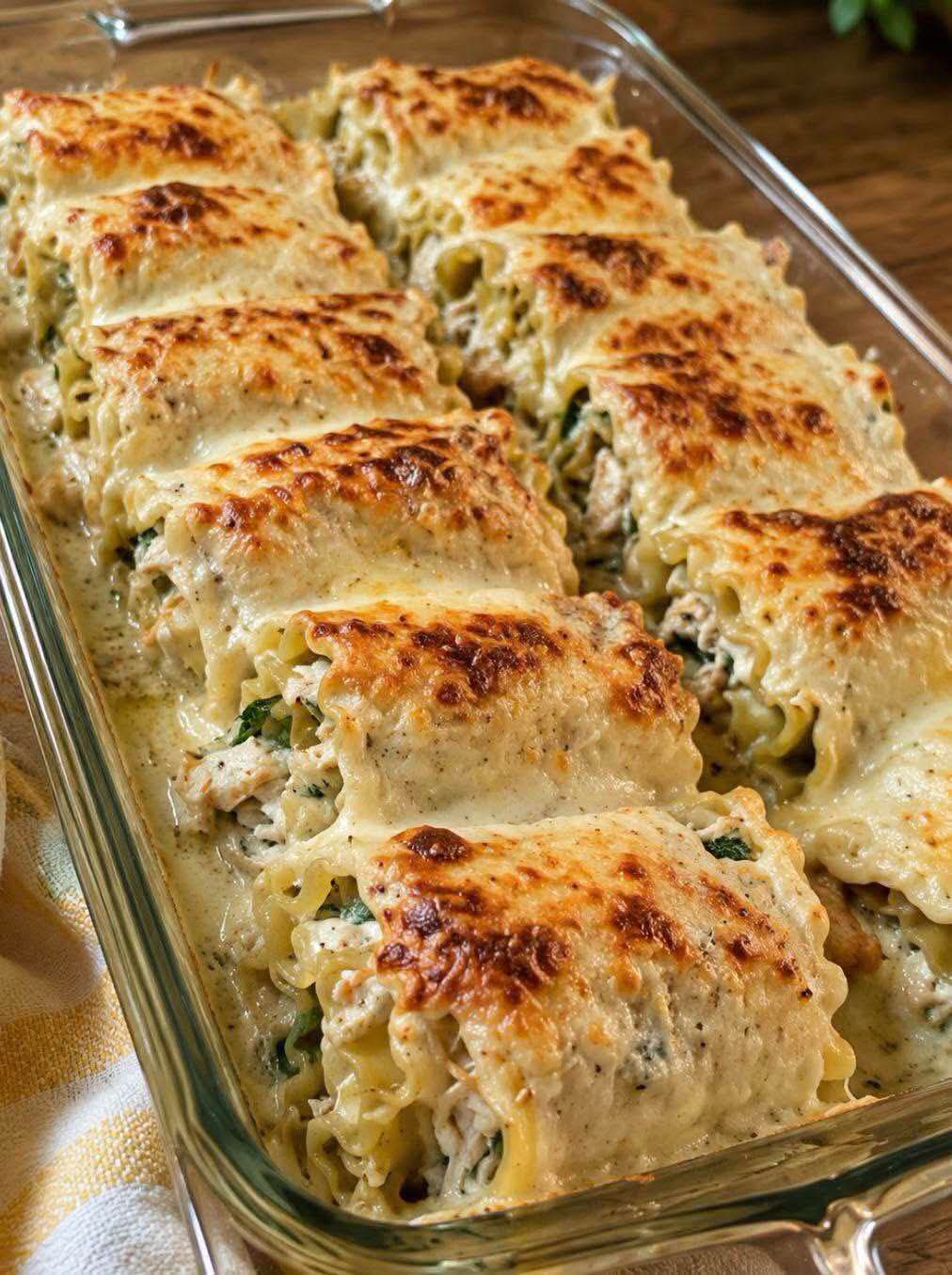
Chicken Alfredo Lasagna Roll Ups combine tender lasagna noodles, shredded chicken, three cheeses, and creamy Alfredo sauce in neatly portioned rolls. Each serving has a rich, savory filling, soft pasta, and a bubbly mozzarella topping with lightly browned edges. They are easier to serve than layered lasagna and practical for weeknight dinners, meal preparation, potlucks, or a relaxed family gathering.
Why You’ll Love This Recipe
This recipe transforms familiar chicken Alfredo flavors into individual pasta portions that hold their shape when served.
- Uses convenient cooked chicken and prepared Alfredo sauce
- Easier to portion than traditional layered lasagna
- Can be assembled up to 24 hours before baking
- Freezer-friendly when properly wrapped
- Uses familiar ingredients found in most U.S. grocery stores
- Easy to customize with optional vegetables
- Produces 12 individual rolls
- Works for weeknight dinners, potlucks, and meal trains
The combination of ricotta, Parmesan, mozzarella, and Alfredo sauce creates a filling that is creamy but sturdy enough to remain inside each noodle. Placing the rolls seam-side down keeps them closed while they bake.
Key Ingredient Notes
Lasagna Noodles
Use conventional dried lasagna noodles that require boiling. They become flexible enough to roll without breaking.
Cook the noodles just until al dente, usually 1–2 minutes less than the full package time. They will continue cooking as they absorb moisture from the sauce in the oven.
Consider boiling 14 noodles even though the recipe requires only 12. The additional noodles provide backups in case one tears or sticks to the pot.
Alfredo Sauce
One 14.5-ounce jar supplies sauce for both the filling and the top of the rolls. Divide it evenly: half goes into the chicken mixture, and the remaining half covers the assembled pasta.
For an extra-saucy casserole, a second jar may be used as an optional addition. Spread approximately ½ cup of extra sauce over the bottom of the baking dish before adding the rolls, then use more over the top as desired.
Different prepared Alfredo sauces vary considerably in thickness and sodium. A thick sauce will produce more structured rolls, while a thinner sauce will create a looser filling.
Cooked Shredded Chicken
This recipe is a convenient way to use leftover roasted or baked chicken. Rotisserie chicken also works well after removing the skin and bones.
Shred or chop the chicken finely enough that the pieces distribute evenly and do not puncture the noodles. You will need approximately 2 cups, or about 10–12 ounces, of cooked chicken.
Ricotta or Cottage Cheese
Ricotta produces a thick, smooth filling with a mild flavor. Cottage cheese is a budget-friendly alternative with a slightly lighter, tangier result.
If using cottage cheese, drain any visible liquid before measuring. Excess moisture can make the filling runny. For a smoother consistency, cottage cheese may be briefly processed in a food processor, although this is optional.
Parmesan Cheese
Grated Parmesan seasons the filling and contributes a savory, slightly nutty flavor. Finely grated cheese blends more evenly than large shreds.
Prepared Alfredo sauce and garlic salt already contain sodium, so no additional salt is required.
Mozzarella Cheese
Mozzarella is divided between the filling and topping. The cheese inside helps bind the chicken mixture, while the cheese on top melts into a golden layer.
Low-moisture mozzarella is preferable to fresh mozzarella. Fresh mozzarella releases more water and can make the finished dish runny.
Italian Seasoning and Garlic Salt
Italian seasoning adds a balanced mixture of dried herbs without requiring several separate seasonings. Garlic salt reinforces the garlic flavor of the Alfredo sauce while seasoning the chicken and cheese mixture.
Recommended Kitchen Equipment
A 9-by-13-inch baking dish gives the 12 rolls enough room to sit in a single layer. A glass, ceramic, or metal dish will work.
You will also need:
- A large stockpot for boiling the noodles
- Tongs or a pasta server for lifting the noodles
- A colander
- Parchment paper or aluminum foil for cooling the pasta
- A medium mixing bowl
- A flexible spatula or large spoon
- Paper towels for removing excess moisture
- An instant-read thermometer for checking the center
Use the largest practical pot for the noodles. Lasagna sheets need enough water and space to move without sticking together.
How to Make Chicken Alfredo Lasagna Roll Ups
Prepare the Oven and Baking Dish
Preheat the oven to 375°F (190°C). Position the rack in the upper third of the oven so the mozzarella browns well without requiring a long broiling time.
Lightly grease a 9-by-13-inch baking dish with cooking spray or a small amount of olive oil.
Cook the Lasagna Noodles
Bring a large pot of water to a boil. Cook the lasagna noodles until al dente according to the package directions, removing them 1–2 minutes before they become completely soft.
Stir gently during the first few minutes to keep the sheets separated. Avoid aggressive stirring, which can tear their ruffled edges.
Drain the noodles carefully. Arrange them in a single layer on parchment paper or foil while they cool. Do not stack or overlap them because the warm surface starch can make them stick together.
Rinsing is not essential, but the noodles must be cool enough to handle before assembly.
Prepare the Chicken Alfredo Filling
In a medium bowl, combine:
- 2 cups cooked shredded chicken
- 1 cup ricotta or drained cottage cheese
- ½ cup grated Parmesan
- 1 cup shredded mozzarella
- ½ teaspoon Italian seasoning
- ½ teaspoon garlic salt
- Half of the Alfredo sauce
Stir until the chicken and cheeses are evenly coated. The mixture should be creamy but thick enough to stay on a spoon.
Fill and Roll the Noodles
Pat the noodles dry if visible water remains on their surfaces. This helps the cheese mixture adhere to the pasta.
Divide the filling evenly among the 12 noodles—approximately ⅓ cup per noodle. Spread it along each sheet, leaving about ½ inch uncovered at one short end.
Starting from the filled short end, roll each noodle gently but firmly. Do not compress it so tightly that the filling escapes from the sides.
Arrange every roll seam-side down in the prepared baking dish. A practical arrangement is three rows of four rolls.
Add the Sauce and Cheese
Spoon the remaining Alfredo sauce over the rolls. Concentrate some sauce along the exposed pasta edges to keep them from drying in the oven.
Sprinkle the remaining 1 cup of mozzarella evenly over the top.
Bake Until Hot and Bubbling
Bake uncovered for approximately 20–25 minutes. The sauce should be bubbling around the edges, the filling should be hot, and the mozzarella should be completely melted.
Because the chicken is precooked, the casserole is reheating rather than cooking raw poultry. For food safety, the center of the rolls should reach 165°F (74°C) when checked with an instant-read thermometer.
For a deeper golden topping, broil the casserole for 1–2 minutes. Watch it continuously because cheese can move from browned to burned quickly.
Allow the dish to rest for 5 minutes before serving. This gives the hot filling time to thicken slightly.
Professional Tips for the Best Results
Cook the Noodles Only Until Al Dente
Overcooked lasagna noodles are fragile and can tear during rolling. Slightly firm noodles are easier to handle and finish cooking in the sauce.
Keep the Noodles Separate
Lay every cooked noodle flat without overlapping. If space is limited, place another sheet of parchment paper over the first layer before adding more pasta.
Remove Excess Surface Water
Wet noodles make the filling slippery. Pat them gently with paper towels before adding the chicken mixture.
Divide the Filling Before Rolling
Place a mound of filling on every noodle before spreading and rolling the first one. This makes it easier to distribute the mixture evenly across all 12 servings.
Cover the Exposed Pasta
Any noodle edges left completely uncovered may become firm in the oven. Spoon Alfredo sauce over those areas before adding the mozzarella.
Rest Before Serving
The sauce and cheese will be extremely hot when the dish leaves the oven. A five-minute rest makes the rolls easier to lift without losing their shape.
Common Mistakes and How to Avoid Them
The Noodles Tear During Assembly
The pasta may have been overcooked or handled while too hot. Cook it al dente and let it cool flat before rolling. Boiling two additional noodles gives you backups.
The Filling Slides Out
Excess water on the noodles or liquid from cottage cheese can loosen the filling. Dry the noodles and drain cottage cheese thoroughly.
Avoid overfilling the pasta. Approximately ⅓ cup per sheet is enough for a generous roll without forcing the mixture out of the ends.
The Pasta Edges Become Dry
Use the remaining Alfredo sauce to cover exposed noodles. If your sauce jar contains less than 14.5 ounces or is particularly thick, an additional jar may be useful.
The Casserole Is Watery
Fresh mozzarella, undrained cottage cheese, wet vegetables, or warm frozen spinach can release excess liquid. Use low-moisture mozzarella and squeeze optional vegetables thoroughly before adding them.
The Rolls Unravel
Place the seam against the bottom of the baking dish. The weight of the filled roll will hold the loose edge in place.
The Center Is Still Cool
Refrigerated casseroles need more time than freshly assembled ones. Continue baking until the middle reaches 165°F (74°C), covering the top loosely with foil if the cheese is already brown.
Recipe Variations and Substitutions
Chicken Alfredo and Spinach Roll Ups
The photographed version appears to include leafy greens. To recreate that appearance, add ½ cup of thawed frozen spinach as an optional ingredient.
Squeeze the spinach firmly in a clean kitchen towel or several layers of paper towels before mixing it into the filling. Removing the water is essential to prevent a thin sauce.
Chicken and Broccoli Variation
Fold 1 cup of finely chopped, cooked broccoli florets into the filling as an optional addition. Let the broccoli cool and pat it dry before using.
Cottage Cheese Filling
Replace the ricotta with an equal amount of drained cottage cheese. This is often a budget-friendly substitution and does not require changes to the baking time.
Italian Sausage Variation
For a variation, replace the chicken with 2 cups of cooked, crumbled Italian sausage. Drain the sausage thoroughly before mixing it with the cheeses and sauce.
Extra-Saucy Roll Ups
Use part of a second jar of Alfredo sauce. Spread approximately ½ cup across the bottom of the baking dish, arrange the rolls over it, and add extra sauce on top.
Homemade Alfredo Sauce
Homemade Alfredo sauce may replace the jarred sauce as long as it is thick enough to coat the chicken mixture. You will need approximately 1¾ cups total.
What to Serve With Chicken Alfredo Lasagna Roll Ups
The creamy pasta pairs best with sides that add freshness, acidity, or a crisp texture.
Try serving it with:
- A green salad with lemon vinaigrette
- Caesar salad
- Roasted broccoli or asparagus
- Garlic green beans
- Roasted Brussels sprouts
- Tomato and cucumber salad
- Garlic bread or toasted Italian bread
For a dinner party, serve one or two rolls per person depending on the other dishes offered. One roll with vegetables and bread makes a moderate serving, while two rolls create a generous main course.
Estimated Cost per Serving
The estimated cost is approximately $1.75–$2.75 per serving, based on six servings of two rolls each and average U.S. grocery-store prices.
Using leftover chicken, store-brand Alfredo sauce, and cottage cheese can reduce the cost. The actual amount will vary by region, brand, and whether you add optional vegetables or a second jar of sauce.
Make-Ahead Instructions
Assemble the rolls, add the sauce and mozzarella, and cover the baking dish tightly. Refrigerate for up to 24 hours.
Remove the cold dish from the refrigerator while the oven preheats. Bake as directed, allowing approximately 5–10 additional minutes. Check that the center reaches 165°F (74°C).
If using glass bakeware, avoid moving an extremely cold dish directly into a hot oven because sudden temperature changes may damage the glass. Let it stand at room temperature briefly, following the bakeware manufacturer’s guidance.
Freezing Instructions
The roll ups may be frozen before or after baking.
Freezing Before Baking
Assemble the casserole in a freezer-safe dish. Cover the surface tightly, then add a second protective layer. Freeze for up to two months.
For the most even heating, thaw it overnight in the refrigerator before baking. Bake at 375°F (190°C) for approximately 30–40 minutes, uncovering during the final 10–15 minutes.
If baking directly from frozen, use a freezer-to-oven-safe dish. Keep it covered initially and expect the total time to be approximately 60–75 minutes. Remove the covering near the end so the cheese can brown. Verify a center temperature of 165°F (74°C).
Freezing Baked Roll Ups
Cool the cooked rolls completely. Freeze individual portions in airtight, freezer-safe containers for up to two months. Thaw overnight before reheating for the best texture.
Storage and Reheating
Refrigerate leftovers in an airtight container within two hours of serving. Store them for up to four days.
Reheat covered portions in a 350°F (175°C) oven until the center reaches 165°F (74°C), usually 15–20 minutes. Add a spoonful of extra Alfredo sauce before reheating if the pasta appears dry.
Individual portions can be microwaved. Cover loosely and heat in short intervals, rotating the roll between intervals so the dense center warms evenly.
Ideas for Leftovers
Chop leftover rolls into smaller pieces and warm them with a little additional Alfredo sauce for a quick pasta bowl. They can also be packed in individual containers with roasted vegetables for convenient lunches.
Frequently Asked Questions
Can I use oven-ready lasagna noodles?
Traditional boilable lasagna noodles are strongly recommended because they become flexible enough to roll. Dry oven-ready sheets usually crack when bent. Some brands may be softened according to their package directions, but results can vary.
Can I use cottage cheese instead of ricotta?
Yes. Replace the ricotta with an equal quantity of cottage cheese. Drain it thoroughly first so the filling remains thick.
Can I use rotisserie chicken?
Yes. Remove the skin and bones, then finely shred the meat. Both white and dark meat work, although a combination produces a moist, flavorful filling.
How do I prevent lasagna noodles from sticking together?
Use a large pot, stir gently during cooking, and lay the drained noodles flat in a single layer. Do not overlap them while they are warm.
How many roll ups should I serve per person?
Two rolls make a generous main-dish serving, giving the recipe approximately six servings. One roll may be enough when served as part of a larger meal with salad, vegetables, and bread.
Can I add spinach to the filling?
Yes. Add ½ cup of thawed frozen spinach after squeezing out as much water as possible. This optional addition will produce a filling closer to the photographed version.
Why did my Alfredo sauce separate?
Excessive heat or prolonged broiling can cause some prepared cream sauces to separate. Bake only until the center is hot, and limit broiling to 1–2 minutes.
Printable Recipe Card
Chicken Alfredo Lasagna Roll Ups
Tender lasagna noodles filled with shredded chicken, ricotta, Parmesan, mozzarella, and creamy Alfredo sauce, then baked until hot and golden.
Prep time: 30 minutes
Cook time: 20–25 minutes
Resting time: 5 minutes
Total time: 55–60 minutes
Servings: 6
Yield: 12 roll ups
Pan size: 9-by-13-inch baking dish
Ingredients
- 12 traditional lasagna noodles
- 1 jar (14.5 ounces) Alfredo sauce, divided
- 2 cups cooked shredded chicken
- ½ cup grated Parmesan cheese
- 1 cup ricotta cheese or drained cottage cheese
- ½ teaspoon Italian seasoning
- ½ teaspoon garlic salt
- 2 cups shredded low-moisture mozzarella cheese, divided
- Cooking spray or a small amount of olive oil for greasing the dish
Optional for the pictured spinach variation:
- ½ cup frozen chopped spinach, thawed and squeezed completely dry
Instructions
- Preheat the oven to 375°F (190°C). Position the rack in the upper third of the oven.
- Lightly grease a 9-by-13-inch baking dish with cooking spray or olive oil.
- Cook the lasagna noodles in a large pot until al dente, following the package directions and removing them 1–2 minutes before fully tender.
- Drain the noodles and arrange them separately on parchment paper or aluminum foil. Let them cool until safe to handle.
- Combine the chicken, Parmesan, ricotta or cottage cheese, 1 cup mozzarella, Italian seasoning, garlic salt, and half of the Alfredo sauce in a medium bowl. Fold in the optional dry spinach, if using.
- Pat the noodles dry when necessary. Divide the filling evenly among them, using approximately ⅓ cup per noodle.
- Spread the filling along each noodle, leaving about ½ inch uncovered at one short end.
- Roll each noodle gently and place it seam-side down in the prepared dish.
- Spoon the remaining Alfredo sauce over the rolls, covering the exposed pasta edges.
- Sprinkle the remaining 1 cup of mozzarella over the top.
- Bake uncovered for 20–25 minutes, until the sauce bubbles, the cheese melts, and the center reaches 165°F (74°C).
- If desired, broil for 1–2 minutes to brown the cheese. Watch the dish continuously.
- Rest for 5 minutes before serving.
Notes
- Boil two extra noodles as backups in case any tear.
- Do not overcook the pasta; al dente sheets are easier to roll.
- Drain cottage cheese and squeeze optional spinach thoroughly.
- An additional jar of Alfredo sauce may be used for an extra-saucy result.
- Use low-moisture mozzarella to limit excess liquid.
- Refrigerated, assembled roll ups may require an additional 5–10 minutes in the oven.
Storage Instructions
Refrigerate cooled leftovers in an airtight container for up to four days. Reheat covered at 350°F (175°C) or in the microwave until the center reaches 165°F (74°C). Freeze properly wrapped portions for up to two months.
Safe Internal Temperature
Heat the center of the casserole to 165°F (74°C) before serving, particularly when baking it after refrigeration or freezing.
Estimated Nutrition
Per serving of two roll ups, based on six servings:
- Calories: 590
- Total fat: 29 g
- Saturated fat: 15 g
- Carbohydrates: 44 g
- Protein: 38 g
- Fiber: 2 g
- Sugar: 5 g
- Sodium: 1,180 mg