Introduction
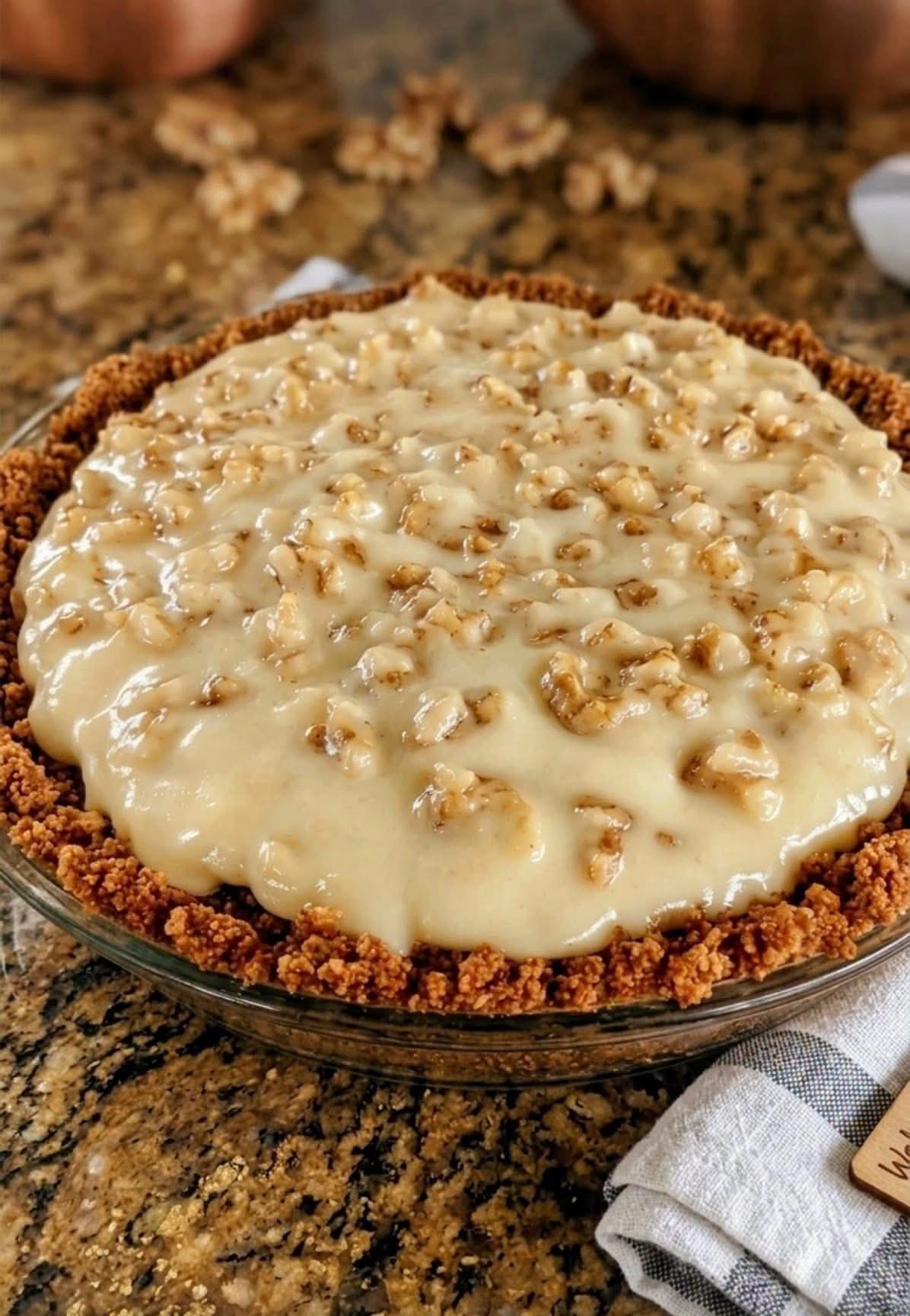
Walnut Cream Pie combines a crisp graham cracker crust, smooth vanilla custard, chopped walnuts, and a generous layer of homemade whipped cream. The result is a chilled dessert with contrasting textures: buttery crumbs underneath, creamy filling in the center, and light whipped cream on top.
Unlike traditional walnut or pecan pies made with a dense, syrup-based filling, this pie uses whole milk, egg yolks, and cornstarch to create a softer custard. Finely chopped walnuts add texture and a pleasantly earthy flavor without making the filling overly heavy.
The crust requires no baking, and the custard is prepared entirely on the stovetop. Once assembled, the pie simply needs enough time in the refrigerator to set. This makes Walnut Cream Pie a convenient choice for Thanksgiving, Christmas, dinner parties, or any occasion when you want to prepare dessert ahead of time.
For the cleanest slices and best texture, plan to chill the pie for at least two hours before adding the whipped cream and serving it.
Why This Recipe Works
Several simple techniques help produce a smooth filling and a crust that holds together when sliced.
The graham cracker crumbs are combined with melted butter and sugar until evenly moistened. Firmly pressing this mixture into the pie pan creates a compact foundation that supports the custard.
Cornstarch thickens the filling and gives it enough structure to hold its shape after chilling. Whisking the cornstarch with the sugar and salt before adding the milk helps distribute it evenly and reduces the chance of lumps.
Starting with cold milk also gives the cornstarch time to dissolve before the mixture becomes hot. Once the custard reaches a full simmer, the cornstarch activates and thickens the liquid.
Egg yolks contribute richness, color, and a smooth mouthfeel. Because they are whisked into the cold milk mixture before cooking, they heat gradually as the custard cooks. Constant whisking is important to keep the mixture smooth and prevent scorching.
Butter and vanilla are added after the saucepan comes off the heat. This preserves the vanilla’s aroma while the butter melts into the custard, creating a glossy finish. The walnuts are folded in last so they remain evenly distributed throughout the filling.
Finally, the whipped cream topping provides a light contrast to the rich custard and crunchy walnuts.
Ingredients You’ll Need
For the graham cracker crust
1½ cups graham cracker crumbs
6 tablespoons unsalted butter, melted
2 tablespoons granulated sugar
For the walnut filling
1 cup finely chopped walnuts
¾ cup granulated sugar
¼ cup cornstarch
¼ teaspoon salt
2 cups whole milk
3 large egg yolks
2 tablespoons unsalted butter
1 teaspoon vanilla extract
For the whipped cream topping
1 cup heavy whipping cream
3 tablespoons powdered sugar
½ teaspoon vanilla extract
¼ cup chopped walnuts, for garnish
Ingredient Notes and Substitutions
Graham cracker crumbs
Finely ground crumbs form a more stable crust than large, uneven pieces. If crushing whole graham crackers, process them in a food processor or place them in a sealed bag and crush them with a rolling pin.
A prepared 9-inch graham cracker crust can be used as a time-saving substitution. Keep it in its disposable pie pan and add the filling as directed.
Unsalted butter
Melted butter binds the crust, while softened butter enriches the custard. Unsalted butter gives you better control over the finished flavor because the filling already contains salt.
Whole milk
Whole milk provides the richness needed for a creamy custard while still allowing the cornstarch to create a firm, sliceable texture. Lower-fat milk may produce a less rich filling and is therefore not recommended for the most consistent result.
Cornstarch
Cornstarch is the primary thickener in this recipe. Measure it carefully and whisk it thoroughly into the cold liquid before cooking. Replacing it with flour would require different proportions and cooking times, so a direct substitution is not recommended.
Egg yolks
Use large egg yolks and separate them carefully so that no pieces of shell enter the mixture. The yolks help create a richer, smoother filling.
For food safety, cook the custard thoroughly until it thickens, begins bubbling, and reaches at least 160°F (71°C).
Walnuts
Finely chopped walnuts distribute more evenly through the custard and make the pie easier to slice. Larger pieces can be reserved for the garnish.
As an optional flavor upgrade, toast the walnuts before using them. Spread them on a dry baking sheet and bake at 350°F (175°C) for approximately 5–8 minutes, watching closely. Let them cool completely before adding them to the filling or topping.
Heavy whipping cream
Use cold heavy whipping cream for the most stable topping. Chilling the mixing bowl and beaters for approximately 10 minutes can also help the cream whip efficiently.
Powdered sugar sweetens the topping and dissolves more easily than granulated sugar.
How to Make Walnut Cream Pie
Prepare the crust
Place the graham cracker crumbs, melted butter, and granulated sugar in a medium bowl. Stir until all the crumbs are evenly coated and the mixture resembles damp sand.
Transfer the mixture to a 9-inch pie pan. Press it firmly across the bottom and up the sides. The flat bottom of a dry measuring cup works well for compacting the crumbs into a uniform layer.
Pay particular attention to the area where the bottom meets the sides, as a loosely packed crust may break there during slicing.
Place the crust in the refrigerator while you prepare the filling. Chilling allows the butter to firm up and helps the crust maintain its shape.
Combine the dry filling ingredients
In a medium, heavy-bottomed saucepan, whisk together the granulated sugar, cornstarch, and salt. Mixing these ingredients before adding liquid helps distribute the cornstarch and prevents concentrated pockets from forming.
Gradually pour in the cold whole milk while whisking continuously. Continue whisking until the mixture is completely smooth and no visible cornstarch remains.
Add the egg yolks
Add the egg yolks to the milk mixture and whisk until fully blended. The mixture should be uniform in color, with no visible streaks of yolk.
Adding the yolks before heating allows them to warm gradually with the other ingredients. This is easier than tempering hot milk into the yolks separately, but it still requires constant attention during cooking.
Cook the custard
Place the saucepan over medium heat. Cook for approximately 6–8 minutes, whisking constantly and scraping along the bottom and into the corners of the pan.
The mixture will remain thin at first, then begin to thicken quickly as it approaches a simmer. Continue cooking until the custard is visibly thick and bubbles begin breaking through the surface.
The filling should coat the whisk and briefly hold its shape when stirred. It should also reach at least 160°F (71°C) to ensure the egg yolks are thoroughly cooked.
Do not walk away from the saucepan during this step. Milk-based custards can scorch quickly, particularly once they begin to thicken.
Finish the filling
Remove the saucepan from the heat as soon as the custard has thickened and begun to bubble. Add the 2 tablespoons of unsalted butter and 1 teaspoon of vanilla extract.
Whisk until the butter has melted and the custard looks smooth and glossy. Stir in the finely chopped walnuts until they are evenly distributed.
Fill and chill the pie
Remove the crust from the refrigerator. Pour the warm walnut custard into the chilled crust and smooth the surface gently with a spatula.
Allow the pie to cool at room temperature for approximately 20 minutes. Do not leave it unrefrigerated for more than two hours in total.
Pressing plastic wrap directly against the custard’s surface is optional but helpful if you want to prevent a skin from forming. Refrigerate the pie for at least two hours, or until the center is completely chilled and firm.
Prepare the whipped cream
Pour the cold heavy whipping cream into a mixing bowl. Add the powdered sugar and vanilla extract.
Beat with an electric mixer, beginning on low speed and gradually increasing to medium-high. Continue beating until soft peaks form. When the beaters are lifted, the cream should form peaks that gently curl over.
Avoid overbeating, which can make the topping grainy and eventually turn it into butter.
Decorate and serve
Remove the plastic wrap from the chilled filling, if used. Spread or pipe the whipped cream evenly over the pie.
Sprinkle the remaining ¼ cup of chopped walnuts over the top. Return the finished pie to the refrigerator until ready to serve.
For neat slices, use a sharp knife and wipe the blade clean between cuts.
Tips and Tricks for Recipe Success
Measure the cornstarch accurately
Too little cornstarch may leave the filling loose, while too much can make it rubbery. Spoon the cornstarch into the measuring cup and level the surface without packing it down.
Begin with cold milk
Adding hot milk directly to cornstarch can create lumps. Cold milk allows the starch to disperse before it begins thickening.
Whisk continuously
The custard must be stirred throughout cooking. Move the whisk across the entire bottom of the saucepan and into its corners, where the mixture is most likely to stick.
Wait for visible bubbles
A custard that looks slightly thicker but never reaches a bubbling stage may not set properly. Let it thicken significantly and begin bubbling before taking it off the heat.
Chop the walnuts finely
Small pieces are easier to cut through and remain better suspended in the filling. Large walnut pieces can make slices uneven or cause the custard to separate from the crust while cutting.
Allow enough chilling time
Two hours is the minimum recommended chilling time. If your schedule allows, chill the filled pie for four hours or overnight before adding the topping. A thoroughly chilled pie produces cleaner slices.
Keep the whipped cream cold
Heavy cream whips best when the cream, bowl, and beaters are cold. Keep it refrigerated until immediately before whipping.
Recipe Variations
The following additions are optional and are not required for the original Walnut Cream Pie.
Toasted Walnut Cream Pie
Toast the walnuts and cool them completely before using them. This produces a deeper, more pronounced nutty flavor.
Pastry-Crust Walnut Cream Pie
Replace the graham cracker crust with a fully baked and cooled 9-inch pastry shell. Do not pour the custard into raw pastry dough because the assembled pie is not baked.
Bourbon Walnut Cream Pie
For an optional holiday variation, stir 1 tablespoon of bourbon into the finished custard with the vanilla. Adding too much extra liquid may affect how firmly the filling sets.
Cinnamon Walnut Cream Pie
Add ¼ teaspoon ground cinnamon to the sugar and cornstarch mixture for a lightly spiced filling.
Chocolate-Garnished Pie
Add a small amount of optional shaved semisweet chocolate over the whipped cream along with the walnut garnish. The chocolate should complement the vanilla and walnuts without covering their flavor.
How to Serve
Serve Walnut Cream Pie well chilled. The cold temperature keeps the custard firm, the whipped cream stable, and the graham cracker crust easy to slice.
Cut the pie with a thin, sharp knife. For especially clean portions, dip the knife into hot water, dry it thoroughly, and wipe it between each cut.
A standard 9-inch pie generally provides eight slices. Smaller slices may be appropriate when serving it alongside other desserts at a holiday meal.
Keep the pie refrigerated until shortly before serving, particularly in a warm kitchen. Because it contains milk, egg yolks, and whipped cream, it should not remain at room temperature for longer than two hours.
Serving Suggestions
This pie pairs especially well with hot, unsweetened beverages that balance its creamy filling.
Serve it with:
Freshly brewed black coffee
Espresso or an Americano
Unsweetened hot tea
Decaffeinated coffee for an evening dessert
Cold milk for a simple family-friendly pairing
For a holiday dessert table, Walnut Cream Pie can be served alongside fruit-based desserts such as apple crisp or cranberry bars. Their tart fruit flavors provide contrast to the vanilla custard and whipped cream.
Make-Ahead Instructions
The crust and filling can be assembled one day before serving. Prepare the recipe through the chilling step, press plastic wrap directly against the custard, and refrigerate overnight.
For the freshest appearance, prepare and apply the whipped cream several hours before serving rather than adding it the previous day. Garnish the top with chopped walnuts shortly before presenting the pie.
The graham cracker crust can also be prepared separately up to one day in advance. Cover it and refrigerate until you are ready to cook the filling.
Do not prepare the custard and leave it in the saucepan for later assembly. It begins setting as it cools and may not spread evenly inside the crust. Pour it into the crust while it is still warm.
Storage and Reheating Instructions
Cover leftover pie carefully or place individual slices in airtight containers. Refrigerate for up to four days.
Because whipped cream can absorb refrigerator odors, keep the pie tightly covered and away from strongly scented foods. The graham cracker crust will gradually soften as it absorbs moisture from the custard, so the pie has its best texture during the first two days.
Walnut Cream Pie is intended to be eaten cold and should not be reheated. Heating would melt the whipped cream and soften the custard.
Freezing is not recommended. Custard fillings thickened with cornstarch may release water or develop a grainy texture after freezing and thawing. Fresh whipped cream can also separate, and the crust may become soggy.
Frequently Asked Questions
Can I use a store-bought graham cracker crust?
Yes. Use one prepared 9-inch graham cracker crust and pour the warm filling into it as directed. Store-bought crusts may be slightly shallower, so add the filling carefully to prevent overflow.
Why is my walnut cream filling runny?
The custard may not have cooked long enough to activate the cornstarch completely. It must become noticeably thick and begin bubbling before it is removed from the heat.
The pie may also appear loose if it has not chilled long enough. Refrigerate it for at least two hours and preferably longer before slicing.
Why did my custard become lumpy?
Lumps can develop when the cornstarch is not fully dissolved or the custard is heated too quickly without constant whisking. Begin with cold milk and whisk continuously over medium heat.
If you notice small lumps before adding the walnuts, you can press the hot custard through a fine-mesh strainer. Then stir in the butter, vanilla, and walnuts.
Should the crust be baked?
No. This version uses a refrigerated graham cracker crust. Pressing the crumbs firmly and chilling the crust helps it hold together.
For a firmer and more toasted crust, baking would require an additional step not included in the provided recipe.
Can I toast the walnuts first?
Yes. Toasting is optional but can intensify their flavor. Allow the nuts to cool completely before stirring them into the custard or sprinkling them over the whipped cream.
Can I make this pie without the whipped cream?
Yes. The chilled walnut custard can be served directly in the graham cracker crust, as shown before the topping is applied. However, the whipped cream contributes a lighter texture and completes the recipe as written.
How do I know when the whipped cream is ready?
Stop mixing when the cream forms soft peaks. A lifted beater should leave a peak that holds briefly before the tip bends over. Overwhipped cream becomes stiff, grainy, and difficult to spread.
How far ahead can I make Walnut Cream Pie?
You can prepare the crust and filling up to one day ahead. Add the whipped cream on the day you plan to serve it for the best texture and appearance.
Final Conclusion
Walnut Cream Pie turns familiar pantry and refrigerator ingredients into an elegant chilled dessert. Its graham cracker crust provides a buttery crunch, while the stovetop custard offers a smooth vanilla base filled with finely chopped walnuts. Homemade whipped cream and a final walnut garnish add a soft, attractive finish.
The most important steps are dissolving the cornstarch in cold milk, whisking constantly as the custard cooks, waiting until it thickens and bubbles, and allowing the assembled pie enough time to chill. Follow those techniques, and the filling should set properly while remaining creamy.
Prepared in advance and served cold, this pie is a practical addition to holiday menus, weekend dinners, and special occasions throughout the year.