Introduction
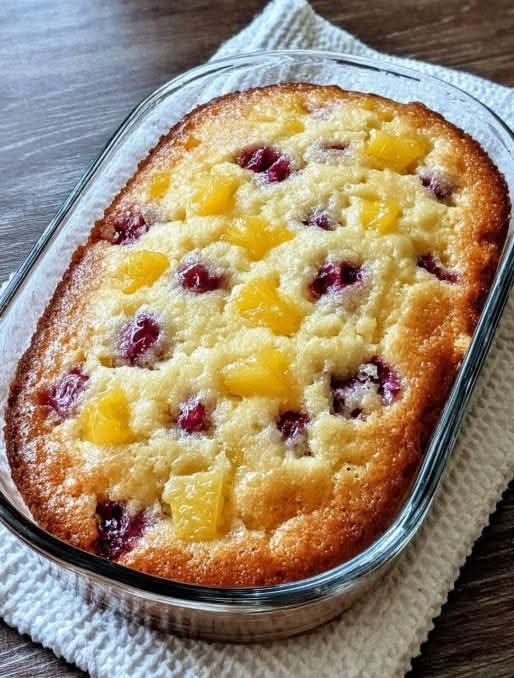
Cuppa Cuppa Cake is a simple fruit dessert with a tender, cobbler-like center and buttery golden edges. Its memorable name comes from the traditional equal quantities of flour and sugar: one cup of each. Add one undrained can of fruit cocktail and butter, and the batter is ready for the oven.
This vintage-style recipe is useful when you need a homemade dessert without complicated preparation. There are no separate cake layers, no electric mixer, and no frosting to prepare. The fruit and its juice provide the liquid needed to bring the batter together, while self-rising flour supplies the leavening.
As the cake bakes, pieces of fruit remain visible throughout the soft crumb. Butter placed across the surface melts into the batter and encourages the top and edges to brown. The finished dessert falls somewhere between a fruit cobbler and a snack cake, making it especially good when served warm.
Cuppa Cuppa Cake can be baked in a 9-inch pie dish or a similarly sized baking dish. Serve it by itself or add vanilla ice cream or whipped cream for a simple finishing touch.
Recipe time
Preparation time: 10 minutes
Baking time: 35–40 minutes
Cooling time: At least 10 minutes
Total time: Approximately 55–60 minutes
Estimated servings: 6–8
Why This Recipe Works
The equal amounts of self-rising flour and sugar make the recipe easy to remember while producing a sweet, soft dessert that supports the pieces of fruit.
Self-rising flour already contains baking powder and salt in proportions intended for baking. When it is combined with the liquid from the fruit cocktail and exposed to oven heat, the leavening helps the batter expand.
Using the entire can of fruit cocktail is essential. The recipe does not contain milk, water, or eggs, so the juice packaged with the fruit is responsible for hydrating the flour. Draining the can would leave the mixture too dry.
Granulated sugar does more than sweeten the cake. It attracts moisture, helps keep the interior soft, and contributes to the golden color that develops around the surface and edges.
The butter is placed over the batter instead of being mixed into it. As it melts, it spreads across the surface and moves into the upper portion of the cake. This produces a rich top with browned areas while the fruit-filled center remains moist.
Minimal mixing also benefits the texture. Stirring only until the visible dry flour disappears prevents unnecessary gluten development, helping the finished cake remain tender rather than chewy.
Ingredients You’ll Need
1 cup self-rising flour
1 cup granulated sugar
1 (15-ounce) can fruit cocktail in juice, undrained
¼ cup unsalted butter, divided into small pats
Vanilla ice cream or whipped cream, for serving
You will also need a small amount of extra butter or nonstick cooking spray to grease the baking dish.
Ingredient Notes and Substitutions
Self-rising flour
Self-rising flour is important because the recipe does not list separate baking powder or salt. Check the package date before using it, particularly if the bag has been open for a long time. Older flour may contain leavening that has lost some of its effectiveness.
Do not substitute an equal amount of plain all-purpose flour without adding leavening. If self-rising flour is unavailable, an optional homemade substitute can be made by combining:
1 cup all-purpose flour
1½ teaspoons baking powder
¼ teaspoon fine salt
Whisk these ingredients thoroughly before adding the sugar and fruit.
Granulated sugar
One cup of granulated sugar creates the characteristic sweetness and helps form the lightly crisp, browned surface. Because canned fruit products vary in sweetness, the final result may taste slightly different depending on the brand used.
Reducing the sugar substantially could affect both moisture and texture, not only sweetness.
Fruit cocktail in juice
Use the entire 15-ounce can, including all the juice. Standard fruit cocktail usually contains a mixture of fruits cut into small pieces, allowing them to distribute easily through the thick batter.
The provided recipe specifically uses fruit cocktail packed in juice, not drained fruit. Fruit cocktail packed in syrup may make the dessert sweeter and change the consistency slightly.
Do not drain the can. Without that liquid, there will not be enough moisture to form the batter.
Unsalted butter
Unsalted butter adds richness and promotes browning across the surface. Slice it into small, relatively even pieces so it melts across as much of the batter as possible.
Salted butter can be used as an optional substitution, but the flavor may be slightly saltier because self-rising flour already contains salt.
Ice cream or whipped cream
Both toppings are optional. Vanilla ice cream creates a pleasant hot-and-cold contrast when the cake is served warm. Whipped cream provides a lighter, creamy accompaniment.
Wait until serving before adding either topping. Ice cream will melt, and whipped cream can lose its shape if placed on a hot cake.
How to Make Cuppa Cuppa Cake
Preheat the oven
Preheat the oven to 350°F (175°C). Position a rack in the center so the dessert receives even heat from above and below.
Allow the oven to preheat fully before placing the cake inside. Starting in an oven that has not reached the proper temperature can delay the rise and produce uneven baking.
Prepare the baking dish
Generously grease the bottom and sides of a 9-inch pie dish, 9-inch cake pan, or similarly sized baking dish with extra butter or nonstick cooking spray.
The dessert contains a significant amount of sugar, and the edges can stick as they caramelize. Greasing the entire interior makes serving and cleanup easier.
If the baking dish is shallow or appears very full after adding the batter, place it on a foil-lined rimmed baking sheet. This is safer and more stable than placing a loose piece of foil directly on the oven rack, and the baking sheet will catch any bubbling fruit juice or melted butter.
Combine the batter
Add the self-rising flour and granulated sugar to a large mixing bowl. Stir briefly to distribute them.
Open the fruit cocktail and pour the entire contents into the bowl. Include both the fruit pieces and all the juice from the can.
Use a sturdy spatula or wooden spoon to fold the ingredients together. Scrape across the bottom and around the sides of the bowl to incorporate dry pockets.
Stop mixing as soon as no obvious streaks of dry flour remain. The batter will be thick, and pieces of fruit will remain visible. It does not need to be completely smooth.
Transfer the batter
Pour or spoon the batter into the prepared baking dish. Spread it gently into an even layer, making sure the fruit is reasonably well distributed.
Do not press down firmly or continue stirring once the batter is in the pan. A light pass with the spatula is enough to level the surface.
Add the butter
Cut the ¼ cup of unsalted butter into small pats. Arrange them evenly across the top of the uncooked batter.
Try to cover the center as well as the outer edges. Large gaps may bake with less browning, while areas underneath oversized pieces of butter may become overly greasy.
The butter does not need to cover every inch. It will melt and spread while the cake bakes.
Bake until golden
Place the baking dish on the center rack of the preheated oven. Bake for 35–40 minutes.
The Cuppa Cuppa Cake is ready when:
The top and edges are golden brown.
The fruit juices are gently bubbling in places.
The center appears set rather than wet with raw batter.
A toothpick inserted into a cake portion comes out without raw flour batter.
Because this dessert contains moist fruit, the toothpick may pick up some fruit juice or tender crumbs. That is acceptable. The important thing is that it does not come out coated in raw batter.
If the center still looks wet after 40 minutes, continue baking for a few minutes at a time. Baking dishes made from glass, ceramic, or metal may cook at slightly different rates.
Cool before serving
Remove the dish from the oven and place it on a heat-safe surface or wire rack. Let the cake cool for at least 10 minutes.
This resting period allows the hot fruit mixture to settle and the structure to firm slightly. The cake will still be warm, but it will be easier and safer to serve.
Spoon portions into dessert bowls or cut them into soft squares or wedges, depending on the dish used. Serve with vanilla ice cream or whipped cream if desired.
Tips and Tricks for Recipe Success
Use every drop of fruit juice
Do not drain the fruit cocktail. Its juice is the primary source of moisture for the batter.
Confirm that the flour is self-rising
All-purpose flour and self-rising flour are not interchangeable without an adjustment. If you use plain flour without adding baking powder and salt, the cake may remain flat and dense.
Avoid overmixing
Fold the ingredients together only until the dry flour disappears. Excessive stirring can make the crumb firmer and less tender.
Distribute the butter evenly
Small pieces melt more evenly than several large chunks. Space the butter across the center and around the outer portion of the batter.
Use an appropriately sized pan
A pan that is too small may overflow, while a very large pan can spread the batter too thinly and shorten the baking time. A 9-inch pie dish or similarly sized cake pan is a reliable choice.
Protect the oven from drips
If your dish is shallow, place it on a rimmed baking sheet lined with foil. Avoid covering the cake itself because the uncovered surface needs dry oven heat to brown.
Judge doneness by appearance and texture
The precise baking time can vary. Look for a golden surface, bubbling fruit, and a set center rather than depending entirely on the clock.
Let it rest
Freshly baked fruit desserts are extremely hot and can seem looser immediately after leaving the oven. A 10-minute rest improves the consistency and reduces the risk of burns from hot fruit.
Recipe Variations
The following substitutions and additions are optional and are not part of the original Cuppa Cuppa Cake.
Peach Cuppa Cuppa Cake
Replace the fruit cocktail with one 15-ounce can of diced or sliced peaches in juice. If using sliced peaches, cut them into smaller pieces so they distribute evenly. Include the juice.
Pear Variation
Use an undrained 15-ounce can of pears in juice. Dice large pear pieces before folding them into the batter.
Pineapple Variation
Substitute a 15-ounce can of pineapple chunks or tidbits in juice. Crushed pineapple may also work, but its finer texture will blend more thoroughly into the crumb.
Cinnamon Fruit Cake
Add an optional ½ teaspoon of ground cinnamon to the flour and sugar. Cinnamon works especially well with peach or pear variations.
Vanilla Variation
Add an optional 1 teaspoon of vanilla extract with the fruit cocktail for a warmer background flavor.
Nutty Cuppa Cuppa Cake
Sprinkle an optional ⅓ cup of chopped pecans or walnuts over the batter before adding the butter. Keep the nuts on top for more noticeable texture.
Coconut Variation
Add an optional ¼ cup of sweetened shredded coconut over the surface before baking. Watch the top closely near the end because coconut can brown quickly.
How to Serve
Cuppa Cuppa Cake can be served warm, at room temperature, or chilled. Warm is the traditional choice when you want a cobbler-like dessert with soft fruit and a buttery surface.
Allow the cake to cool for at least 10 minutes before serving. Scoop it into bowls if the center is very soft, or cut it into portions after it has cooled longer and become firmer.
For a casual presentation, serve it directly from the baking dish. For more defined portions, let it cool for 30–45 minutes before cutting.
Serving Suggestions
Pair warm portions with:
Vanilla ice cream
Lightly sweetened whipped cream
Hot coffee
Black tea
Cold milk
Vanilla ice cream is particularly suitable because it melts slightly over the warm fruit cake. Whipped cream is a good choice if you prefer a lighter topping.
For a little contrast, an optional spoonful of plain Greek yogurt can be served with a room-temperature slice at breakfast or brunch. Keep in mind that Cuppa Cuppa Cake is still a sweet dessert rather than a traditional breakfast cake.
Make-Ahead Instructions
Cuppa Cuppa Cake can be baked one day before serving. Let it cool completely, cover the baking dish, and refrigerate it.
Reheat the dessert gently before serving if you prefer it warm. Alternatively, bring it to room temperature for approximately 20–30 minutes.
It is better to bake the batter soon after mixing it. Self-rising flour begins reacting when it comes into contact with liquid, so allowing raw batter to sit for a long period may reduce its rise.
For advance preparation, measure the flour and sugar into separate containers, prepare the pan, and cut the butter. Combine everything with the fruit only when the oven is preheated and you are ready to bake.
Storage and Reheating Instructions
Allow leftovers to cool completely before covering them.
Because the cake contains moist canned fruit, refrigeration is the safest and most reliable storage method. Store it in an airtight container or cover the baking dish tightly and refrigerate for up to four days.
Reheating individual portions
Place one serving on a microwave-safe plate and heat for approximately 15–25 seconds. Add ice cream or whipped cream only after reheating.
Reheating in the oven
Cover the baking dish loosely with foil and warm it at 300°F (150°C) until heated through. Remove the foil during the final few minutes if you want to dry and lightly refresh the surface.
Avoid overheating, as prolonged reheating can dry the cake around the edges.
Freezing instructions
The cake can be frozen, although the fruit-filled crumb may be somewhat softer after thawing.
Cool it completely, divide it into portions, and wrap each portion securely before placing it in a freezer-safe container. Freeze for up to two months for the best quality.
Thaw overnight in the refrigerator, then reheat using the microwave or oven instructions above.
Frequently Asked Questions
Why is it called Cuppa Cuppa Cake?
The name refers to the equal one-cup measurements of self-rising flour and granulated sugar. Variations of the recipe may use slightly different fruit or butter quantities, but the easy-to-remember “cuppa” ratio remains its defining feature.
Should I drain the fruit cocktail?
No. Add the entire can, including all the juice. The liquid hydrates the flour and creates the batter.
Can I use fruit cocktail packed in syrup?
The provided recipe uses fruit cocktail packed in juice. A syrup-packed product may work, but it will make the dessert sweeter and may alter the texture slightly.
Can I use fresh fruit?
Not as a direct one-for-one substitution. Fresh fruit does not provide the measured amount of packaged juice needed to hydrate the flour. A fresh-fruit version would require additional liquid and recipe testing.
Why did my cake turn out dry?
The fruit may have been drained, the pan may have been too large, or the cake may have baked too long. Use all the canned juice, choose a properly sized baking dish, and begin checking at 35 minutes.
Why is the center so soft?
This recipe has a moist, cobbler-like consistency rather than the airy crumb of a layer cake. However, the center should not contain raw flour batter. Continue baking if it still looks wet and unbaked.
Can I use all-purpose flour?
Yes, but only if you turn it into a self-rising flour substitute. For this recipe, combine 1 cup all-purpose flour with 1½ teaspoons baking powder and ¼ teaspoon fine salt.
Can I prepare the batter the night before?
No. For the best rise, mix the batter immediately before baking. You can measure the dry ingredients and prepare the pan ahead of time.
Does the cake need frosting?
No. The melted butter creates a rich surface, and the fruit provides sweetness and moisture. Vanilla ice cream or whipped cream may be added when serving, but frosting is unnecessary.
Final Conclusion
Cuppa Cuppa Cake is a practical dessert built around an easy-to-remember ratio of self-rising flour and sugar. Undrained fruit cocktail supplies both colorful fruit pieces and the liquid required to create the batter, while butter melts across the surface to produce a rich, golden finish.
The most important details are simple: use self-rising flour, include all the juice from the can, mix only until combined, distribute the butter evenly, and bake until the center is set.
Served warm with vanilla ice cream or whipped cream, this uncomplicated fruit cake delivers the comforting texture of a cobbler with the convenience of a short pantry-based recipe.