Introduction
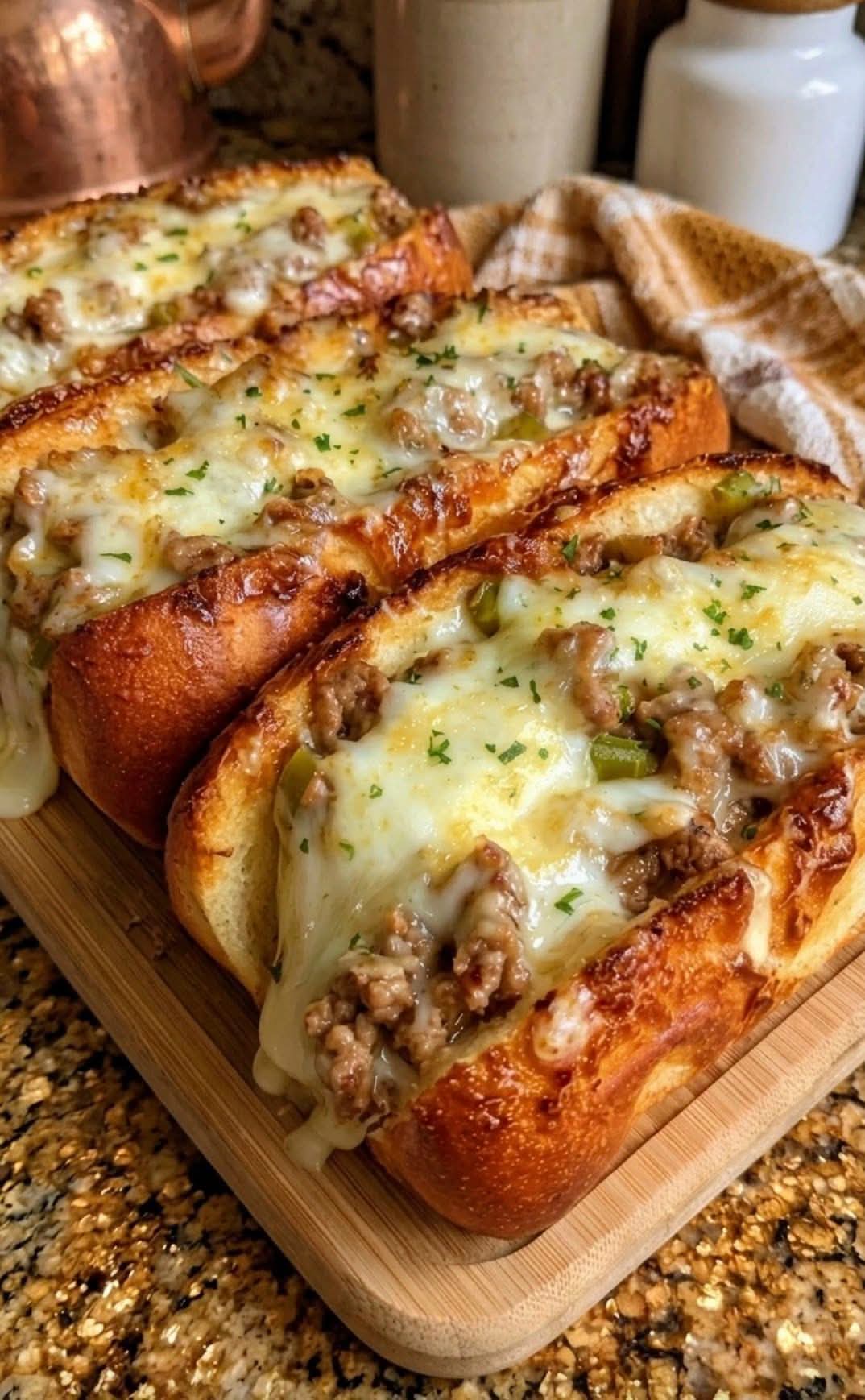
Cheesy Philly Cheesesteaks combine thinly shaved ribeye, sautéed onions, green bell pepper, melted provolone, and warm cheddar cheese sauce inside crisp, butter-toasted hoagie rolls. The result is a rich, satisfying sandwich with tender beef, lightly caramelized vegetables, and cheese in every bite.
High heat is essential for this recipe. A properly heated griddle or cast-iron skillet quickly browns the thin slices of steak without drying them out. Cooking the vegetables separately at first also allows them to soften and develop flavor without interfering with the beef’s sear.
These sandwiches are inspired by classic Philadelphia cheesesteaks but include green bell pepper, Cajun seasoning, provolone, and a pourable cheddar sauce. While those additions differ from some traditional versions, they produce a bold homemade cheesesteak that is especially good for a casual dinner, game-day meal, or weekend gathering.
Why This Recipe Works
The ribeye is sliced thinly against the grain, shortening the muscle fibers and making the cooked beef easier to bite through. Ribeye also contains enough marbling to remain flavorful during the quick, high-temperature cooking process.
Starting the onions before adding the bell pepper gives them additional time to soften. The pepper is added later so it can retain some texture instead of becoming overly soft.
Spreading the beef into a thin layer helps it make direct contact with the cooking surface. This promotes browning and prevents the meat from simmering in its released juices.
Provolone is melted directly over the combined steak and vegetables, helping bind the filling together. A small amount of water creates steam under the lid, melting the cheese quickly without requiring the beef to cook much longer.
The butter-toasted rolls provide an important contrast to the soft filling. Toasting also creates a sturdier interior surface that holds up better under the meat juices and warm cheese sauce.
Finally, the seasoned cheddar sauce gives these Cheesy Philly Cheesesteaks an extra layer of creamy flavor. Chicken broth thins the condensed sauce so it can be poured easily without becoming watery.
Ingredients You’ll Need
For the Philly Cheesesteaks
1 pound ribeye steak
½ yellow onion, thinly sliced
½ green bell pepper, thinly sliced
3 slices provolone cheese
2–3 hoagie rolls, depending on size
½ teaspoon garlic powder
½ teaspoon onion powder
½ teaspoon Cajun seasoning
Salt and black pepper, to taste
1 tablespoon avocado oil
1 tablespoon unsalted butter
For the Cheese Sauce
About 1 cup Ricos condensed cheese sauce
¾ cup chicken broth, plus more if needed
¼ teaspoon smoked paprika
¼ teaspoon garlic powder, optional
Ingredient Notes and Substitutions
Ribeye steak
Ribeye is well suited to cheesesteaks because its marbling provides both flavor and moisture. Place the steak in the freezer for approximately 25–30 minutes before slicing. It should become firm but should not freeze solid. The firmer texture makes it easier to produce very thin slices.
Cut the beef against the grain whenever the direction of the fibers is visible. A sharp chef’s knife is important for creating thin, even pieces that cook quickly.
Thinly sliced top sirloin may be substituted for ribeye. Flank steak can also work, but it must be sliced very thinly against the grain because it is naturally leaner and more fibrous.
Onion and green bell pepper
Yellow onion adds sweetness as it cooks, while green bell pepper contributes a fresher, slightly bitter flavor that balances the rich beef and cheese. Cut both vegetables into thin strips so they cook evenly.
Bell pepper is an addition to this particular recipe rather than a requirement for every style of Philadelphia cheesesteak. It may be omitted if you prefer a simpler steak-and-onion filling.
Provolone
Mild provolone melts smoothly and provides enough structure to hold the chopped filling together. Sharp provolone can be used for a stronger flavor. White American cheese or sliced white cheddar may also be used as an optional substitution.
Condensed cheese sauce
Ricos condensed cheese sauce creates the pourable topping. Because it is concentrated, chicken broth is added gradually to loosen it. The final sauce should be fluid enough to drizzle but thick enough to cling to the meat.
Different brands may vary in thickness, so you might not need all the broth. Begin with a smaller amount and add the remainder gradually.
Cajun seasoning
Cajun seasoning gives the steak a mild spicy and savory note. Because many blends already contain salt, season the beef lightly at first. You can always add more salt after tasting the cooked filling.
Hoagie rolls
Choose rolls that are soft enough to bite through but sturdy enough to support the filling. Rolls with a slightly crisp exterior work especially well. Two large rolls will produce generously filled sandwiches, while three medium rolls provide more moderate portions.
How to Make Cheesy Philly Cheesesteaks
1. Partially freeze and slice the steak
Place the ribeye in the freezer for 25–30 minutes. Once firm, place it on a cutting board and identify the direction of the grain.
Using a sharp knife, slice the beef very thinly against the grain. Cut long pieces into smaller, bite-sized shavings if necessary. Keep the beef refrigerated while preparing the remaining ingredients.
2. Prepare the cheese sauce
Place the condensed cheese sauce in a small saucepan over medium-low heat. Gradually whisk in the chicken broth until the mixture becomes smooth and slightly pourable.
Stir in the smoked paprika and optional garlic powder. If the sauce remains too thick, add a small amount of additional broth or water. Reduce the heat to low and keep the sauce warm, stirring occasionally to prevent scorching.
Avoid bringing it to a hard boil, which can cause the sauce to become too thick or develop an uneven texture.
3. Slice the vegetables
Thinly slice the yellow onion and green bell pepper. Keeping the slices relatively uniform will help them cook at the same rate.
Have all the seasonings, cheese, rolls, and butter ready before heating the griddle. The steak cooks quickly, so there will not be much time to measure ingredients once it hits the hot surface.
4. Cook the onion and pepper
Heat a large griddle or heavy cast-iron skillet over medium-high heat. Add the avocado oil and allow it to heat until shimmering.
Add the sliced onion with a small pinch of salt. Cook for about 3 minutes, stirring occasionally. Add the sliced bell pepper and continue cooking until the vegetables reach your preferred texture.
For vegetables with a little crunch, cook them for another 2–3 minutes. For softer vegetables, allow several additional minutes. Move the cooked vegetables to a cooler area of the griddle or transfer them briefly to a plate.
5. Sear the ribeye
Make sure the cooking surface is still hot before adding the beef. Spread the shaved ribeye into a thin, even layer rather than piling it in the center.
Season lightly with the garlic powder, onion powder, Cajun seasoning, salt, and black pepper. Let the beef cook undisturbed for approximately 2 minutes so the underside can brown.
Flip and separate the pieces with two spatulas or a spatula and tongs. Continue cooking until the beef is browned and safely cooked.
For food safety, whole-muscle beef sliced at home should reach at least 145°F (63°C), followed by a 3-minute rest. Check the thickest pieces with an instant-read thermometer when practical.
6. Combine the filling and melt the provolone
Return the onion and bell pepper to the meat. Toss everything together, taste carefully, and adjust the salt or pepper if needed.
Arrange the mixture into a compact pile and place the provolone slices over the top. Add only a small splash of water to an empty section of the hot griddle, then immediately cover the filling with a melting dome or heat-safe lid.
Let it steam just until the provolone has melted. This should take less than a minute. Remove the lid carefully because hot steam will escape.
7. Toast the hoagie rolls
Move the filling to the cooler side of the griddle. Split the hoagie rolls without cutting completely through the opposite side.
Spread the unsalted butter over the cut surfaces. Place the rolls cut-side down on the griddle and toast until crisp and deeply golden. Watch them closely because buttered bread can brown quickly on a hot surface.
8. Assemble the sandwiches
Divide the steak, vegetables, and melted provolone among the toasted rolls. Use a wide spatula so the filling stays together during transfer.
Spoon the warm cheddar cheese sauce over each sandwich. Serve the Cheesy Philly Cheesesteaks immediately while the beef is hot, the provolone is melted, and the bread is still crisp.
Tips and Tricks for Recipe Success
Keep the steak cold
Partially freezing the ribeye is one of the easiest ways to obtain thin slices without specialized equipment. If the steak begins to soften while you are slicing, return it to the freezer for another 10 minutes.
Preheat the griddle thoroughly
Adding cold beef to a cooking surface that has not fully heated will encourage steaming rather than browning. Give a cast-iron skillet several minutes to preheat before adding the oil.
Avoid overcrowding
A crowded skillet traps moisture around the meat. If your pan cannot hold the beef in a thin layer, cook it in two batches. Return all the cooked beef to the pan before adding the vegetables and provolone.
Season carefully
The Cajun seasoning, provolone, condensed cheese sauce, and chicken broth may all contain salt. Begin with a modest amount of added salt, then taste the finished filling before adding more.
Use very little water for steaming
Only a small splash is needed to melt the provolone. Too much water can make the filling wet and reduce the crispness of the toasted bread.
Assemble just before eating
The cheese sauce and beef juices will eventually soften the rolls. For the best texture, toast the rolls and fill them immediately before serving.
Recipe Variations
Chicken cheesesteaks
As an optional variation, replace the ribeye with 1 pound of very thinly sliced boneless, skinless chicken breast. Cook chicken to a safe internal temperature of 165°F (74°C) before adding the vegetables and cheese.
Spicy cheesesteaks
Add sliced pickled jalapeños as an optional topping. Their acidity and heat balance the rich cheese sauce particularly well. You can also choose a hotter Cajun seasoning blend.
Cheesesteaks without peppers
Omit the green bell pepper and prepare the filling with beef and onion only. No other changes are necessary.
Different cheese options
Replace the provolone with sliced white American cheese, sharp white cheddar, or traditional-style cheese spread. Keep the cheddar sauce for the double-cheese version, or omit it for a less saucy sandwich.
Gluten-free serving option
Skip the hoagie rolls and serve the filling over an optional baked potato or gluten-free French fries. Confirm that the cheese sauce, broth, seasonings, and other packaged ingredients are certified gluten-free when necessary.
How to Serve
Serve Cheesy Philly Cheesesteaks as soon as they are assembled. Their texture is best when the rolls are warm and crisp and both cheeses remain soft.
Because the sandwiches are generously filled, wrap the bottom half of each roll in parchment paper or foil to help contain the filling. Place additional warm cheese sauce on the table for anyone who wants more, but avoid adding too much before serving because it can overwhelm the other flavors.
Two large hoagie rolls make substantial servings. For smaller portions, divide the filling among three medium rolls.
Serving Suggestions
These sandwiches pair well with simple sides that provide contrast without competing with the rich filling. Optional serving ideas include:
Crisp French fries or potato wedges
A lightly dressed green salad
Coleslaw
Dill pickles or pickled peppers
Roasted vegetables
Potato chips
For a gathering, arrange the cooked filling, toasted rolls, and cheese sauce separately. Guests can assemble their sandwiches immediately before eating, which helps keep the bread from becoming soggy.
Make-Ahead Instructions
The vegetables can be sliced up to one day in advance and refrigerated in separate airtight containers. The steak may also be sliced several hours ahead. Keep it tightly covered in the refrigerator at 40°F (4°C) or below until cooking time.
The cheese sauce can be prepared one day in advance. Cool it promptly, transfer it to an airtight container, and refrigerate. Reheat it gently in a saucepan, adding a small splash of broth if it has thickened.
Do not assemble the complete sandwiches ahead of time. The meat juices and sauce will soak into the toasted rolls during storage.
Storage and Reheating Instructions
Refrigerating leftovers
Remove any filling from assembled sandwiches before storing it when possible. Refrigerate the beef and vegetable mixture in an airtight container for up to 3 days.
Store the cheese sauce in a separate container. Keep unused rolls at room temperature in a sealed bag, following the package’s storage directions.
Refrigerate cooked food within 2 hours of preparation, or within 1 hour if the surrounding temperature is above 90°F (32°C).
Reheating the filling
For the best texture, warm the steak and vegetable mixture in a lightly oiled skillet over medium heat. Stir frequently and remove it from the heat as soon as it is steaming hot. Leftovers should reach 165°F (74°C).
Warm the cheese sauce separately over low heat. Stir in a little broth or water if necessary to restore its pourable consistency.
Toast fresh rolls and assemble the sandwiches only after everything is hot. A microwave can be used for convenience, but short intervals at reduced power will help prevent the beef from becoming tough.
Freezing
Freezing is not recommended. Cooked onion and bell pepper can become overly soft after thawing, while the cheese sauce may separate. These sandwiches deliver their best flavor and texture when prepared fresh.
Frequently Asked Questions
Why did my beef turn out tough?
The beef may have been sliced too thickly, cut with the grain, or cooked for too long. Partially freeze the ribeye, slice it thinly against the grain, and cook it quickly on a properly preheated surface.
Can I use a regular frying pan?
Yes. A large cast-iron skillet or another heavy-bottomed pan works well. Cook the beef in batches if necessary so the pan does not become overcrowded.
Do I have to use ribeye?
No, but ribeye provides excellent flavor and tenderness because of its marbling. Thinly sliced top sirloin is the closest practical substitute. Flank steak can also be used if it is cut very thinly against the grain.
Can I leave out the green bell pepper?
Yes. Simply prepare the filling with the beef and onion. The cooking method remains the same.
Why is the cheese sauce too thick?
Condensed cheese sauces vary by brand and can thicken while sitting over heat. Whisk in additional broth or water, 1 tablespoon at a time, until the sauce reaches a pourable consistency.
How can I keep the rolls from becoming soggy?
Toast the cut surfaces until golden and add the filling immediately before serving. Keep the cheddar sauce separate until the last moment and avoid storing assembled sandwiches.
Is this a traditional Philadelphia cheesesteak?
This recipe is a homemade variation inspired by the famous sandwich. It includes green bell pepper, Cajun seasoning, provolone, and cheddar cheese sauce, so it does not attempt to reproduce every detail of a traditional Philadelphia preparation.
How do I melt the provolone without overcooking the steak?
Place the cheese over the combined filling, add a very small splash of water to an empty portion of the hot cooking surface, and cover immediately. The trapped steam melts the provolone rapidly, allowing you to remove the filling before the beef overcooks.
Final Conclusion
Cheesy Philly Cheesesteaks turn ribeye, onions, bell pepper, and two types of cheese into a hearty sandwich with contrasting textures and layers of savory flavor. Thinly slicing the beef, using high heat, avoiding an overcrowded pan, and toasting the rolls are the most important steps.
Prepare the components in advance, work quickly once the griddle is hot, and assemble each sandwich immediately before serving. You will get browned, tender steak, melted provolone, warm cheddar sauce, and crisp bread in every bite.